







The issue weighing most heavily on Americans today is the cost of living. And for most families, their single biggest expense is housing.
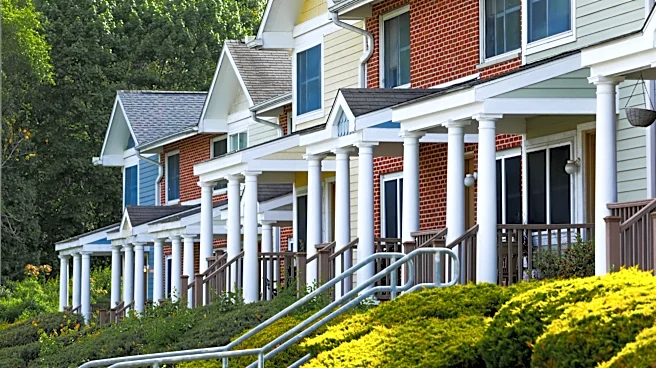
Finding an affordable place to rent is increasingly difficult, much less achieving the American dream of homeownership. Housing costs are reshaping everyday life. Many workers live farther from their jobs because they can’t afford to live nearby. Older Americans worry about being priced out of the communities they’ve called home for decades. And for many low-income families, spending half their income on housing leaves so little for everything else that a single setback can put them at risk of homelessness.
The reason is straightforward: America has not built enough homes to keep up with demand. The result is that
housing costs have risen faster than incomes for years.
Congress took a bipartisan step in June to help address this housing shortage. And our new polling finds public support for the new incentives to build affordable housing and limits on corporations in the housing market. But Americans also support going much further.
Republicans and Democrats want government help with housing

In surveys my team and I conducted nationally and across competitive states and congressional districts, voters evaluated a range of proposals for making housing more affordable. These are ideas still being debated in Washington and on the campaign trail. Survey respondents evaluated each proposal on its own merits, without being told which party had advanced it.
What emerged was striking. Republicans and Democrats expressed agreement on far more housing policies than today’s political debate would suggest.
The surveys show that Republicans and Democrats support stimulating the private market to build more housing, as well as a government role in providing targeted incentives to expand the supply of affordable housing for low- and middle-income households.
How much government involvement do Americans want? We asked.

The pattern held across every battleground state and congressional district we surveyed. Support among Democrats ranged from 77% to 93% and among Republicans from 71% to 87%, depending on the proposal.
Here are a few examples:
Providing tax incentives for builders to construct affordable housing
- Nationally: 88% of Democrats; 80% of Republicans
- Competitive states and districts: 77-93% of Democrats; 71-87% of Republicans
Providing $25 billion to help build housing for low- and middle-income families
- Nationally: 84% of Democrats; 63% of Republicans
- Competitive states and districts: 77-91% of Democrats; 45-77% of Republicans
Providing $40 billion to build housing for low- and very low-income families
- Nationally: 86% of Democrats; 64% of Republicans
- Competitive states and districts: 69-91% of Democrats; 49-81% of Republicans
Support was also strong for providing assistance directly to those in particular need:
Increasing rental assistance for those with very low incomes, the disabled and the elderly by $24 billion
- Nationally: 89% of Democrats; 74% of Republicans
- Competitive states and districts: 80-93% of Democrats; 58-83% of Republicans
To address the inflationary effects of corporations purchasing single-family homes, the bipartisan proposal would limit corporations to owning 350 homes. Americans go further:
Prohibiting corporations from purchasing any single-family homes
- Nationally: 82% of Democrats; 77% of Republicans
- Competitive states and districts: 76-89% of Democrats; 64-86% of Republicans
These findings point to something larger than housing policy. They reveal a disconnect between what large bipartisan majorities of Americans support and what Congress seems ready to do.
Whether lawmakers choose to pursue those proposals is a political question. But the surveys make one thing clear: On housing policy, Republicans and Democrats agree with each other far more often than today’s political debate would suggest.
As candidates fan out across the country to campaign for the November midterm elections, they’ll spend plenty of time talking about the hot-button issue of the housing crisis. A key question will be whether they frame the issue in polarized terms or if they take the opportunity to build on the bipartisan common ground of the people.
Dr. Steven Kull is a political psychologist and founder of the Program for Public Consultation at the University of Maryland’s School of Public Policy. For more than three decades, he has conducted in-depth research on public opinion and democratic governance.
This article originally appeared on USA TODAY: Corporations are buying up homes. Voters want to ban that. | Opinion