






"Horror moves" is a series exploring haunted spots, travel disasters and vacations gone wrong. If you'd like to contribute to our future reporting and share your experience as a source, you canclick here to fill out this quick form.
UNIVERSAL CITY, CA – Brooklyn-Eden can’t wait to step into this year’s “Sinners” house at Universal Studios Hollywood’s Halloween Horror Nights.
“I love ‘Sinners’ as a film, obviously because it represents my cultural background, and it's so exciting to see something so dear to me and so representative of me and other people like me on such a large scale and appreciated on such a large scale, but also, it was just masterfully done,” the California-based voice actor, Afro artist and Halloween Horror Nights fan told
USA TODAY.
John Murdy, creative director and executive producer of Halloween Horror Nights at Universal Studios Hollywood, knows that for many fans, “It's more than just a horror film.”
For years now, the Southern California park has made a point to spotlight horror reflecting various cultures and communities who haven’t always been centered in mainstream films.
Abraham Castillo Flores, a Mexico City-based programmer, curator, and researcher of Mexican horror cinema, told USA TODAY, “Every single region, every single ethnicity has stories that deal with the supernatural, with the fear of death, with demons, political struggles and tragedy that are told under the guise of something horror.”
And horror fans want to see more.
How it started
Murdy credits Horror Nights fans for sparking Universal Studios Hollywood’s foray into multicultural horror.
“Fans just came up to me unsolicited and (were) like, ‘Have you ever heard of La Llorona? Have you ever heard of El Cucuy?’” he told USA TODAY on a behind-the-scenes tour while the houses were built.
He said he hadn’t come across the legends in his own upbringing, but was fascinated to learn more about them. “We started looking into it and realized that there is this huge wealth of great characters and great stories that was kind of untapped.”
Castillo Flores has been working to restore Mexican horror films like “El Vampiro” and “Misterio/Studio Q,” and has recently focused on Mexican mummies, which he described as real dehydrated bodies that were found in places like convents and cemeteries across Mexico. He said La Llorona, the weeping woman, is probably the most famous horror legend in Mexico, but versions are found throughout Latin America.
“This is usually the story of an Indigenous woman who got in a relationship with a Spanish man who was already married, and then they had kids, and he leaves her, and the woman is so distraught, she ends up drowning the kids,” he explained. “She comes back as a ghost, calling ‘Ay, mis hijos. Oh, my children.’ And it's a story that has been told over and over and over again through the ages.”
La Llorona first appeared in a scare zone at Universal Studios Hollywood in 2010 and has reappeared over the years, including as part of the Monstruous house trilogy that wrapped last year.
How it’s going

This year, La Llorona is one of many mythical creatures in an original haunted house called KILLceañera: Music by Slash.
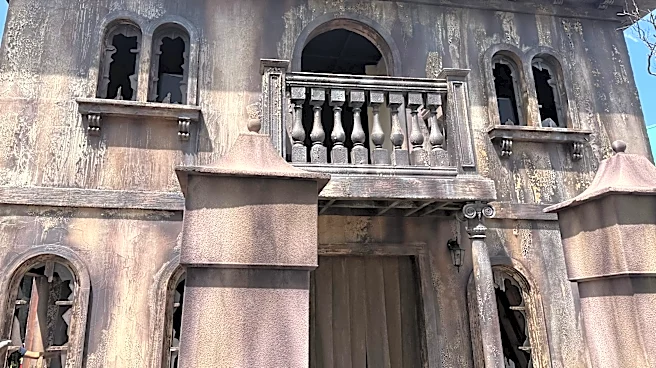
Its story goes, a girl’s family died in a house fire, leaving her orphaned and scarred. She’s taunted as she grows up. When it’s time for her quinceañera, or 15th birthday, she invites her bullies to her coming-of-age celebration in the ruins of her burnt house and summons a host of Latin American mythical creatures to help her exact her revenge. It doesn’t hurt that her birthday happens to fall during Día de los Muertos, when the veil between life and the afterlife is believed to be especially thin. La Llorona, El Cucuy, El Silbón, La Lechuza, Tlahuelpuchi, La Mala Hora, and El Charro all show up.
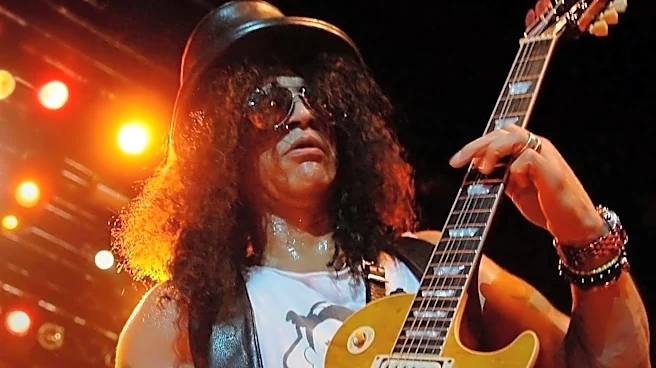
Murdy said the idea was sparked in 2018, after he spotted a quinceañera procession at Universal Citywalk, the dining, retail and entertainment complex adjacent to the park. When he pulled the idea out for this year’s Horror Nights, he worked with Grammy-winning Rock and Roll Hall of Famer Slash on the music and an internal group of team members of various Latin American backgrounds on the representation.
“I always kind of get that group together when we begin the process, a, to help make sure it's all authentic culturally, because that's really important to us,” Murdy said. “And the other is I took two years of Spanish in high school. That was over 40 years ago. So I write it in Spanish and then I give it to them to go, ‘Hey, can you make sure my Spanish is correct?’”
The house’s dialogue and music are a mix of Spanish and English. And cultural touchstones are everywhere, like a jar of agua fresca in which a head is submerged at the birthday celebration, and a quinceañera tiara and scepter embedded in a victim.
Latin American-inspired storytelling continues outside the house as well, in an original scare zone called El Circo de la Muerte, or Circus of Death.
“It's inspired by something called carpa shows, which are Spanish for tent,” Murdy said. “Little tent shows that went village to village … like a traveling sideshow.”

The power of representation
Castillo Flores is eager to see wider representation, noting that Hollywood, in general, hasn’t had the best track record.
“We don't want to be just the victims or like the token friend that gets killed,” he said, speaking of the film industry, not the theme park.
Connecticut-based author Isabela Livino agrees and said she sees the industry changing, citing the popularity of films like “Sinners” and “Midsommar.”
“’Midsommar’ is amazing and, to me, also kind of innovative in a different way. Centers a female experience, not just as her running away,” she told USA TODAY. “I think people are starting to realize horror can have really good storytelling. It can have nothing to do with slashers. You can have a full character arc. Women can have agency. It can be told from many different story points of view, cultural points of view.”
As a dad of two daughters, Murdy said he’s made a conscious effort to create strong female-centric original stories like KILLceañera for Horror Nights.
Livino does too, in her debut novel, “An Immaculate Deception,” which was published Sept. 1. It’s a gothic horror story set in Brazil, where she grew up. Livino notes that, up until 2020, she didn’t think people would be interested in a story set there, but her perspective changed when she read the best-selling novel “Mexican Gothic,” which is set in Mexico and which she loved.
“That's the power of representation,” she said. “It makes you believe in yourself. Like I can tell the stories of my heritage.”
What it means to fans
“I think (Universal’s) efforts to bring in more diverse stories and multicultural stories to be something that people can experience, I think that's really good,” said Livino, who hasn’t been to Horror Nights but enjoys Universal theme parks. “That's way better, I think, than if it was just all the stories that we already know.”
Among other stories, Hollywood’s Horror Nights previously featured Asian spirits and demons in a 2019 scare zone and deaf representation in 2024’s “Quiet Place” house. Murdy said the reactions he’s received to the wider array of horror have been hugely positive.
“We get unsolicited letters. People come up and stop me in the park and just want to say: ‘I grew up with this story when I was a kid. It means so much to me to see,'” he said. “It's a real honor to get to do this and to have that community trust us with their stories, to tell them appropriately.”

Brooklyn-Eden wants to see even more people and places do that.
“I would love to see people dig into their own cultures and tell their own cultural stories of horrors that have happened in history or horrors from their folklore,” they said, citing ‘Sinners’ as a perfect example. “Just seeing more rich cultural stories told correctly from the people that they belong to.”
Castillo Flores echoed, “It brings you always joy when you see that people like you or from your cultural background are in the entertainment that you are consuming. It makes you feel more, it feels closer and it helps you scream better.”
Halloween Horror Nights runs on select nights through Nov. 1 at Universal Studios Hollywood and Universal Orlando Resort.
This article originally appeared on USA TODAY: The horror stories Universal is finally bringing to life