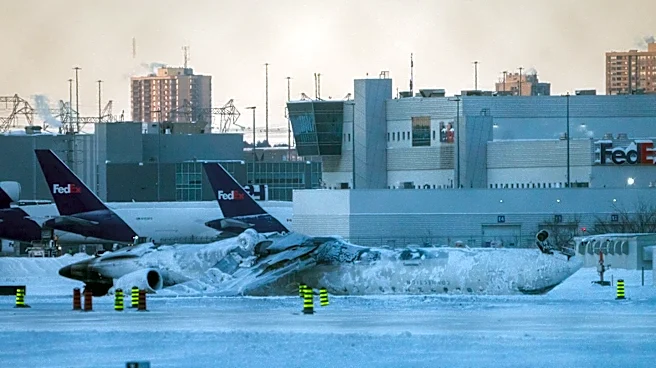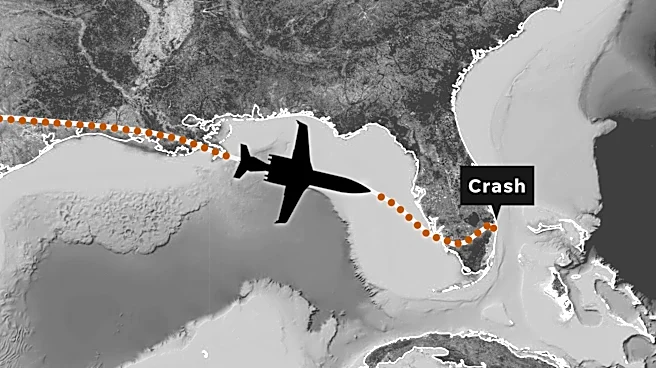





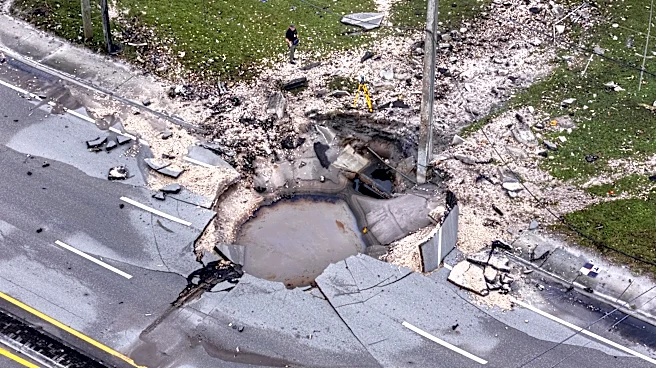



Federal aviation officials are examining ice, rain and other weather conditions as factors that may have contributed to the fatal crash of a Learjet 60 jet in Florida on Nov. 1 in which nine people were killed.
The jet was en route from Austin, Texas, to the Bahamas when it encountered ice, wind, and precipitation over South Florida. The crew reported clear icing, turbulence and precipitation shortly before the aircraft banked and plunged to earth.
While authorities are not speculating on the cause of the accident, weather conditions at the time of the crash will be “a major concern of the investigation,” said Thomas Chapman of the National Transportation Safety Board at a news conference on Nov. 2.
One of the possible factors being studied is
ice on the aircraft, which under some conditions can cause severe problems with flight control and performance. The crew reported ice and moderate turbulence before the crash.
How does ice accumulate on aircraft in flight?
Can't see our graphics? Click here to reload the page.
While all planes get pre-flight checks for any type of contamination that could affect them, it’s possible for ice to accumulate on aircraft while in flight.
"Just like you accumulate ice on your car, an airplane operating in a cold environment will accumulate ice on its surfaces," says Robert Joslin, associate professor in the College of Aviation at Embry-Riddle Aeronautical University in Florida.
Icing is a deposit or coating of ice on an object, caused when ice adheres or water freezes on a surface, says the National Oceanic and Atmospheric Administration.
It typically happens when an aircraft flies through airborne liquid-water droplets suspended in clouds, fog or other precipitation, according to NASA.
“Airplanes are going to fly through clouds, which are composed of either liquid drops or ice crystals,” says Julie Haggerty, a scientist at the National Science Foundation's National Center for Atmospheric Research in Boulder, Colorado. The group studies aircraft icing.
The droplets, known as super-cooled liquid, can be in liquid form even though the air temperature is below 32 degrees Fahrenheit. That’s because they can lack an ice-forming nucleus, a tiny airborne particle that helps the droplet begin to freeze.
Aircraft "frequently encounter super-cooled liquid drops in clouds," Haggerty says. When an aircraft passes through the supercooled droplets, they hit the leading edges of the aircraft’s wings and tail "and freeze on impact," Haggerty says. The aircraft in effect acts as freeze-enabling particle.
If the aircraft stays in the cloud or precipitation, the process can continue and ice can accumulate.
How does ice on aircraft affect planes in flight?
To fly an airplane, "a certain rate of airflow over its wings is required," Haggerty says. "When the plane is going fast enough, the wings are designed to create lower pressure above the wing than below it." The pressure difference gives the aircraft its lift.
The tail, or horizontal stabilizer, provides balance to keep the plane level.
Aircraft wings "are very smooth, because you want the airflow to go over them very smoothly," Joslin says.
Even a thin, rough layer of ice on the wings and tail can change the shape or smoothness of their surfaces.
"If the surface isn't nice and smooth, then the airflow will no longer go over it smoothly," Joslin says. "It'll be all turbulent, like little wavelets, so you're not going to get the lift."
The wings and the tail "can accumulate ice that can increase the drag and affect the stability of an airplane," Haggerty says.
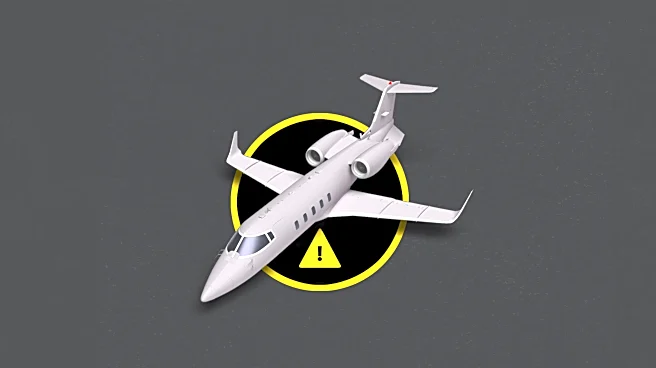
Even the size of the aircraft can play a part in ice buildup. "Certain aircraft, like the Learjet, have thin wings," Joslin says. "The leading edge of a sharper, thinner wing will accumulate ice since it's more prone to accumulation. The water droplets are hitting that surface right away."
Larger jets have more rounded wings, which create a greater pressure wave. That separates the incoming air and in essence pushes more air out of the way, reducing ice accumulation.
What can pilots do?
Ice can significantly degrade an aircraft’s performance within minutes, NASA says.
To maintain airspeed and altitude, planes may need more engine power. Pilots can also raise the plane’s nose to make the wing generate more lift. That increases the wings’ angle of attack but risks putting the plane into a stall.
Pilots can activate de-icing devices in the wings and tail. They can also request air-traffic control permission for a change in altitude or a turn to leave an area where precipitation is prevalent.
Contributing: N'dea Yancey-Bragg
Source: USA TODAY Network reporting and research; Reuters; Federal Aviation Administration; National Transportation Safety Board; NASA; National Science Foundation's National Center for Atmospheric Research; National Atmospheric and Oceanic Administration.
This article originally appeared on USA TODAY: How quickly can ice threaten an aircraft? It can happen within minutes