




It's been over a year since electric vehicle buyers in the United States could take advantage of the federal government's popular $7,500 tax credit for plug-in models that was phased out at the end of September 2025.
That tax credit, which was first adopted during former President George W. Bush's administration in 2008 to help spur EV adoption, was eliminated on Sept. 30, 2025, by a law passed by Republicans in Congress and signed by President Donald Trump.
EV sales have plummeted since then, although a spike in gas prices this year has led to a bit of a renaissance for plug-in models in 2026. The elimination of the EV tax credits has had impacts on other parts of the industry too: Carmakers canceled production on several low-selling electric
models that they could no longer market with the big discount.
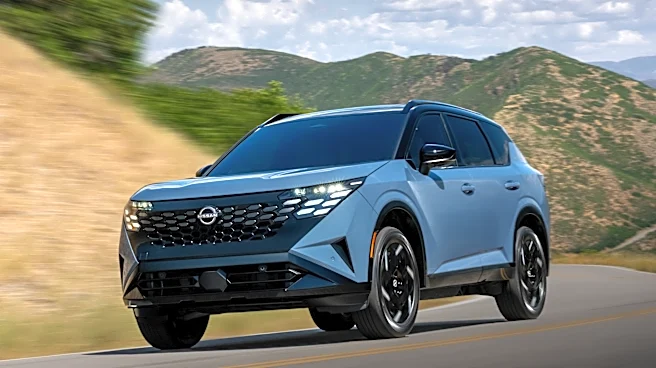
As consumers sought fuel efficient models in the wake of average gas prices rising above $4 per gallon, hybrid vehicles saw a big uptick in interest as carmakers who were moving away from EVs pitched those to gas price-conscious consumers.
Carmakers have sold over 12 million new cars so far in 2026, similar to their pace in the first nine months of 2025, according to Cox Automotive. Only about 6% of those new car sales this year have been electric cars, although used EV sales are up in recent months, according to the group.
Jeremy Robb, chief economist at Cox Automotive, said in a briefing on his organization's third quarter carmaker sales forecast that there is a "tug-of-war" shaping auto demand right now.
"On the headwind side, rising gas and fuel prices are forcing consumers into difficult trade-offs - when energy costs climb, people prioritize essential spending and push big-ticket purchases, like a vehicle, further down the list," he said.
"On the tailwind side, we're seeing strong growth in liquid assets-savings, money market, and stock holdings outside of 401(k) and IRA accounts have been expanding at double-digit rates in recent years, and that's bolstering purchasing power, particularly for higher-income buyers," Robb continued.
With that in mind, the USA TODAY Cars Team took a look at where the rest of the U.S. auto market stands one year after Trump killed the federal EV tax credits and what shoppers can expect moving forward.
Why are car shoppers turning increasingly to hybrids?
Stephanie Valdez Streaty, Cox Automotive’s director of Industry Insights, added on the same briefing that the biggest beneficiary of the changes in gas prices and the amount subsidies that are available for electric models has been hybrids.
"Hybrid vehicles continue to be the clearest growth story in the electrified market," she said, adding that hybrid car sales volume increased 23% from the second quarter of 2025 to the second quarter 2026.
Valdez Streaty said that spike pushed hybrids share of the U.S. auto market to a record 16.3%, which was up from 13.0% a year ago.
"For consumers, hybrids offer better fuel efficiency without requiring a major change in how they fuel or use theirvehicle," she said.
Valdez-Streaty noted that several automakers like Toyota, Kia and Hyundai already had multiple hybrid cars in their model mix that they could market to consumers who didn't want to go fully electric, even as gas prices prompted searches for more fuel-efficient models.
"Toyota remains the clear (hybrid electric vehicle) market leader, accounting for 44% of hybrid registrations," she said. "But the competitive mix is shifting. Toyota’s share has declined more than four percentage points over the past year, while Ford has fallen from nearly 10% to 6%. At the same time, Kia and Hyundai are gaining ground quickly."
What can shoppers expect from carmakers going forward?
Carmakers have gone all in on hybrids recently, but most manufacturers are not completely abandoning their plans to develop more fully electric vehicles in the future.
General Motors' CEO Mary Barra said during a recent appearance on Fortune's "Titans" podcast that her company is still committed to a future of developing mostly electric vehicles, although that appears now to be much further off than most of the industry's initial projections were.
"I don't think it's shifted our mission," Barra said in interview. "We still think EVs are the endgame."
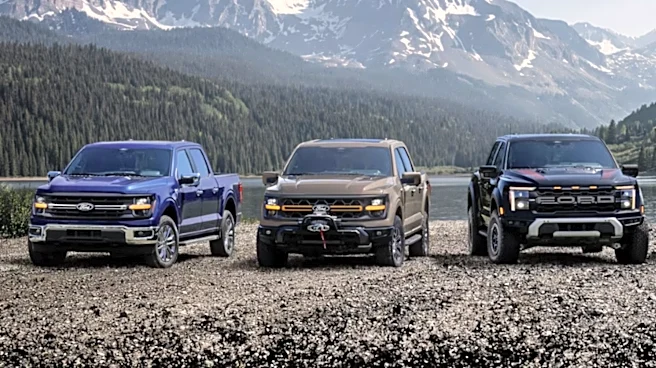
Similarly, Ford CEO Jim Farley said in a July 2026 interview with USA TODAY that his company's new $30,000 Fathom electric pickup truck would be its most important car of the future.
"I think you're going to see a product that really has a potential to change our industry," Farley said, comparing the new model to Ford's first mass produced and widely successful car, the Model T.
"If we reinvented the Model T today, it would be an electric car," Farley said.
Valdez Streaty, the Cox analyst, said "the building blocks for electrification continue to improve, even as consumer adoption varies across powertrains."
"On battery technology, average EV range has increased 20% over the past five years, from roughly 250 miles in2021 to about 300 miles for 2026 models," she said. "At the same time, global battery pack prices have fallen 21% over five years to $108 per kilowatt-hour. Charging infrastructure is expanding as well."
Valdez Streaty said it all adds up to a complicated picture of the path forward on electrification for automakers.
"New EV demand is stabilizing, used EVs are reaching more buyers, and hybrids are providing much of the current growth momentum," she said. "The market continues to electrify, but the path is proving more gradual and more diverse, with consumers choosing among a broader mix of powertrains."
Keith Laing is an automotive reporter on the National Trending Desk at USA TODAY. Contact Keith at klaing@usatodayco.com.
This article originally appeared on USA TODAY: One year later, here's what happened after EV tax credits died