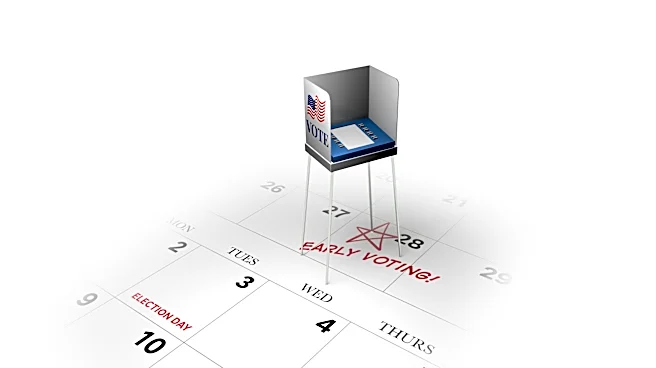










The crucial Maine U.S. Senate race between incumbent Republican Sen. Susan Collins and Democrat Troy Jackson might not be decided on election night.
Maine is one of just two states that uses ranked-choice voting in statewide races with more than two candidates. This year, there are six declared write-in candidates in addition to Jackson and Collins. In ranked choice voting, if no candidate receives over 50% of the first-choice vote, the race goes to a ranked choice tabulation.
Maine Secretary of State Shenna Bellows told USA TODAY that this scenario is “highly possible.”
“It would be the first time in Maine that a U.S. Senate race has ever gone to ranked choice,” Bellows told USA TODAY. “However, Congressional District Two has gone to ranked choice voting
multiple times, so it's highly possible given the tight polling between Collins and Jackson and the existence of the six write-in candidates.”
If that happens, she said, it could take several days to determine the official winner.
Jackson, a logger and former Maine state Senate president, is trying to unseat the five-term incumbent, who is the lone Senate Republican representing a state won by former Vice President Kamala Harris. Democrats view the seat as critical to their chances of flipping the Senate, which is currently controlled by Republicans 53-47. Recent polls have found the Maine race in a dead heat.
Why could Maine Senate race go to ranked-choice runoff?
Maine uses ranked-choice voting in all state and federal offices in the primary, but only in federal races in the general election.
Under this system, voters rank candidates in order of preference. If no one candidate gets 50% of the total ballots cast in the first round of voting, the last place candidate gets eliminated and their second-choice votes get distributed. The process continues until one candidate cracks 50%.
In the Maine Senate race, there are six declared write-in candidates, meaning the ballot has a third line for voters to write-in, and then rank, one of those candidates. The number of votes for them, as well as blank first-choice votes, could prevent either Collins or Jackson from clearing the 50% threshold if the race is as tight as polling suggests.

How long would a ranked choice runoff take?
If the races goes to a ranked choice runoff, it could take days to complete.
Bellows said ranked choice tabulation has typically taken them until the Friday of the following week after the election to get the official result. This year, that would be Friday, Nov. 13. However, they’re hoping to expedite that process if it happens this election.
She also said it’s possible that if the race is close enough, they won’t know on election night if the race will go to ranked choice voting as municipalities have two days to report the results to the Secretary of State’s office.
Has this happened before?
While no U.S. Senate race in Maine has gone to ranked choice voting, it has happened three out of the last four elections in Maine’s 2nd Congressional District.
The most recent was in 2024, when the race between Rep. Jared Golden, D-Maine, and Republican Austin Theriault went to a ranked choice runoff after 421 people voted for declared write-in candidate Diana Merenda and nearly 12,000 left their first-choice blank. While Golden won a plurality of first-choice votes, he received just under 49% of total votes.
In that race, the runoff was completed in four days, but Golden wasn’t officially declared the winner until a month later because of a recount.
This article originally appeared on USA TODAY: Collins vs. Jackson Maine Senate race could go to ranked-choice runoff