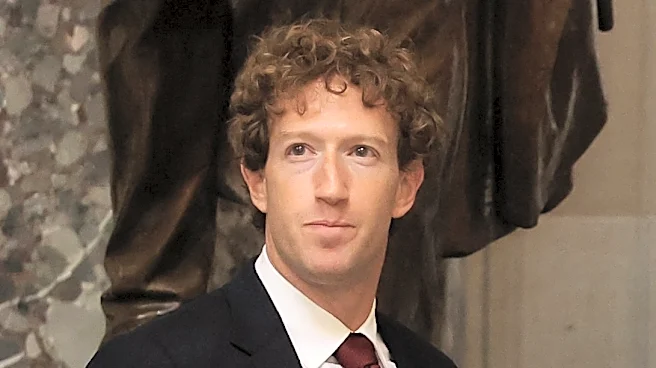

Maryland Gov. Wes Moore is running for reelection and is rumored to be a 2028 Democratic presidential contender, but he has taken on another initiative in 2026: electing more Black governors.
Moore, 47,
is one of just three Black Americans ever elected as a state's chief executive in a country that is 14% Black, but a roster of politically and geographically diverse candidates could triple that number.
At least eight Black gubernatorial nominees, including Moore, are among a bipartisan cast on the ballot this fall.
"I became the first in my state's history and now only the third elected in the history of America, and that is a bit indicting when you consider the fact that we have a country that's now 250 years old," Moore, the newly minted chair of the National Governors Association, told USA TODAY in an interview.
Moore, who had no electoral experience before running for governor, may be joined by swing-state Democrats including Nevada Attorney General Aaron Ford, Milwaukee County Executive David Crowley in Wisconsin and Keisha Lance Bottoms, the former mayor of Atlanta, in Georgia.
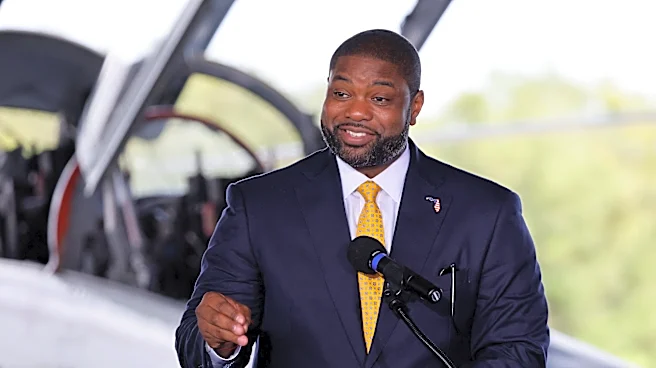
The Republican Party has their own list of history-making contenders. Rep. Byron Donalds, a staunch Trump ally, will likely become the first Black governor of Florida, and Rep. John James is the Michigan gubernatorial GOP nominee in a competitive contest this November.

Democratic South Carolina state Rep. Jermaine Johnson and Minnesota House Speaker Lisa Demuth, a Republican, are also running for governor as longshot candidates.
'My job is not to become the first'
Since the Civil Rights Movement of the 1960s, Black Democrats have been far more successful in majority-Black districts than in statewide elections with mostly White electorates. In many states, Black voters are a major component of the Democratic primary electorate, but now all the Black gubernatorial nominees must appeal to largely White electorates in their general election battles.
Black Republicans, of whom there have been far fewer in Congress, often represent districts where the majority of their constituency is White.

Jasmine Carrera Smith, a George Washington University expert on electability among Black voters, said Black gubernatorial candidates have had outsized success this cycle but continue to be underrepresented overall.
In November 1989, American history was made when Virginia elected Douglass Wilder as governor – but he only served four years because state law prevents governors there from seeking consecutive terms in office. Two decades later, in 2006, Deval Patrick was elected governor of Massachusetts. Moore was elected governor of Maryland more than 15 years later, in 2022.
Then-Lt. Gov. David Paterson became New York's first Black governor in 2008 when Gov. Eliot Spitzer resigned following a prostitution scandal. Paterson, a Democrat, later faced allegations of impropriety as well and withdrew from the 2010 race for governor.
Now 95, Wilder could live to see several Black candidates elected governor.
In addition to Crowley and Ford having strong chances, Florida is likely to elect Donalds as the successor to Gov. Ron DeSantis.

But Donalds has had to face what was considered by some to be a race-based attack when James Fishback, a Republican primary opponent, called the congressman a "slave to donors."
Black candidates face major tests in two key swing states
In Wisconsin, Crowley won a heated primary over a democratic socialist, in part on the strength of his support among Black voters. He now must court the general electorate in a state of nearly 6 million people that is 85% White – a challenge Black politicians often face, and which many address by de-emphasizing race.
"My job is not to become the first," Crowley, 40, told USA TODAY. "My job is to make sure that young people all across the state can see themselves in me and understand that there are many more opportunities that they'll have access to in the future for themselves."

Crowley, a married father of three daughters, is currently favored to replace his mentor, Gov. Tony Evers. The state's popular chief executive endorsed Crowley, who reentered the race after Evers' lieutenant governor dropped out amid a scandal and during rising concerns about state Rep. Francesca Hong's electability.
Crowley was first elected to the State Assembly in 2016 and served two terms.
He then beat a more progressive, non-Black Democratic legislator in a close 2020 race for Milwaukee County executive – a result repeated this month when he won the state's Democratic primary over Hong, an Asian American state representative from Madison.
Hong made several gaffes that attracted national intention, including a 2020 tweet that Thanksgiving is "celebrating colonialism."
Crowley's general election opponent is Rep. Tom Tiffany, a member of the ultraconservative House Freedom Caucus. Tiffany lags behind in general election polling, but major statewide elections in Wisconsin are typically decided by around 1 percentage point.

Georgia, another swing state, will also test Black candidates' sway.
Both Crowley and Bottoms have experience as chief executives, which may give them an edge compared to past Black nominees in their respective states who did not. Mandela Barnes, a former lieutenant governor who lost to Sen. Ron Johnson in 2022, was previously a state legislator. Georgia's former Democratic House speaker, Stacey Abrams, was also a lawmaker before she lost races to Gov. Brian Kemp in 2018 and 2022.
Black candidates often lose in difficult areas for their parties
Bottoms' quest to succeed Kemp, the state's Republican governor, who is term limited, will likely lead to a close race. Her opponent Rick Jackson, a health care CEO and billionaire, is well-funded, and she faces questions about a crime spike during her pandemic-era tenure in Atlanta.
If elected, Bottoms would make history as the country's first Black woman to serve as governor, after Abrams failed to cross the finish line in two consecutive contests.

Paru Shah, an expert on politics at Rutgers University, said the number of Black gubernatorial candidates this cycle will test longstanding arguments about electability that have often faced nonwhite contenders. Shah said that while identity does factor into political outcomes, voters typically focus first on party preference.
"It ends up being that they lose in places that it would have been difficult for a Democrat to win anyway, but then the narrative is not that Democrats can't win, it's that Black women can't win, or Black men can't win," Shah said.
She pointed to Abrams' losses in Georgia, a swing state that Trump lost in 2020 to former President Joe Biden and won in 2016 and 2024. The last four Black gubernatorial candidates to appear on ballots lost, but each contender ran in difficult areas and environments for their respective parties.

Three Black Republicans have lost in high-profile races in recent years, despite leaning heavily on their support of Trump. Former North Carolina Lt. Gov. Mark Robinson lost by nearly 15 points amid a sex scandal and other controversial comments in 2024, and former Virginia Lt. Gov. Winsome Earle-Sears lost by almost 16 points last year.
Kentucky Attorney General Daniel Cameron, once a protege of Sen. Mitch McConnell, lost to Gov. Andy Beshear, a rare popular Democrat in the state, in 2023. Shawn Wilson, Louisiana's Democratic two-term state transportation secretary, lost the same year.
Will Nevada elect a Black man?
Ford, the Nevada attorney general, will likely face a highly competitive race against incumbent Gov. Joe Lombardo in a state Trump lost in 2016 and 2020 but won in 2024. Ford made history in 2018 as the Silver State's first Black statewide elected official when he flipped the attorney general seat for Democrats.
During this race, Lombardo and his GOP allies have repeatedly spotlighted his Democratic foe's travel out of state, referring to him as "frequent flyer Ford" in attack ads. Reports say those trips have been mostly for professional conferences but also campaigning for former Vice President Kamala Harris.
"I recognize it for what it is. I've dealt with this the entirety of my political career," Ford told USA TODAY in July. "Nevadans don't countenance this type of nonsense, which is the reason why I've won statewide twice – including the last time by more than anybody else running statewide."
Demuth is unlikely to win in Minnesota over longtime Democratic Sen. Amy Klobuchar. Johnson, a Democrat in reliably red South Carolina, will also face a difficult electoral landscape.
Uptick in Black political participation this cycle
The current bumper crop of Black gubernatorial nominees pursuing higher office occurs at a time when Black representation is expected to plummet in Congress and state legislatures.
A Supreme Court ruling this summer gutted a key provision of the Voting Rights Act, which has allowed Republican-dominated states such as Texas to redraw their maps with fewer majority-Black or Latino districts in order to minimize Democratic-leaning seats.
"What's going on right now is you’re watching the greatest forms of political redlining that we have seen in generations," Moore said, referring to the practice of banks refusing to lend to homebuyers in certain areas, often heavily Black or Latino neighborhoods.
Black voters have responded with high turnout at the polls. A study by VoteHub, a nonpartisan organization offering political analysis, shows a surge in Black voter participation in Southern primaries.
In four Black Belt states in the American South – Louisiana, South Carolina, Alabama and Georgia – average primary turnout was about 26% overall, but rose to 32% in majority-Black counties, a difference five times larger than the last midterm primaries in 2022.

Democratic strategist Nina Smith, a former senior adviser to Abrams' 2022 campaign for Georgia governor, said there's a heightened level of participation among Black Democratic voters, particularly in the South.
"There's a level of awareness and amongst our people that we are under attack," she said. "You can absolutely see a 'Black wave' of self-organizing that is happening."
Only 14 Black senators, elected or appointed, have ever served in the Senate. Barack Obama, a former senator from Illinois, became the first Black president, and Kamala Harris, a former senator from California, became the first Black vice president.
While more progress has been made in the House of Representatives, which has seen 189 Black members in total, Black candidates have struggled to win gubernatorial elections.
Speaking with USA TODAY, Moore acknowledged there is a pride the Black community has with Obama and the election of others, such as himself, but that voters cannot fall victim to believing those historic gains end the need for more inclusive leadership.
Before Moore makes a potential run for the White House, he wants more Black Americans to make history in governor's mansions after decades of work from voting rights activists.
"It's important that we're vigilant, and it's important that we do not relinquish or give up a political power that those who came before us, you know, worked for and fought for and died for."
This article originally appeared on USA TODAY: A record 8 Black candidates for governor are running in 2026