







When you think of spaceflight in the United States, you most likely think of Florida.
The Sunshine State, after all, is where astronauts hitch rides aboard powerful rockets to begin their ventures in orbit. And, of course, anything from telescopes
to orbiters to internet-beaming satellites regularly get off the ground during launches from either NASA's iconic Kennedy Space Center or the nearby Cape Canaveral Space Force Station.But as of Nov. 6, it has been 17 days (and counting) since a rocket of any kind has gotten off the ground anywhere in Florida.
That's a notable drought in a state accustomed to multiple rocket launches per week. To put it into even more perspective, the most recent mission marked just the 60th liftoff of 2026 in Florida
– a notable lag in cadence following a record 2025 in which 109 rocket launches were notched.
So, what gives?
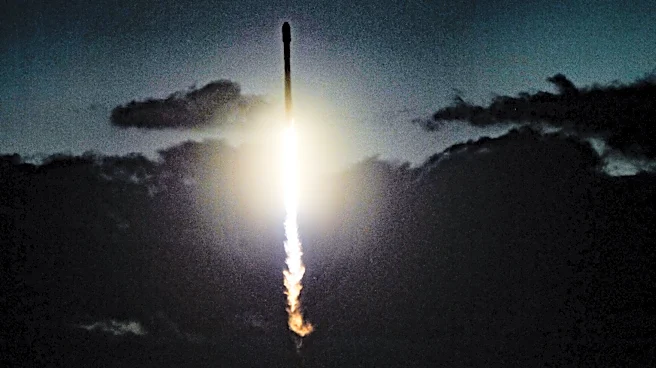
For starters, the most active rocket in the world, SpaceX's vaunted Falcon 9, has not been very active of late in Florida. What's more, mishaps and anomalies have also forced other launch providers like Blue Origin and the United Launch Alliance to ground their own rockets.
Meanwhile, California has already shattered a launch record it set in 2025 with more than two months left to go before 2026 comes to an end. The 72nd launch of the year at the state's Vandenberg Space Force Base solidified a notable geographic shift – at least this year – in spaceflight operations in the United States as California appears destined to surpass Florida in the number of rocket launches for the first time in five decades.
SpaceX pauses Falcon 9 rocket launches for 6 weeks in Florida
Florida has not seen a rocket launch since SpaceX last got its Falcon 9 off the ground Oct. 20 from the Cape Canaveral Space Force Station on a rideshare mission known as Bandwagon-5.
And based on comments from a SpaceX official, it could be a six-week gap between that mission and when another SpaceX rocket could get off the ground from Florida.
SpaceX, the commercial spaceflight company founded by Elon Musk, also made headlines with the announcement that an Aug. 25 mission would be the final using its Falcon 9 rocket to deploy the company's Starlink internet satellites from the state. The two-stage, 230-foot rocket, which has launched hundreds of times in Florida and California, has since been used only sparingly on missions to send astronauts and cargo spacecraft to the International Space Station.
SpaceX prepares massive Starship rocket for Florida debut
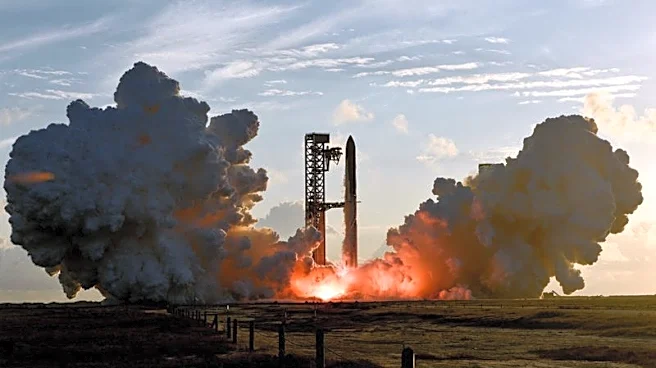
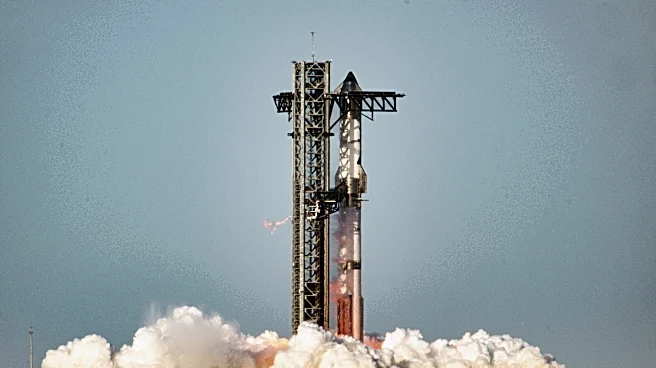
The semi-retirement of the Falcon 9 rocket and SpaceX's six-week launch hiatus in Florida comes as the company shifts focus to readying its Starship rocket for its Florida debut – potentially by the end of 2026.
To date, the world's largest rocket – standing at more than 400 feet tall when fully stacked – has launched 14 times from South Texas at SpaceX's Starbase headquarters.
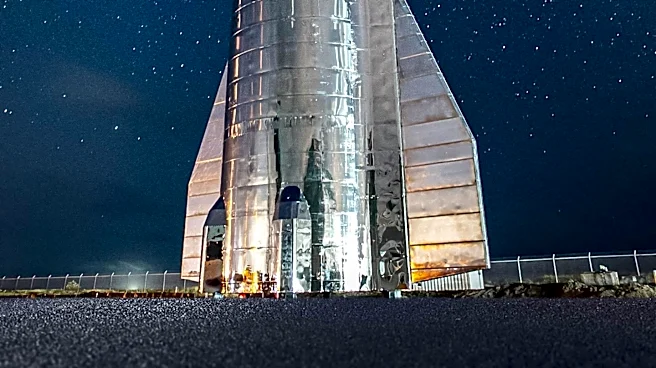
But for years, SpaceX teams have been preparing to expand Starship operations to Florida, with plans for the rocket to launch in the years ahead at both the Kennedy Space Center and the Cape Canaveral Space Force Station.
Starship is central to SpaceX's future spaceflight ambitions.
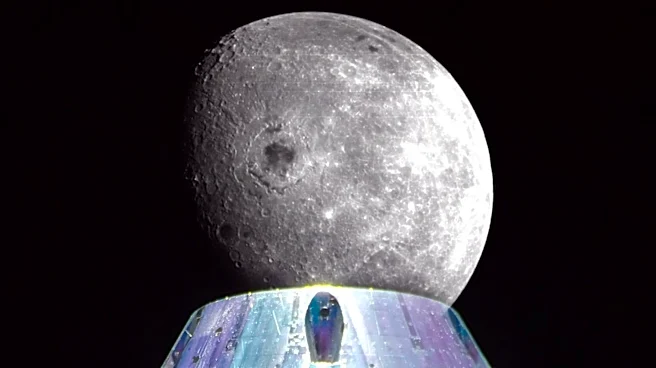
The rocket will not only allow for the deployment of larger and more powerful Starlink satellites, but will be used in NASA's Artemis missions sending humans to the moon. Musk, the chief executive of SpaceX, also has dreams of sending humans aboard Starship to reach and colonize Mars.
ULA Vulcan to return to flight on Amazon satellite mission
Just because SpaceX is temporarily stepping back from rocket launches in Florida doesn't mean the Sunshine State won't see a single liftoff for a month-and-a-half.
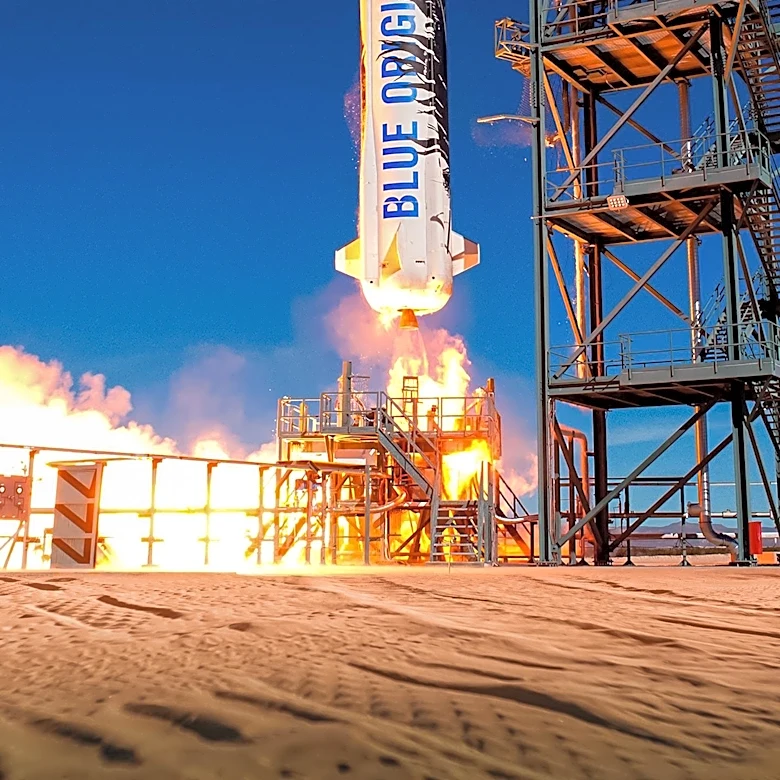
Yes, Blue Origin's heavy-lift New Glenn rocket continues to be out of commission as billionaire Jeff Bezos' company repairs – and even improves – its launch complex at the Cape Canaveral Space Force Station following a May explosion. In fact, the company's target for New Glenn to return to flight by the end of 2026 has slipped to the beginning of 2027.
But at least one rocket launch for November in Florida has been added to the schedule.
The United Launch Alliance's new Vulcan rocket, which has been grounded since February when it experienced a mid-flight anomaly, is due to return to flight in the middle of the month. The Vulcan rocket, which can fly with up to six solid rocket boosters mounted to the side, could transport a batch of Amazon Leo satellites to low-Earth orbit following a liftoff scheduled for Friday, Nov 13, at the Cape Canaveral Space Force Station, according to the ULA, a joint venture between Boeing and Lockheed Martin.
California sets rocket launch record, next one due up
While rocket launches lag in 2026 in Florida, California has already set a record for the year.
On Oct. 27, SpaceX launched its Falcon 9 on what became a record-setting mission at the Vandenberg Space Force Base in Santa Barbara County.
The otherwise routine mission to deploy 27 Starlink internet satellites from the West Coast marked the 72nd rocket launch of 2026 – surpassing California's annual record set in 2025, according to Space Force officials. And with more than two months to go in 2026, Space Force officials have previously indicated that around 80 rockets could launch from California before the year comes to an end.
The next launch, in fact, is due up Friday, Nov. 6. The 74th liftoff of the year in California, the mission will see SpaceX's Falcon 9 rocket getting off the ground on a classified satellite deployment mission for the U.S. Space Force.
Eric Lagatta is the Space Connect reporter for the USA TODAY Network. Reach him at elagatta@usatodayco.com
This article originally appeared on USA TODAY: Rocket launches surge in 2026 in California. What happened to Florida?