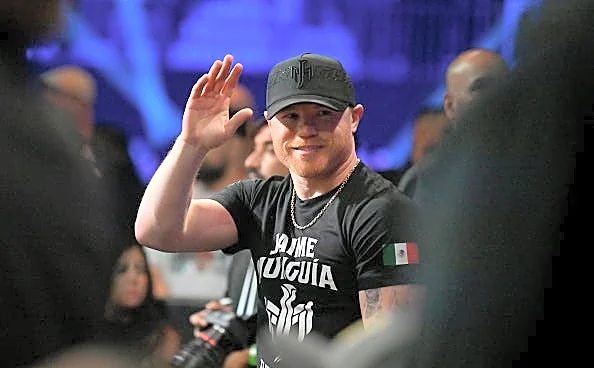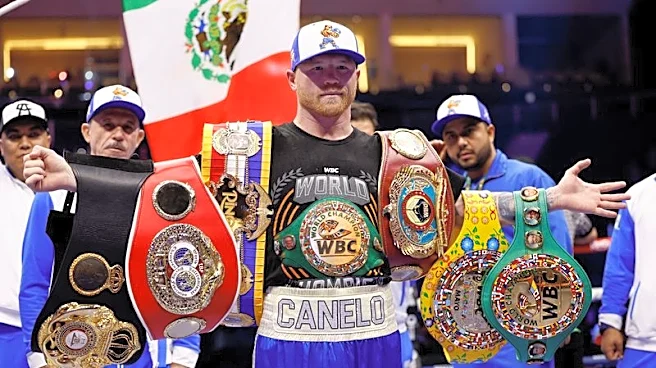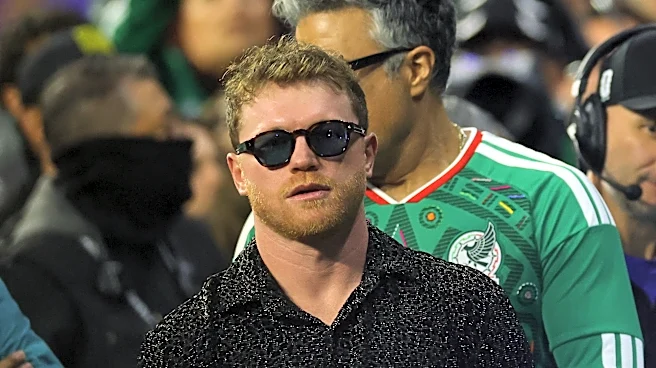



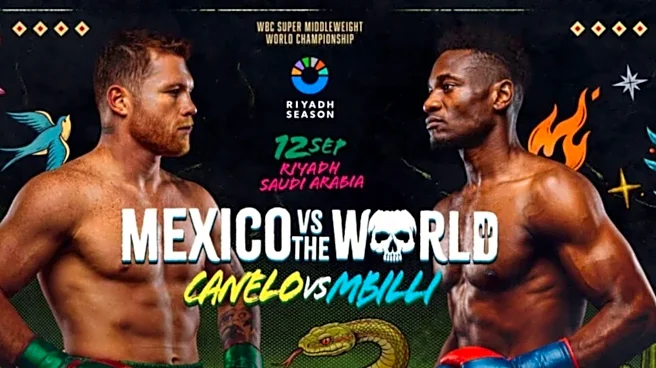

It's time to cancel the boxing match between Canelo Alvarez and Christian Mbilli, a super middleweight title fight scheduled for Saturday, Oct. 31, in Riyadh, Saudi Arabia.
That’s right, Riyadh. As in the capital of Saudi Arabia and a current battle zone.
The Iran-backed Houthi rebels of Yemen are at war with a Saudi-led coalition.
On Oct. 10, a missile strike killed 13 people and injured more than 300 at King Khalid International Airport in Riyadh.
On Tuesday, according to the Associated Press, explosions were heard over the Saudi capital of Riyadh, and Saudi authorities said they destroyed two ballistic missiles fired by the Houthis.
The Associated Press reported on Wednesday that the Houthi rebels said Saudi-led airstrikes had killed 14 people
in a busy market in northern Yemen.
It's unlikely that on Saturday Houthis will order pay-per-view on Halloween, set down their missiles and peacefully watch the boxing matches being livestreamed from Riyadh.
It's hard to know when the next missiles will be headed for the Saudi capital. The obvious worry is that the next set will be fired either before, during or immediately after the boxing event, with more than a dozen fighters on the card.
The U.S. Department of State has issued a travel advisory for Saudi Arabia that read, "Reconsider travel to Saudi Arabia due to risk of drone and missile targeting of American interests by Iran and the Iranian-supported Houthis, armed conflict, terrorism, exit bans, and local laws regarding social media activity. Some areas have increased risk.’’
Explosions in Riyadh, silence from fight card organizers
Despite the explosions, there’s an unsettling silence elsewhere – from those in charge of the boxing event.
Boxing is one of five sports, along with WWE professional wrestling, on which Saudi Arabia has spent $15 billion, Medium reported in 2025. It has also promoted some of the sport's biggest fights. Critics have called the practice sportswashing. The sport has gladly scooped up the riches and expressed gratitude to Turki Alalshikh.
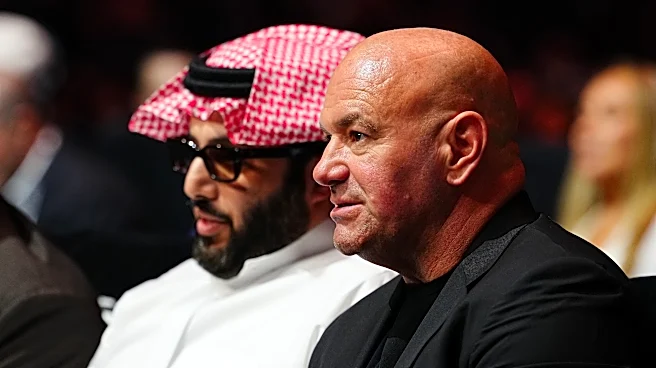
Alalshikh, a Saudi government official who is chairman of the General Entertainment Authority, has become a boxing powerbroker. He put together the boxing event headlined by Alvarez and Mbilli.
Alalshikh did not respond to requests for comment that USA TODAY Sports emailed to Ring Magazine, which Alalshikh bought in 2024.
The World Boxing Council is sanctioning the title fight in which Alvarez will fight for the WBC super middleweight title Mbilli holds.
Mauricio Sulaiman, the WBC president, did not reply to an email from USA TODAY Sports seeking comment.
Saudi Arabia projecting image of 'normality'
Kristian Ulrichsen, a Ph.D. at Rice University, is a fellow for the Middle East at the Baker Institute and co-director of the Middle East Energy Roundtable.
By email, I asked for his thoughts on the boxing event going forward.
"The boxing event is part of the annual Riyadh Season, which is going ahead this year despite the ongoing Houthi attacks on Saudi Arabia," he replied. "Many of the events which have been canceled recently had more of an international dimension to them and reflected external concerns about traveling to Saudi Arabia, not least during the lengthy closure of the airport in Riyadh, whereas Riyadh Season is geared to far more of a domestic audience, and it is likely that the Saudi authorities want to project an image of normality and business as usual."
He said it was "statistically unlikely, although not impossible, that participants in sporting and other events in Saudi Arabia could be caught up in a Houthi attack, but clearly the strikes on Saudi airports have raised the risk level for all visitors to the Kingdom, and have generated an elevated perception of risk, particularly among international audiences that the Saudi leadership has tried so hard to attract in recent years."
"Statistically unlikely" might strike some people as reassuring. But the sports world can live without a boxing match between Alvarez and Mbilli, and the undercard fights.
Undercard boxers already taking precautions, backing out
Prudence has already been set in motion.
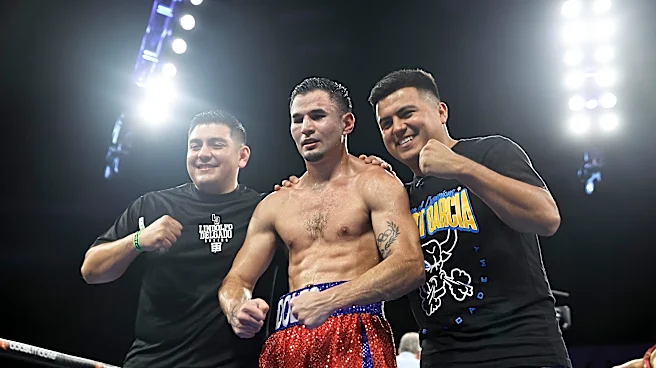
Boxer Lindolfo Delgado, scheduled to fight for the IBF lightweight title, withdrew from the event over safety concerns.
Robert Garcia, Delgado's trainer, told Boxing Scene earlier this week, "I got a call from an attorney who's already there, and he told me, 'Look, Robert, we get at least two alerts on our phone every day about missiles. It's happening.'
"So obviously that was already a good reason to say why would we risk ourselves going out there without being safe?"
Other sporting events have been postponed. For example, the "Six Kings Slam," which will feature tennis stars Carlos Alcaraz and Novak Djokovic and originally was scheduled for October, has been postponed until Dec. 27–30.
Professional wrestling is adjusting.
WWE Crown Jewel 2026, set for Nov. 7, was to take place in Riyadh. But on Wednesday, Oct. 28, Riyadh Season confirmed the event will be moved but provided no specifics.
"Of course I don’t think it should be happening," longtime boxing promoter Lou DiBella told USA TODAY Sports about the Canelo fight. "Dangerous, unnecessary …
"I do understand why the Saudis want it to go on. Countries under attack want to keep up the appearance of business as usual."
But now it's up to boxing to acknowledge this is not business as usual. This is the time to protect the boxers, the trainers and so many others who will be involved in the fight that suddenly matters much less than the conflict at hand.
This article originally appeared on USA TODAY: Boxing can't treat Canelo's fight in Riyadh as business as usual | Opinion