


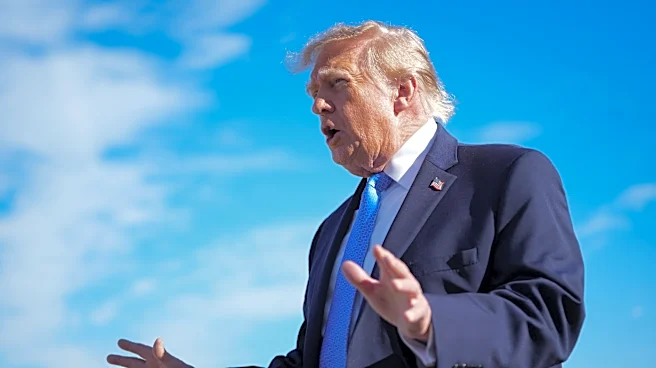
WASHINGTON — The Trump administration is using federal funds from the Department of Homeland Security to pay for a series of controversial television ads that promote President Donald Trump weeks before the midterm election, according to government records and lawmakers from both parties.
Three days before the first of three pro-Trump ads aired on television, DHS on Sept. 20 awarded a $20 million contract to an advertising agency called LMD Agency, Inc. to carry out a "national media campaign," a summary of the contract says.
The funding was made available to DHS a day earlier when the White House Office of Management and Budget provided U.S. Border and Customs Protection with $20 million from the One Big Beautiful Bill Act ‒ Trump's signature
law passed in 2025 ‒ for the listed purpose of "OBBBA commemorative events."

The taxpayer-funded Trump ads ‒ which appear to be paid for through the $20 million contract ‒ have drawn criticism over the use of public dollars on politically themed ads. AdImpact, a firm that tracks campaign spending on television advertising, estimate the government has spent $1.7 million so far to air the ads.
The White House did not respond to multiple inquiries about the government's funding sources for the television ads. DHS referred USA TODAY toprevious White House statements about the ad campaign, but the statements do not addressing the funding.
Annual appropriations acts approved by Congress prohibit public money paying for political advertisements and propaganda. To apparently seek to skirt such provisions in appropriation funds, the Trump administration is using money from the One Big Beautiful Bill, Trump's sprawling tax and spending legislation approved by only Republicans in Congress in 2025.
"It came from the One Big, Beautiful Bill," said Republican Sen. Susan Collins of Maine, who faces a tough reelection in November and has criticized Trump's ad campaign. "It was taken out of funding that was supposed to be for Customs and Border Protection."
The Wall Street Journal first reported on the Trump administrations use of Homeland Security funds to pay for the ads.
The White House has defended the legality of the ads by saying they are "public service announcements," not political ads, because Trump is not on the ballot in the November midterms and the ads don't mention the upcoming election.
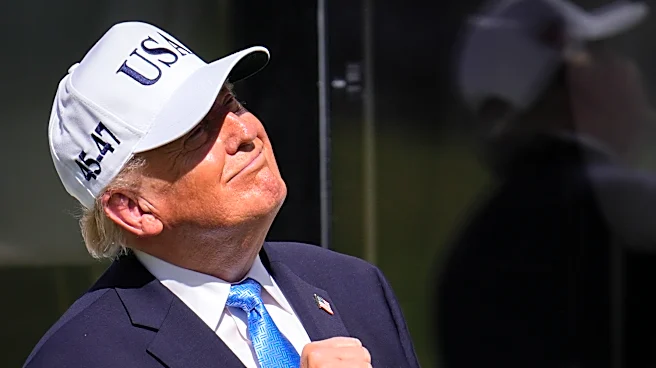
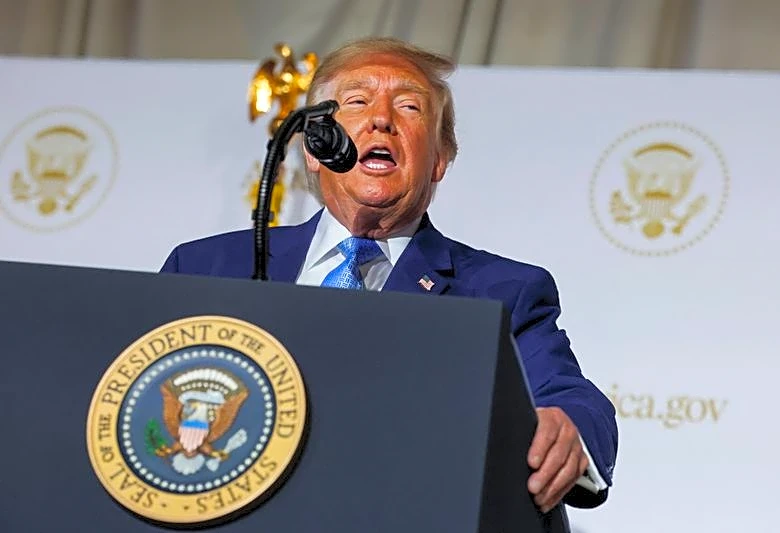
The first Trump ad, which aired Sept. 23, features Trump urging Americans to "defeat communism," while touting his economic record and personal resilience, as a choir in the background recites the verse "Love me." Attorneys for musical artist JMSN, whose song "Love me" is featured in the ad, sent a cease-and-desist letter to the White House on Sept. 28 demanding the administration stop using his song.

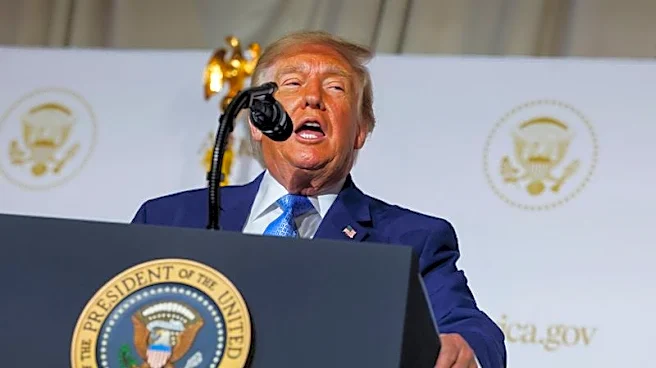
A second ad shows Trump delivering remarks at Mount Rushmore during this year's Fourth of July celebration. "This is only the beginning of the golden age of America," Trump says in the ad.
A third ad, which aired nationally over the weekend during NFL football games, is identical to a commercial Trump aired during the 2024 presidential election. Trump, narrating this ad as well, warns of a "final battle" for Americans to defeat "the deep state," Marxists and other "villains."
Each ad ends with the statement: "Paid for by the U.S. government."
Democrats have slammed the ads and demanded the White House take it off the airwaves. A Sept. 29 letter from Sen. Patty Murray, D-Washington, vice chair of the Senate Appropriations Committee, and Sen. Chris Murphy, D-Connecticut, ranking member of the Homeland Security Subcommittee, to Homeland Security Secretary Markwayne Mullin seeks answers within 48 hours about DHS's apparent involvement in the ad.
"This administration’s defense of using Americans’ tax dollars to air these ads is as absurd as it is offensive," their letter reads. "The American people deserve answers about how this president is literally stealing their tax dollars to air campaign ads celebrating himself—while doing nothing to help them afford health care or housing."
Some Republicans have also criticized the ad campaign. “I like the message," Senate Majority Leader John Thune told reporters. But it shouldn't be paid for with taxpayer dollars.”

Retiring Sen. Thom Tillis, R-North Carolina, a frequent target of Trump, was harsher with his assessment. "I hate it. It feels like Viktor Orbán talking to the Hungarian people. There's no place for that," Tillis said. "None of it made sense to me, and what most didn't make sense to me, it was paid for by taxpayer dollars."
While not disclosing the funding sources within the government, the White House has called the ads "educational and unapologetically patriotic" commercials that are intended to remind Americans to love the United States and remind them why it's worth defending.
Although Trump is not on the November ballot, the president has urged his supporters to "pretend" he's on the ballot in a bid to energize them about an election that is showing signs of a potential blue wave for Democrats. At the end of a Republican midterm convention in Dallas this month, he had attendees raise their hands and recite a pledge of allegiance to Trump.
The White House has compared Trump's ad campaign to past "public service announcements" of former presidents Joe Biden (promoting the COVID-19 vaccine), George W. Bush (one regarding Medicare, and an anti-drug campaign) and Barack Obama (a new water rule that featured an online video). The White House also argued the Trump commercial is no different than President Franklin D. Roosevelt's Office of War Information, which produced films, radio programs and posters to promote U.S. efforts in World War II.
But unlike these ads, the Trump ads do not promote a specific government policy and instead focus on defeating political adversaries, praising Trump and American greatness and patriotism.
Reach Joey Garrison on X @joeygarrison.
This article originally appeared on USA TODAY: Trump using DHS funds to pay for TV ads before midterms