



President Donald Trump knows a thing or two about "Must See TV."
After all, he was the star of "The Apprentice," a massive ratings juggernaut for 14 years on NBC, the broadcast network that coined the slogan. At age 80, he hasn’t lost the art of holding the audience's attention.
After a bruising election where his omnipresence on the campaign trail did not help Republicans keep control of Congress, he's still leaning into the "all Trump, all the time" programming he's had going for years.
And that has included pranking the press with his own version of "fake news."
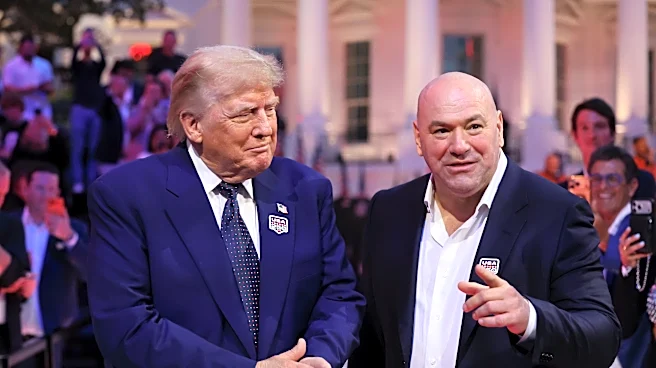
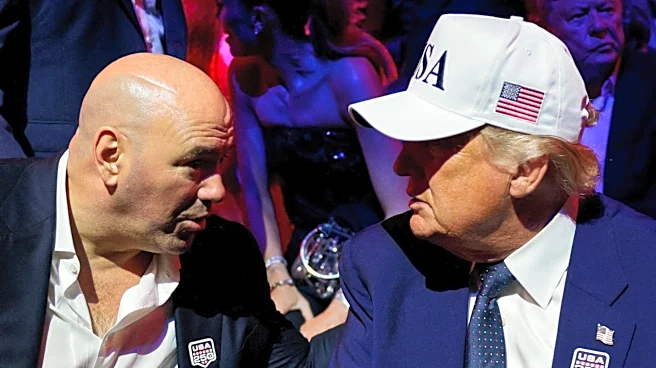
On Nov. 7, four days after the midterms and a day before the Sunday talk shows, he floated the idea of the Ultimate Fighting Championship CEO Dana White as a potential White House press
secretary in a Truth Social post. The next day, Trump reversed course, saying he was "only kidding" when he announced that he had offered White the job.
But Trump's initial announcement that he had offered White the press secretary job dominated the news cycle over the weekend. Breathless coverage of the possibility of White behind the lectern at the James Brady Briefing Room served as an effective counterprogramming to pundits dissecting the midterms and Democrats celebrating their victories.
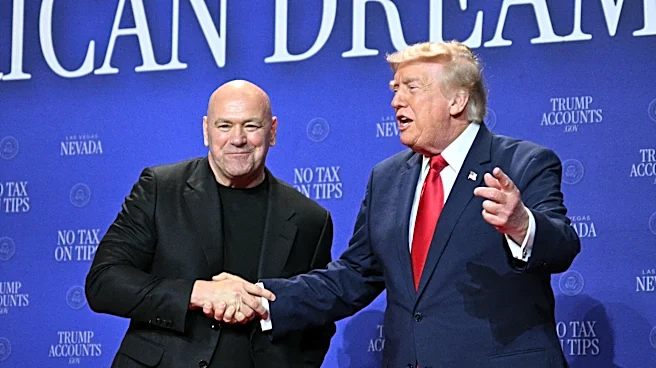
"We were having a very bad press day," Trump admitted on Nov. 9 after he made the surprise announcement on Truth Social. "And I said - I don't know why - I thought of his name. He's been my friend for a long time. I said, 'You know, I think I'm going to get Dana White to be my new press secretary.'"

'On a construction site, Trump is the one running the conversation'
White wasn't Trump's only pivot away from the election results.
He took reporters to a construction site the day after the midterms and announced the departure of his chief of staff, naming the person who would fill the position.
His first real media availability the day after the midterms, when the Republican Party lost both the House and Senate to Democrats by wide margins, was a tour of the under-construction White House ballroom. He talked about chandeliers, thick steel beams, marble floors and kitchens.
"It was the most telling, pathetic and symbolic presidential sessions in history," said Jeffrey Engel, founding director of the Center for Presidential History at Southern Methodist University in Dallas. "This was the day after the American people said we're upset because gas prices are too high and groceries are too high. When people are cornered and scared, they usually fall back on first principles. And Trump's first principle is to change the narrative to be about him."
Every time there is a conversation about the ballroom or White, Americans are not having talks about gas prices, said Engel, who has authored or edited 13 books on American foreign policy.
Molly McPherson, a public relations professional who specializes in crisis strategy, said Trump took the press to the ballroom construction site because he loves to discuss what he builds, not what voters think he's tearing down.
"On a construction site, Trump is the one running the conversation," she said.
'On reality TV, there’s no bad episode, only a boring one'
On Nov. 6, Trump announced the departure of Susie Wiles, his chief of staff, and elevated Stephen Millerinto the role. By Nov. 7, Trump had trumped White for White House press secretary, a position that has remained vacant since the ouster of Katie Zacharia, whose 5-day tenure in October set a record in Trump world.
The headline-grabbing question, "was Trump joking or was he serious?" dominated the news cycle.
"What we’re seeing now is a rerun of 'The Apprentice'," McPherson said. "On reality TV, there’s no bad episode, only a boring one. When the ratings drop, you bring in a new cast member and fire somebody - that’s White and Wiles."
And of course, Miller.
White, for his part, fed the media frenzy by saying he was taking a flight from London to meet with Trump. The Nov. 9 meeting was one that had been scheduled earlier.
McPherson said Trump effectively changed the conversation.
"Three days of headlines he picked himself, none of them about the midterms," she said. "And Dana White sells fights, so the message was clear: We’re in a fight."
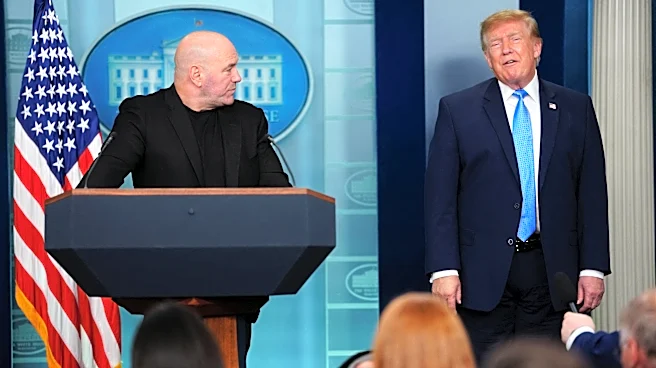
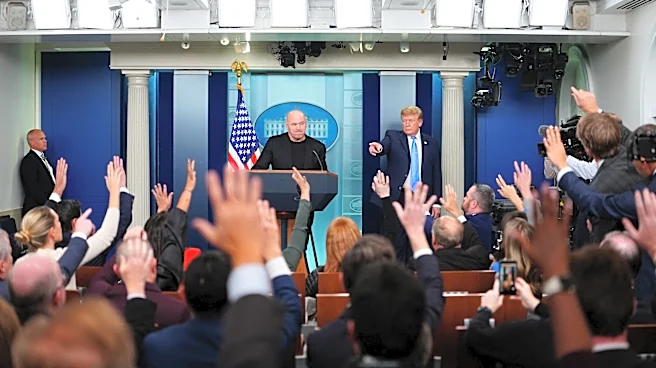
The meeting with Trump and White was closed to the press. At 4:36 p.m. ET, the White House announced a briefing with a 2-minute warning and no prior notice. The briefing room, which is normally jam-packed with reporters, had many empty seats.
Trump took the podium at 4:41 p.m. ET and said he planned to introduce a guest. After remarks on the Iran war, during which he said the United States was seeing momentum toward the end of the conflict and that it would end "fairly soon," Trump invited White to take the lectern.

The faux news conference began with White asking, "Who has the first question?" and declaring he had "zero political aspirations."
The session ended around 5:15 p.m. ET with Trump saying he wanted to ask White the "big question": "Dana, would you like to be press secretary of the United States of America?"
After White turned down what Trump said was a joke offer a day before the news conference, Trump responded: “I am devastated to hear this.”
This was just week one of the lame-duck phase of Trump's remaining two years as president. Asked what she thought the rest of the term would look like, McPherson had a prediction:
"Trump isn’t looking for approval. He's looking for audience," she said. "Look for less policy and more headlines. I think this will be two years of spectacles."
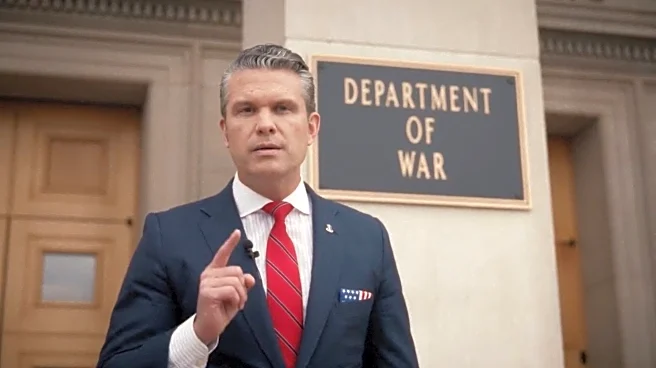
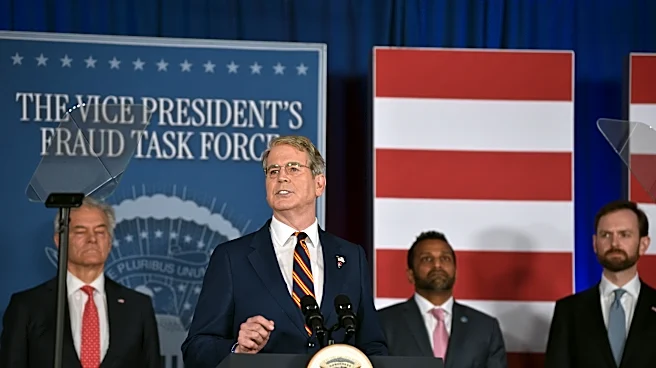
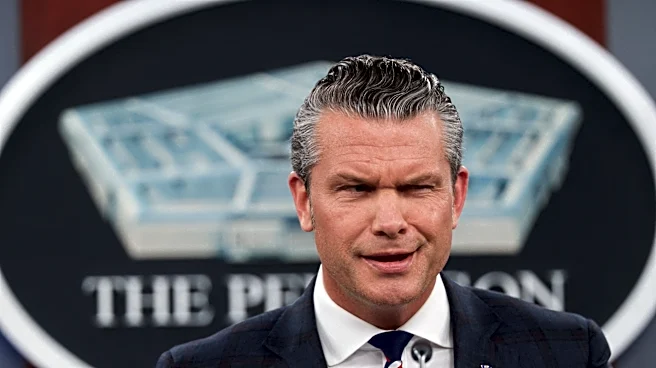
Indeed, Trump promoted a Nov. 10 news conference by Pentagon chief Pete Hegseth, whose looks he has frequently described as "central casting."
"Great job by Pete Hegseth," Trump wrote on Truth Social, sharing the video of Hegseth, who has faced calls for impeachment. "A MUST SEE!"
Swapna Venugopal Ramaswamy is a White House correspondent for USA TODAY. You can follow her on X @SwapnaVenugopal.
This article originally appeared on USA TODAY: 'Must See TV': Trump leans into 'spectacles' as he enters lame-duck phase