







You eat healthy, work out and feel great. Then, the intrusive thought: What if a mysterious disease is lurking somewhere in your body? Wouldn't you want to know?
You visit a futuristic, fresh-smelling wellness clinic and shimmy into a hospital gown. You lie down on the table, and a machine scans your body for any hidden problems. It spits out a shocking answer: You have a brain tumor, and thank goodness we caught it, because you were going to die and now we can take it out and save your life.
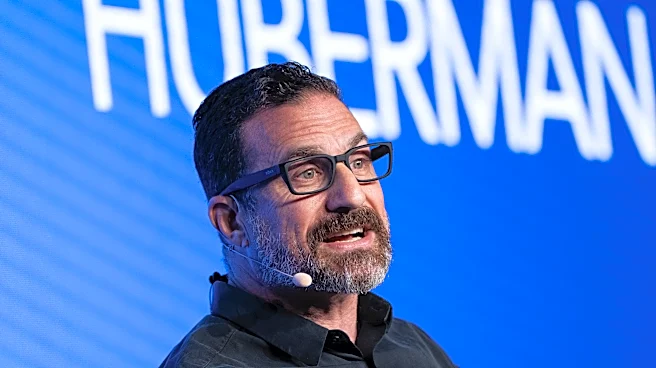
This experience is what many full-body MRI proponents tout as a success story. If you book one of these scans, you could save yourself a world of hurt later. Andrew Huberman, a neuroscientist, professor and influential podcaster said as much on Aug. 1.
"The
whole body MRI thing is controversial for obvious reasons," Huberman wrote on X earlier this month. "It’s costly & there are a lot of false positives. But I have neurosurgeon friends who tell me they do life-saving surgeries every month b/c people got full body MRI merely b/c they curious & found operable issues."
Huberman didn't immediately respond to request for comment. He is a scientific advisor for Function Health – a company that offers full-body MRIs, among other health care services – from which he "receives financial compensation" and "other sponsored content," according to a disclaimer on his website.
The whole body MRI thing is controversial for obvious reasons. It’s costly & there are a lot of false positives. But I have neurosurgeon friends who tell me they do life-saving surgeries *every month* b/c people got full body MRI merely b/c they curious & found operable issues.
— Andrew D. Huberman, Ph.D. (@hubermanlab) August 1, 2026
Physicians piled on Huberman's post with a mountain of additional context, with some throwing cold water on his claims. "Neurosurgeon here," Dr. Sanjay S Dhall, of UCLA, wrote on X. "This is hogwash." "I have never once operated on any incidental 'life saving' lesion found on a whole body MRI," added Dr. Anthony DiGiorgio, associate professor of neurological surgery at UCSF.
Internal medicine physician Dr. Brandon Luu offered a nuanced take: "The fact of the matter is that I have also watched many people die of cancer who may have been saved had it been caught sooner. There's no easy answer here."
"As a neurosurgeon, there are very few things we operate on if they are truly asymptomatic," DiGiorgio told USA TODAY in an interview. "Unruptured intracranial aneurysms are probably the only one. Even then, the data on number needed to treat for treatment to be effective is extremely difficult to determine."
Research shows these tests often find something, but much less often find actual disease. One study in 2020 found that 95% of asymptomatic patients had some type of "abnormal" finding, but just 1.8% of these findings were indeed cancer. Research has varied on just how many incidental findings occur from these tests.

In general, "whole body MRI is in its clinical infancy," Dr. Manjiri Dighe, professor of radiology at the University of Washington School of Medicine, previously told USA TODAY. "While it is noninvasive and highly sensitive, it lacks the large-scale longitudinal data needed to prove that it saves more lives than it complicates through overdiagnosis." With low availability and high cost, for the average person, it remains a luxury item not an "evidence-based medical necessity," Dighe says. The tests range from several hundred to several thousand dollars, depending on which sections of the body are scanned, and are not covered by insurance.
In clinical practice, "I don't personally see a lot of incidental lesions that are found on whole body MRI that I end up intervening on," DiGiorgio adds. "But I probably have colleagues that do, and so I don't want to say it doesn't happen ever, but I think it's incredibly rare."
Overall, DiGiorgio is skeptical that full-body MRIs will meaningfully improve public health but says people can certainly pursue it if they're willing to pay for it.
"The people who tend to take these steps are usually pretty healthy to begin with," he says. "So if somebody's going to spend all this money on a whole-body MRI or an AI longevity subscription, they're probably someone that's looking after their own health."
Dr. Francis Deng, associate professor of radiology and radiological science at Johns Hopkins University of Medicine, cautions that "popularizing direct-to-consumer whole body MRI without medical indications will only siphon away critical medical resources in this country," however.
What might actually improve health care in the United States includes fixing access to it in the first place, DiGiorgio says. That's something all this innovative health tech has yet to solve.
This article originally appeared on USA TODAY: He posted about this controversial medical test. Then came the backlash