
WASHINGTON — Americans are seeing taxpayer-funded television ads promoting President Donald Trump, government checks are hitting nearly 1 million mailboxes across the country and federal agents are combing
through voter rolls as a midterm election marked by Trump's relentless efforts to boost Republicans' chances enters its final weeks.
Facing a challenging midterm landscape for the GOP, Trump has taken extraordinary steps targeting the election at every turn. The president is harnessing the power of the federal government in ways that election experts say are unprecedented, raising questions about what could come next from a leader who sought to overturn the 2020 contest he lost, was impeached and indicted over it, and now is back in the White House for another consequential campaign cycle.
“I think the president is trying to use all of the powers at his disposal to control the election results, and almost all of those efforts are illegal, but that has not deterred the administration,” said Adav Noti with the Campaign Legal Center, a nonpartisan watchdog group that has fought some of the administration’s actions in court.
Trump’s midterm moves include a rare mid-decade redistricting effort to carve out more Republican-leaning House seats, executive orders creating new voting restrictions and directing the Department of Homeland Security to look for noncitizens on the voting rolls. He's regularly accused Democrats of cheating to win elections, without presenting evidence, and sowed doubts about the integrity of U.S. elections in a prime-time speech in July.
Igniting accusations of bribery, Trump promised to give every U.S. adult $5,000 if Republicans keep control of Congress. The Trump administration this week started sending $500 refund checks to Americans he says were overcharged under the Affordable Care Act by the Biden administration. And Trump on Oct. 2 announced plans to send checks of nearly $100 to more than 20 million seniors by diverting money from the $2 billion Medicare Improvement Fund, which Congress created in 2008 to improve Medicare services.
Trump is also spending millions of government dollars to air ads promoting himself and his agenda ‒ including one that's identical to an ad he ran during his 2024 campaign ‒ despite federal laws prohibiting public funds for political advertising.
The White House, along with most Republicans, have defended each lever Trump has pulled, arguing, for example, that his attempts to purge noncitizens from voting rolls and restrict mail-voting are meant to boost election security. The administration calls the pro-Trump commercials "public service announcements," not political ads.
In response to an inquiry from USA TODAY about Trump's actions around the midterms, the White House pointed to previous statements by the president and the administration on his efforts.
"President Trump is the unequivocal leader, best messenger, and unmatched motivator for the Republican Party, and he is committed to maintaining Republican majorities in Congress," said White House spokesman Davis Ingle.
Democrats are worried Trump could turn to even more aggressive ways to influence the Nov. 3 election.
"I think he feels he is unconstrained," Sen. Mark Warner, D-Virginia, told USA TODAY. "I think he can and would try anything."
Despite the flood of activity, Americans won't see major changes to the way they cast ballots as they begin to head to the polls for early voting this month. Courts and Congress have denied Trump his most-sought election reforms, including requiring proof of citizenship to vote and curbing mail voting. Trump so far has failed to change the trajectory of the election as Republican candidates struggle in key races that could decide control of Congress.
The president's approach represents a significant departure from the norms around elections, though, one that experts worry is undermining the democratic system. Democrats accuse the president of creating mistrust and confusion heading into the midterms, setting the stage for potentially challenging the vote.
Prominent Trump supporters have floated everything from sending Immigration and Customs Enforcement agents to the pollsto declaring a national security emergency in the final weeks of the election, as the president continues to stoke unfounded concerns about widespread fraud. Trump didn't rule out either scenario in a Sept. 28 interview with Time magazine, or the possibility of invoking the Insurrection Act, which allows the president to deploy the military on U.S. soil to suppress civil disturbances.
Trump rejected the results of the 2020 election, culminating in the Jan. 6, 2021, storming of the U.S. Capitol by a mob of his supporters.
“The last time he lost an election he incited an insurrection so I don’t think that he deserves the benefit of the doubt on anything,” said Sarah Matthews, who served as deputy press secretary during Trump’s first administration. "I wouldn't put anything past him in terms of what he will do between now and Election Day to try to interfere, and what he will do in the aftermath."

‘We have to turn this around’
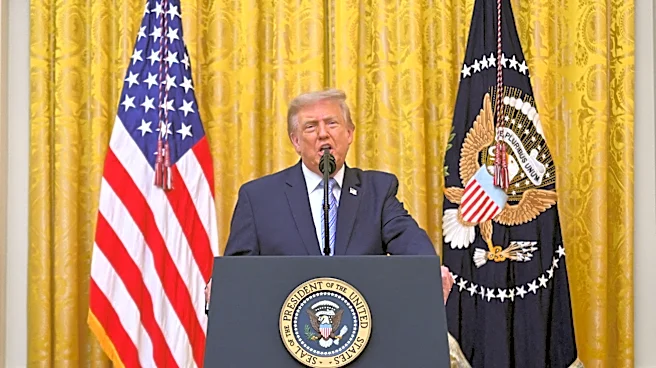
Trump lamented the dismal midterm environment for the GOP during a Sept. 30 White House event.
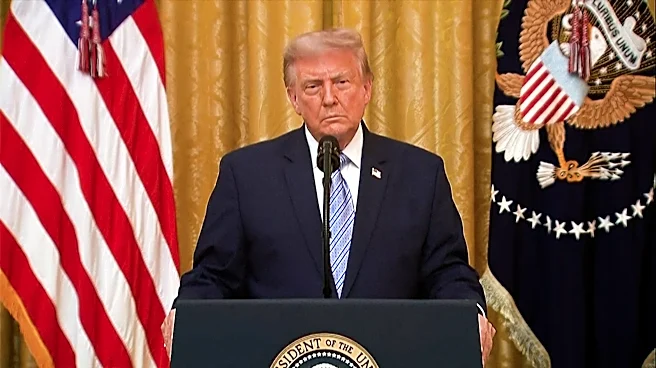
“We have to turn this around,” Trump told a group gathered to celebrate Hispanic Heritage Month. “For some reason presidents, Democrat or Republican, they just don’t win the midterms. I don’t know why.”
Midterm elections often see voters push back against the party in power. Trump has added to the GOP's midterm woes with an unpopular war in Iran that has spiked energy prices and contributed to an overall increase in inflation as voters indicate cost of living is a top concern. His approval rating - which has hit a record low in recent polls - is threatening to drag down GOP candidates.
Republicans have been on defense in deep red states such as Iowa, Kansas, Texas and Alaska that Trump carried by double digits, with the average of recent polls showing Democrats ahead in nine key Senate battlegrounds. Forecasts indicate Democrats have a good chance of winning control of the House and possibly the Senate, leaving Trump potentially facing down a hostile Congress during his last two years in office.
Yet even as Trump acknowledges midterm contests typically are challenging for an incumbent president, he has accused his opponents of trying to cheat, echoing his false claims that the 2020 election was rife with fraud.
"They're cheaters, they cheat like hell," Trump said of Democrats during an Oct. 1 rally in Oklahoma.

Democrats and voting rights groups say Trump is the one trying to “rig” the election. They have fought him court.
The president began focusing on the next election shortly after he took office, signing an executive order early last year with new voter ID rules to prove citizenship.
Voting rights groups sued, and judges blocked key provisions in the order.
Trump tried again a year later with an executive order exerting federal control over mail ballots. The Supreme Court weighed in to stop the U.S. Postal Service from implementing the new mail ballot rules for this election. Trump also failed to get a voter ID bill through Congress, despite making it his top priority and constantly haranguing Republicans to approve the measure, saying the party wouldn't lose an election for the next 100 years if it passes.
“When the president has actually tried to enact policy, he’s been blocked every time,” said David Becker, who runs the nonpartisan Center for Election Innovation & Research.
Becker called the Trump administration’s record in election cases this cycle, including unsuccessful efforts by the Department of Justice to obtain states' complete voter rolls, a “remarkable record of failure.” The election is proceeding smoothly, he said, but added that “this should not be normalized.”
“We have never before had a federal government that went from being a partner to the states as they ran secure elections to being a potential adversary, and that’s what we’re seeing in 2026,” Becker said.
Redistricting and accusations of a $5,000 'bribe'
Even as Trump’s efforts to change voting rules fall flat, he has leveraged his power in office and within the GOP to influence the midterms in other ways.
"Trump has emptied out the tool shed looking for tools to manipulate the election," said Harvard University government professor Steven Levitsky, co-author of the book "How Democracies Die."
Trump launched an unusual mid-decade redistricting push, pressuring elected officials in Republican-controlled states to redraw House districts to favor the GOP. Democrats responded with their own redistricting effort in states they control, but the GOP was able to carve out more seats, which could blunt a potential blue wave.
Redistricting typically occurs every 10 years when new Census figures are released detailing the previous decade's population changes. Trump turned to it early this cycle, though, and has continued to look for ways to gain an edge in the election.
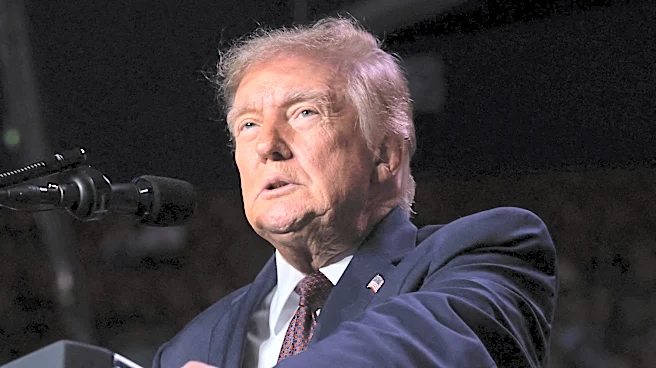
Speaking during the Republican Party's first-ever midterm convention last month, Trump floated an extraordinary plan to pay every adult American $5,000 if Republicans maintain control of Congress. Democrats and some prominent MAGA voices immediately criticized the move as a "bribe."

The president has announced other plans to send taxpayers' checks that haven't materialized, but one is going forward. The federal government begansending out $500 Affordable Care Act rebate checks to nearly one million Americans last week, putting money directly into the hands of potential voters across 30 states as Election Day approaches.
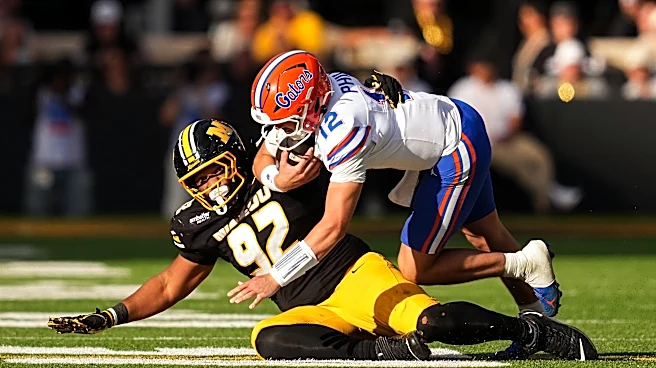
As the checks started going out, the government also has been airing taxpayer-funded pro-Trump ads using $20 million from the Department of Homeland Security. The latest one, which aired during NFL football games on Sept. 27, is narrated by Trump and identical to a commercial he campaign ran during the 2024 presidential election. The ad warns of a "final battle" to defeat "the deep state," Marxists and other "villains."
Trump defended the ads, saying they aren't promoting himself or a candidate and are "for the country."
"When I talk about making American country, about making our country great, that's a countrywide ad. That's an ad for the spirit of our country," Trump said.
Warner said the ads are evidence Trump feels uninhibited, describing the administration as "totally lawless."
"If he gets away with that, the idea that he will take that and say he is untouchable, nothing would be more ironic than if in our 250th year we had a totally corrupted election," Warner said.

Meanwhile, the Trump administration has been ramping up efforts to investigate noncitizens registered to vote, with 160 people arrested as of mid-September, according to Homeland Security Investigations official Matthew Millhollin. Voting advocates note the cases represent a small fraction of the population, and accuse the administration of trying to sow doubt about the election.
Senate Democrats sent Department of Homeland Security Secretary Markwayne Mullin a letter on Sept. 25 saying "Your actions as Secretary are intentionally undermining Americans’ trust in the 2026 midterm elections and appear to purposefully disenfranchise eligible voters."
"Taken together, these actions amount to an illegal attempt to federalize the administration of the upcoming midterm elections," the letter reads.
Trump's debunked allegations about the 2020 election are even getting a fresh look from federal investigators, who raided a Georgia elections office earlier this year.
The president's laser focus on potential election malfeasance was punctuated by a prime-time address he delivered in July, where he alleged voting systems are vulnerable and warned other nations could interfere in U.S. elections.
The efforts add up to a broad, months-long push by Trump aimed at midterms and election operations.
"We've never seen anything like this before," said Noti with the Campaign Legal Center, adding: "The issue of the president of the United States using the powers of the presidency to try to control the election. That is a new development with this election."
Election observers are bracing for what could come next.
'I don't rule anything out'
In August, conservative media figure Wayne Allyn Root, as he interviewed Trump, suggested the president declare a national emergency to implement voting changes around the midterm elections.
“Let me just say that stranger things have happened, OK?” Trump responded. “I’ll leave it at that.”
Root isn't the only Trump supporter talking about extreme election measures. Peter Ticktin, a Florida attorney who represented Trump in a 2022 lawsuit the president brought against former Democratic presidential candidate Hillary Clinton, told USA TODAY that martial law could be called for in a "nightmare" election scenario, which he described as Trump and Vice President JD Vance potentially being removed from office by a Democratic-controlled Congress.
"In that eventuality that the election is rigged - we have evidence to show that it was rigged - and it would involve a transfer of power or potential transfer of power, that it might be necessary to implement martial law," said Ticktin, who told USA TODAY he had lunch at the White House with Trump over the summer but hasn't spoken to him about the possibility of martial law.
Steve Bannon, a close Trump ally who served as White House chief strategist during the president's first term, said in February that "We're going to have ICE surround the polls come November."

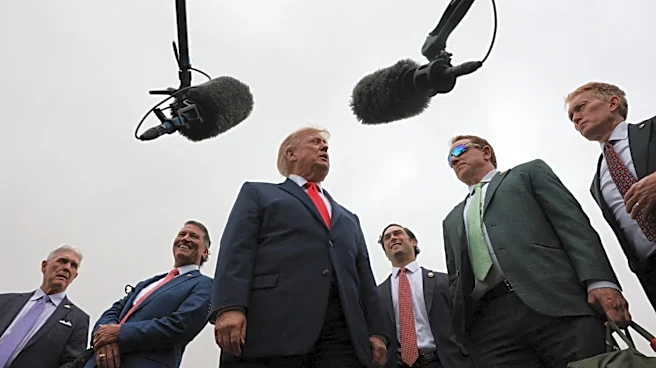
Trump addressed some of these scenarios in a Sept. 28 Time magazine interview. He didn't rule out the possibility of declaring a national emergency around the midterms or even invoking the Insurrection Act, an 1807 law that allows the president to deploy the military in the United States to quell civil unrest. Trump also said he hadn't thought about sending ICE agents to the polls, but didn't dismiss the idea.
"I don't rule anything out or in. We'll see," Trump said of declaring a national emergency, adding that he's never invoked the Insurrection Act but "I could use it. A lot of people think I should use it sometimes."
In response to concerns from Democrats, Joint Chiefs of Staff Chairman Gen. Dan Caine, in a Sept. 1 letter to Sen. Elissa Slotkin, D-Michigan, said the military has no plans to send troops to polling places in the November midterm election, nor has he received such an order from Trump.
Caine, the nation's highest-ranking military officer, was responding to a letter from Slotkin seeking confirmation that the military would not send troops to the polls or seize any election materials. She pointed to comments from Trump in which he did not rule out sending the National Guard or ICE agents to polling sites.
"I'd do anything necessary to make sure we have honest elections,"Trump said in May in response to a question from a reporter.
Becker, with the Center for Election Innovation & Research, said he doesn't worry about the election being disrupted, predicting any effort to interfere before or after votes are cast would fail to withstand legal scrutiny, but added, "I get why people are worried."
"We've never seen anything like this before," he said.
Contributing: Josh Meyer of USA TODAY
This article originally appeared on USA TODAY: Trump takes extraordinary steps to target midterms, alarming critics