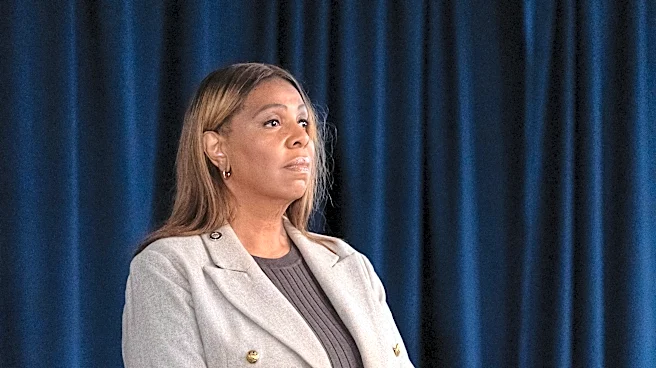









Elizabeth Chambers receives dozens of direct messages from physical or sexual abuse survivors and from the families who witnessed it from afar. When she's inundated by her social media, she redirects users to her inbox, but she says, "I can't even read some of these."
"You wouldn't even imagine the extent that people go to to hurt other people and the evil that's in this world, how people are preyed upon, how it repeats itself somehow," Chambers, 44, tells USA TODAY.
Since leading Investigation Discovery's series "Toxic," which delves into stories about intimate partner violence, domestic abuse, coercion and manipulation, this has become her reality. Prior to its launch in 2025, Chambers navigated a decade-long marriage to Armie Hammer, the "Call
Me By Your Name" star who was accused of psychological and sexual abuse in 2020. Hammer has denied the allegations, and following a sexual assault investigation, prosecutors dropped criminal charges against himin May 2023, after finding insufficient evidence to support an accuser's claims of rape and physical abuse.
Chambers, who filed for divorce from Hammer in July 2020, says she's "over the conversation" about Hammer and would much rather "pay attention to the real problems that we have systemically in society that don't include one person who made a series of bad choices."
"I've been divorced for six-and-a-half years," Chambers says. "Yes, a divorce was the impetus for this show, but we're doing such meaningful work that is helping so many people."
In the latest and final episode, "Toxic: What Happened in the Haight House" (now streaming on HBO Max), Chambers reexamines the 2023 domestic violence case following a Utah man, Michael Haight, who allegedly killed his wife Tausha, her mother Gail and his five children before turning the gun on himself. The two-hour special also discusses the lethality assessment protocol, a questionnaire that helps people identify the warning signs in a toxic relationship.
In an interview with USA TODAY, Chambers talks about co-parenting with her ex-husband, breaks down the lethality assessment and poses questions to the seven men involved in the Cornell rape case.

Question: You split from Armie Hammer after a decade of marriage, following allegations about his sexual assault and physical abuse. When you look back, how did you feel after the accusations surfaced? Elizabeth Chambers: I won't say shame. I was more embarrassed because I didn't ask for that, and I didn't have any control over it. If there's one thing I've always been, it's really confident in myself, and I've always known I can't control someone else. You have to relinquish that when you're in a marriage, right? That was always really scary for me because you're holding the most meaningful thing, which is your family.
I was always so afraid of something happening that I have to say that part of me almost felt not relieved, but I could breathe because I wasn't trying to hold something together that I couldn't control. So it was embarrassing, but I also knew that I didn't have to try so hard to keep it together.
You have two kids, Ford and Harper, with Hammer. What's their relationship like with their father these days? How is co-parenting going?
Nobody needs a girl or a boy with daddy issues, you know? I believe everyone should think that their dad's a superhero, and they do. They have a really great relationship with him. He's super present when he's with them. Psychology also tells us all kids really need is one anchor parent. And while we've had trials and tribulations, they know they have that in me no matter what. They have a great relationship with their dad, with their grandparents, his mom is staying with my kids right now at my house while I'm in New York. So, they just need love.

What's your relationship with Hammer like today?
We're not the best of friends, and like any relationship, sometimes you're closer, sometimes you're not. Sometimes you're annoyed.
A former Cornell University student, using the pseudonym Jane Doe, filed a civil lawsuit Sept. 18, alleging she was gang raped at a fraternity party. Given how your projects often deal with domestic violence or sexual abuse, what was your reaction to the Cornell rape case?
There are so many stories like this all the time and nobody seems to care, which is incredibly infuriating for women and for people who have suffered at the hands of abusers. I'm encouraged by the attention. I think it's always hard because there are three sides to every story. And while we're very victim-centric and pro-victim on our show, I want to know about the boys' families. I want to know what their dads are like to their mom. We see this in the Yeardley Love case that is coming up. Yeardley was a UVA [University of Virginia] lacrosse player. My sister actually played lacrosse with her at UVA, they were teammates, and she was killed by her UVA lacrosse player boyfriend, George Hugueley. When you look at George's family, it makes sense. His mom was abused by his dad. He was raised with no respect for women.
While everyone should be innocent until proven guilty, I would love to know what the dynamics are of their family and their family history to really get an understanding of how they respect and treat women and who they are at their core. Because right now, it's awful, but all we don't have insight into what's happening.
With your latest episode of "Toxic" centered around the Haight family, what makes this story unique from other criminal cases around family disputes?
This is not a story of a man that snapped because he was out of money. This was not a man that snapped because he didn't take his medication. Of course, those do exist, but this is actually the culmination of generations of abuse, of domestic violence, of violence in general and decades for Tausha and the kids of abuse. That's a far less sensational headline, but that is the reality. And that's what people need to know is that this is the result of years, decades … of no boundaries, bad behavior, and no consequences.
What I found most disturbing about "Haight House" is when the family began to notice that the guns were missing. Then a couple of days later, the whole family is found dead. Was there a way that we could have saved the family?
We need to make the term and the concept of a lethality assessment household terminology. At any stage in your relationship, you take that test, you score it and you're in the lethal range [or] if you're in the mid-lethal range, get out of there. Just having those questions, maybe not even on a piece of paper, but in the back of your head all the time. Am I being this? Am I being this? Am I being this?
I know it almost feels like we've been given a disservice by not having this shoved down our throats. It almost feels like, as women, this should have been taught to us in school, not the other agenda of the patriarchy, but that's just my opinion.
This interview has been edited and condensed for clarity.
Our journalism takes time, expertise and resources. Your support funds our reporting and allows us to continue bringing you original journalism. Please subscribe today.
This article originally appeared on USA TODAY: Elizabeth Chambers talks Armie Hammer, Cornell 7 and what all women should know