






A unique new Colorado library features natural beauty, outdoor adventures and, yes, books, too.
Organizers say it's a first-of-its kind spin on a model that could inspire other locations around the nation. The Anythink Nature Library features nature trails, gardens, camping gear, and, this being Colorado, boulders for young kids to climb and clamber over, letting them safely explore and take risks.
And, at the end, the kids can even play in a mud pit ‒ what kid doesn't love mud?
Since its opening in early August, 50,000 visitors have made "joy a daily presence in the library," said Maria Mayo-Peaseley, the library's branch manager.
The Anythink Foundation, a nonprofit serving Adams County, Colorado (just north of Denver) that includes seven other
local library branches, is behind what its executive director calls a first-of-its-kind library in the nation.
"Our vision was to help people feel their place in nature," Executive Director Mark Fink told USA TODAY. "It's a very individual experience, so we want to provide visitors with opportunities to borrow equipment and use the knowledge they can gain here, and the gear we provide, to get outside and have a more enriched experience."
A connection to nature, near home
The Anythink Nature Library in Thornton, Colorado, has all the things you might expect in any public library: books and computers, printers and community spaces, Wi-Fi and places for studying.
Adams County is home to more than 550,000 people, according to 2025 U.S. Census estimates, and nearly 10% of its residents live in poverty. Though Colorado is known for its natural beauty, for many families, its cultural institutions, mountains and parks aren't easily accessible, Mayo-Peaseley said.
"It’s a trek to get to Denver or the mountains," she said. The Nature Library is open and accessible and free to anyone living in the area, like any other public library.
The gardens on its 15-acre campus aren't just for looking at: They're meant to engage visitors to learn more about planting, growing and nurturing native flora. There's a trail loop for a light walk, but that also connects to a 140-acre trail system.

"We wanted to connect people with nature, the prairie grasses and other nature in their backyard," Fink said.
The mountains are about 45 minutes away from Thornton. The area is fully developed with single-family homes and apartment complexes, home to many people who've been priced out of Denver, Mayo-Peaseley noted. Many residents are of Latino descent, and the library has Spanish speakers on staff.
"We know there are a lot of kids here have never been to the mountains," she said.
The library has books on plants, trees, animals and nature, but it also has tools and materials to help people engage with nature without having to buy expensive gear: camping equipment, photography equipment, wildlife cameras, GPS devices, binoculars and kits for bird watching, bug collecting and gardening.

"Just the other day, a customer asked, 'What's a bear bag?'" Mayo-Peaseley said. "She'd seen it hanging up, but she'd never been camping, so we talked about the need to protect your food from animals, what it's like to actually go camping, and I helped her set up a reservation."
A dark room, a library highlight
Fink said the community was brought into the design process for the library, including leaders from local Indigenous groups who shared their cultures' ideas around reciprocity and deep connections to the natural world.
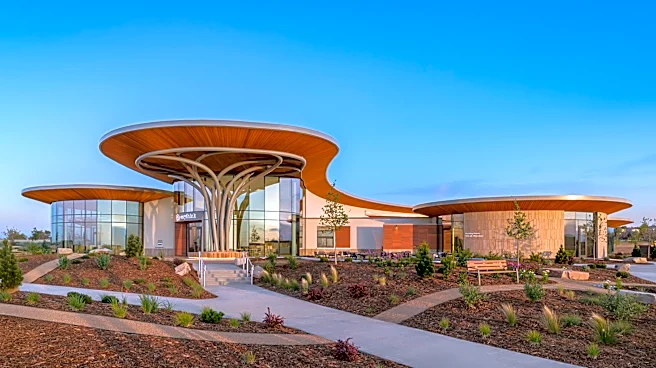
The building's design is meant to evoke blades of grass blowing in the wind; a dark room, one of the library's most popular features, mimics a starry night sky and a campfire circle. That space has hosted storytelling, mindfulness sessions and sound baths.

"We had to build trust with each other," Fink said. "(The Indigenous groups) had some bad experiences in the past, and we didn't want to appropriate their ideas; we wanted it to be authentic," he added, admitting that at times "it has not all been smooth. There were lessons learned for us."
Thornton residents were invited to create dioramas to represent their desired experiences with nature, and more than 150 of them did so.
The $43 million library is "a great example of a successful local government at work," Fink said, at a time when politics, even locally, sometimes seem hopelessly polarized and paralyzed. "We proposed this new, wacky idea, but we were transparent with our ambitions ... it really paid off."

Mayo-Peaseley said she's already heard from other library administrators, including from as far away as New Mexico, inquiring about how they can help their own patrons engage with nature.
But the kids, she said, have given the most honest feedback: "The smiles have been so rewarding. The children are the ones leading the charge, diving into the mud pit, climbing boulders, toddlers pulling their grown-ups around the trails. The intergenerational learning is taking off, and nature brings out that connection.
"The kids get it," she said. "They look around, say 'Wow!' and they're off!"
Phaedra Trethan is a national correspondent for USA TODAY, writing about history and Americana. Contact her by email at ptrethan@usatoday.com, on X @wordsbyphaedra, on BlueSky @byphaedra, or on Threads @by_phaedra.
Contributing: Trevor Hughes
This article originally appeared on USA TODAY: Unique new library features rocks and mud ‒ and some books, too