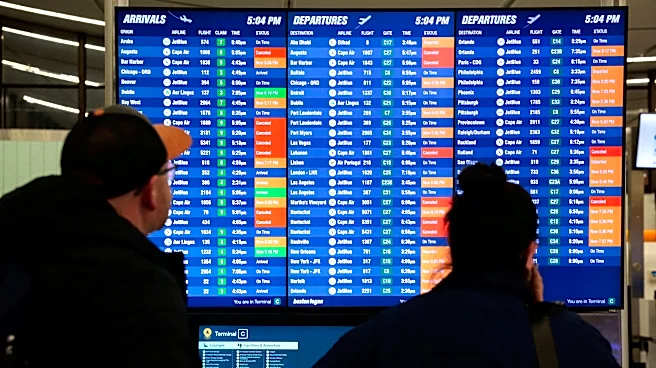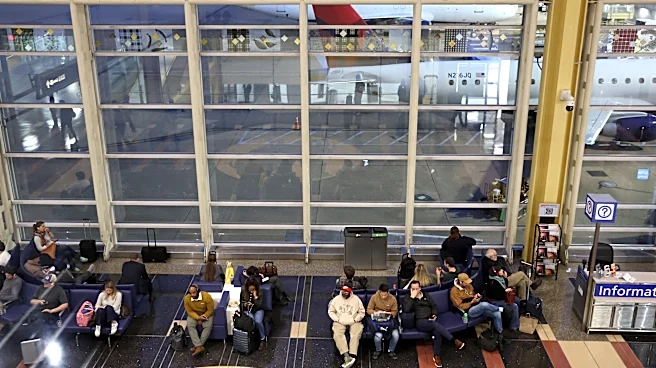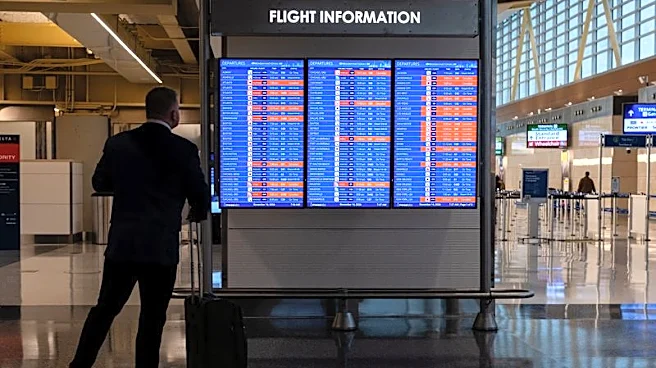








U.S. air travel remained disrupted on the morning of Nov. 15 after more than 15,000 flights were canceled in the last two days following the nationwide federal ground stop.
But officials say the air traffic system is stable, and airline schedules should largely return to normal by the night of Nov. 15.
"The system is stable and we’re returning to normal operations," the FAA said on X late on Nov. 14. "We ask for your patience as our airline partners work to get you to your destination."
In all, 875 flights scheduled for Sunday were already canceled, online tracker FlightAware said. Another 1,904 were delayed.
What's the latest on flights?
As of the morning of Nov. 15, the Federal Aviation Administration National Airspace System dashboard reported no active en-route events, which
is a strong indication that the nationwide communications failure last week is no longer constraining the national system, Reuters reported.
Local traffic management programs are still possible later today, including in the Dallas-Fort Worth, Austin, San Antonio, Denver, Houston, San Diego, Seattle and San Francisco areas, according to the FAA. Those are airport and route-specific contingencies, not another nationwide ground stop.
At two major hubs, conditions this morning look relatively normal: JFK and Chicago O'Hare were each reporting general arrival and departure delays of 15 minutes or less, Flightaware reported.
How many flights have been affected?
Nov. 14 was extremely rough: FlightAware counted more than 6,400 U.S. cancellations and 8,000 delays by late in the day.
Nov 13: About 9,200 flights were canceled and 7,500 delayed after the FAA halted essentially all U.S. departures for nearly five hours.
That means roughly 15,600 flights were canceled Friday and Saturday alone, before Sunday's cancellations are included, according to Reuters.

What caused the shutdown?
U.S. Transportation Secretary Sean Duffy said Nov. 14 that the preliminary investigation points to work by FAA contractor L3Harris during a routine upgrade from copper wiring to fiber. A newly installed or modified router began flooding other routers with data, disrupting communications and radar information at air traffic control centers, Reuters reported.
Investigators are determining whether the underlying problem was equipment failure or contractor or installer error.
What is L3Harris?
The router work was being done by contractor L3Harris Technologies, which is headquartered in Melbourne, Florida, Duffy said.
L3Harris manages the FAA Telecommunications Infrastructure, supporting about 45,000 daily U.S. flights and connecting more than 4,400 facilities, according to the company's website.
Among its tasks: converting decades-old copper wire connections with modern high-speed networks.
"L3Harris has been modernizing the communications infrastructure supporting the National Airspace System in close coordination with the FAA. With safety and reliability as our highest priorities, L3Harris, together with its telco partners and the FAA, has completed more than 70% of the planned airspace communications conversion from legacy copper wires to a fiber optic system," the company said in a statement Nov. 14.
"We are supporting the FAA in its investigation to understand the conditions that led to the Nov. 13 ground stop of our nation’s air travel. L3Harris takes the nationwide ground stop and its impact on travelers, airlines and air traffic operations seriously."
The nation's aging air traffic control system has been a hindrance for years, as it relies on outdated telecom systems, including decades-old Compaq computers and replacement parts bought on eBay, Reuters reported. FAA Administrator Bryan Bedford has said outdated telecom copper wires should be completely replaced by September 2027.
Contributing: Mike Snider, USA TODAY
This article originally appeared on USA TODAY: Flight disruptions continue, but schedules to get back to normal: What to know