




The audiobook started unsuspectingly.
I was listening to “Country People” by Daniel Mason, which seemed to have a classic one-voice narration. But when I got to Chapter 4, a jaunty ditty started. A full cast of narrators joined in to act out townies on a radio show.
I'd been unsure whether to keep reading “Country People,” but these chapters hooked me. It made the story feel immersive, the side characters real.
That’s exactly why Alexandra Rainis, a 25-year-old social media manager who lives in Boston, hardly ever picks up a physical book. She’s an avid reader; she just prefers them dramatized. She didn’t like audiobooks until she wanted to reread “A Court of Thorns and Roses” by Sarah J. Maas and found GraphicAudio's dramatized version included
in her Spotify Premium subscription. She never looked back.
“It just brought books to life for me, where now I literally will wait for the dramatized version to come out,” Rainis says. “I'm definitely buying books less. I used to love physical books. I have a Kindle … but now I'd rather purchase the dramatized audio.”
Rainis loves the opening of a GraphicAudio read: “A movie for your mind.” She’s in good company.
Readers are increasingly looking for immersive audiobook experiences, with music, sound effects or full-cast narration. User demand for GraphicAudio titles grew by nearly 300% between 2023 and 2025, according to Becky Wyatt, a spokesperson for RBMedia, which owns GraphicAudio.
Publishers are responding enthusiastically. Audible recently hosted the world’s first bookless bookstore with a “storytender” behind the bar to give bespoke audiobook recommendations. Spotify now includes books in its annual Wrapped. And producers are ballooning timelines by several months to add elements that keep readers listening.
Audiobooks are becoming a movie between your ears
Audible finds that dramatized audiobooks are not overtaking traditional audiobooks but are complementing them, says Rachel Ghiazza, Audible’s chief content officer. Single-narration sales hold steady when a multi-cast version of the same story releases. But customers complete multi-cast installments at higher rates than single-narration audiobooks, particularly in the romantasy genre.
Though you could find fantasy on your TV, immersive audiobooks provide a similarly imaginative experience without the screen fatigue. Plus, they're easily consumed on the go.
“People are very hungry for spending their time well,” Ghiazza says. “These technologies that have allowed us to catch up with the creative ambition and the fact that people can bring this into time well spent around the real-life things they need to do, that's enhanced the experience so much.”
Full-cast audio is nothing new, but the frequency has changed, says Karen DiMattia, the senior vice president of audio production at Penguin Random House Audio. She recalls “Lincoln in the Bardo” by George Saunders, which won an Audie Award for its 166-cast audiobook in 2018.
But as they grow more popular, authors are requesting more full-production audiobooks. DiMattia says Penguin Random House audio consults authors on decision-making, especially casting, music and sound effects.
How audiobooks are ‘straddling publishing and entertainment’
Bigger audiobooks mean bigger productions.
A typical straight narration audiobook may take two to three months to cast, assign a director, record and edit, DiMattia says. Immersive audiobooks can take up to a year.
By the time it comes out in September, “Our Strange Duet” by Erin A. Craig will have been in the works for six to nine months. It’s a reimagining of “Phantom of the Opera,” so the audiobook will be as immersive as sitting in the theater. It contains a full cast, dramatized scenes and a selection of performances from Andrew Lloyd Webber’s musical. Many of the narrators appeared on Broadway as the characters they’ll reprise for the audiobook.
On Audible’s side, immersive audiobooks can breathe new life into a beloved book. These are a “pretty extensive lift to build,” says Ghiazza.
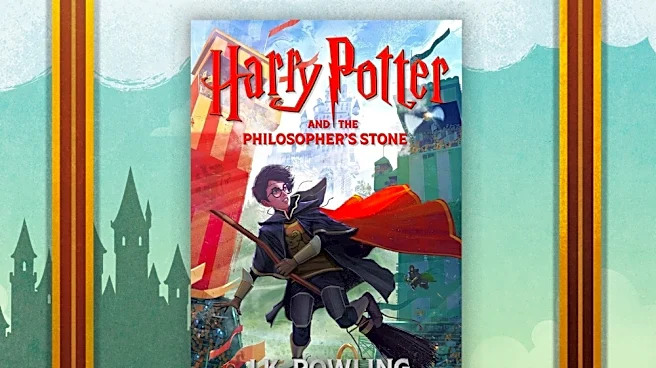
To re-record a new immersive Harry Potter audiobook, Audible looked at over 500 narrators during the casting process. The result was a mix of Hollywood bigwigs and newcomers. Hugh Laurie plays Dumbledore, Matthew Macfadyen is Voldemort and Keira Knightley is Professor Dolores Umbridge. Arabella Stanton, who will play Hermione in the upcoming TV reboot, voices her character for Books 1-3. Getting all of those people in the booth takes a lot of time.
Then there are the bells and whistles, like a 60-piece orchestra and unique sound qualities for each character. A London team dedicated to real-world sound capture recorded Britain's largest operating steam engine for the Hogwarts Express. And they use 360 audio to capture the sound dimension so that you can hear how much taller Hagrid is when he’s talking to Harry.

Demand for immersive audiobooks has turned production into “a pretty in-depth process, much more similar to what you would see for film and TV,” Ghiazza says.
“Whether you're listening to your earbuds on a plane or you're sitting in a Dolby room, we want to make sure that sound is really vibrant and comes through,” Ghiazza says.
The publishers themselves feel a similar Hollywood-ification.
“We're kind of straddling publishing and entertainment and with immersive audio, I would say it definitely tips a little closer to entertainment,” DiMattia says, of Penguin Random House Audio productions. “Many times I feel like we're definitely closer to a real TV production company or movie production company.”
Immersive audio can also help a smaller studio gain a cult following. Jeff Hays, USA TODAY’s 2026 “Voice of the Summer” and the narrator of the Dungeon Crawler Carl books, started his Soundbooth Theater in 2020 because he wanted “audio drama to become big again.”
As audiobook narrators become celebrities in their own right, he’s evolved to voice actor, director and producer. He’s currently rolling out “Immersion Tunnel” versions of "Dungeon Crawler Carl" with added audio elements in episodic format. Last year, when he recorded the crime novel “The Bones at Point No Point” by D.D. Black, he went out to the small town that inspired the book to record ambient sound.
“Audiobooks are competing against all other medias. We have to remember that. Why would people listen to this audiobook when they could watch Netflix?” he told USA TODAY earlier this year.
Beyond books, but enticing the same bookish listeners
The current landscape has allowed new audio ventures to emerge, too. Audio-erotica app Quinn is courting booklovers by tapping book-to-screen icons to narrate new stories.
While they wait for the new "Heated Rivalry" book from Rachel Reid or Season 2 of the series, readers can listen to Hudson Williams and Connor Storrie narrate “Ember and Ice,” a three-part erotica about two fae princes from rival kingdoms. Hot with anticipation for “Off Campus” Season 2? Listen to breakout stars Mika Abdalla and Stephen Kalyn narrate a best-friend’s-brother romance on the app.

Founder Caroline Spiegel tells USA TODAY they’re eager to cast stars who have a “young, female, rabid fan base” similar to BookTok. It’s like fan fiction, without waiting for the fans to write it.
“A lot of these actors are thrown into thousands of fanfic stories and AI edits and TikTok edits, and they have no say over that. And there's a way in which doing a collaboration with Quinn, they can have a lot more creative control and have a say in how they want to tell this intimate story instead of having it be done for them,” Spiegel says.
We’ve been reading erotica as long as we’ve been reading, but the BookTok-led explosion of spicy romantasy books has created what Spiegel dubs a “smut renaissance.” But with audio erotica on Quinn, readers don’t just picture the explicit scenes – they actually hear it. Quinn will take a bedroom scene further than many traditional audiobooks.
But readers are responding and counting it toward their annual reading goals, goading Goodreads to add it to the app’s library. And Quinn is launching short-form written stories this fall.
“(Quinn) is great for people who maybe they love to read physical books, they love to read on Kindle, but maybe a full audiobook is too much of an investment in terms of time and spice. So Quinn can be that quick hit or introduction to the genre,” Spiegel says. “It’s more like a TV show in your mind than a full audiobook.”
Clare Mulroy is USA TODAY’s Books Reporter, where she covers buzzy releases, chats with authors and dives into the culture of reading. Find heron Instagram, subscribe to our weeklyBooks newsletter or tell her what you’re reading atcmulroy@usatoday.com.
This article originally appeared on USA TODAY: Audiobooks' new frontier: Immersive sound, famous voices make movies for your ears