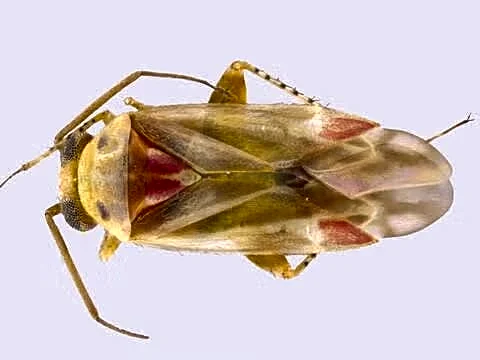







Meet the newest members of the Swiftie universe. They're blonde, accented in red and have names like "Lover," "Fearless" and "Poets."
They've also been hiding out in Australia for decades.
Scientists have named a newly discovered genus of plant-feeding insects "Swiftiephylus" in honor of Taylor Swift.
Sarah Schroeder, a doctoral student in entomology at the University of California, Riverside, along with professor Christiane Weirauch, described the bugs in a study published Sept. 9 in the journal "Insect Systematics & Evolution." The pair examined 593 specimens collected throughout Australia between 1995 and 2004 and described 12 new species across five new genera.
"It felt authentic to me as a lifelong Swiftie to honor Taylor in this way, as well
as bring attention to the diversity of insects that has yet to be discovered," Schroeder said in a UC Riverside release.
The four species are named the superstar: "Swiftiephylus taylorae," "Swiftiephylus amator," "Swiftiephylus intrepidus" and "Swiftiephylus poetorum."
The genus combines "Swiftie," the nickname for Swift's fans, with "phylus," a name commonly used for this group of insects. The second names are Latin takes on Taylor, lover, fearless and poets, respectively.

The bugs have Swift style
The paper formally describes the insects as "blonde" with varying red markings. "Swiftiephylus taylorae," for example, has a blonde body with two red lines and other red accents, while "Swiftiephylus intrepidus" has a blonde body with a bright red section of its wings.
"Taylor Swift’s iconic look is her blonde hair and red lips," Schroeder said in the release. "These insects are pale yellow with accents of red throughout. In the paper I refer to them as blonde."
The bugs' fashionable color palette may serve a practical purpose. Researchers found similar cream-and-red coloring among distantly related insects that live on the same Australian she-oaks across South Australia, New South Wales, Western Australia and Tasmania. The study suggests the pattern may have evolved independently as camouflage, helping the bugs blend in with the plants' red and orange flowers.
The insects aren't known to pose a threat to people or animals. They feed on she-oaks, yet aren't known to harm the plants either. They belong to the largest family of true bugs, which includes more than 11,000 species worldwide.
The scientific paper offers its own dedication to the singer. Schroeder and Weirauch write that "Swiftiephylus" was named for Swift in recognition of her "show-stopping talent, heart-wrenching lyrics" and the joy and comfort she has brought to fans.
Don't miss any Taylor Swift news; sign up for the free, weekly newsletter This Swift Beat.
Follow Taylor Swift reporter Bryan West on Instagram, TikTok and X as @BryanWestTV.
This article originally appeared on Nashville Tennessean: Taylor Swift has a newly discovered bug genus named after her