







On the Monday, August 3, 2026, episode of The Excerpt podcast: The Trump administration has changed how some asylum applications are processed, allowing certain cases to be sent directly to immigration court without an initial interview with a trained asylum officer. USA TODAY National Reporter Christopher Cann explains who could be affected, why those interviews matter and how the change could influence deportations, detention and access to legal representation.
Hit play on the player below to hear the podcast and follow along with the transcript beneath it. This transcript was automatically generated, and then edited for clarity in its current form. There may be some differences between the audio and the text.
Podcasts: True crime, in-depth
interviews and more USA TODAY podcasts right here
Dana Taylor:
For people seeking asylum in the United States, an interview with a trained asylum officer is usually their first opportunity to plead their case, a chance to explain why returning home would put them in danger. But under a new Trump administration policy, some applicants may never get that interview. Instead, their cases can now be sent directly to immigration court where removal proceedings can begin. For many, that will mean deportation.
Hello, and welcome to USA TODAY's The Excerpt. I'm Dana Taylor. Today is Monday, August 3rd, 2026. USA TODAY National Reporter Christopher Cann has been reporting on the change and what it could mean for people seeking protection in the US.
Christopher, it's great to speak with you again.
Christopher Cann:
Yeah, I'm good to be here.
Dana Taylor:
Let's start with what's new. What exactly has changed in the asylum process and who does it affect?
Christopher Cann:
So to start, asylum is the legal protection given to people who are at the border or inside the country who have a legitimate fear of persecution in their home country based on a few criteria, including race, religion or political opinion. Now, there's usually two ways someone can obtain asylum. A person who is in removal proceedings already may apply for asylum defensively by filing an application with an immigration judge in immigration court, and that's overseen by the Department of Justice.
Now, a person who's not in removal proceedings can actively apply for asylum directly with the citizenship and immigration services, and that's USCIS. And in that process, they have that opportunity to do an interview with a trained USCIS asylum officer and who would assess the claim and either grant asylum or if that person doesn't meet the requirements for asylum, they would send those cases to immigration court. Now, so this rule changes that policy and pretty much scraps the requirement for those interviews to take place, which are really kind of integral to the process.
Dana Taylor:
Has the Trump administration shared why they've made this change?
Christopher Cann:
The Department of Homeland Security said that this change was made to reduce the significant backlog in the asylum system. And so there's currently about 1.4 million cases pending. And the USCIS Director, Joseph Edlow, also put out a statement. He said that the asylum system has been exploited for purposes of delay and work authorization and illegitimate claims for protection. So he says that this change is also a way to address some of those issues.
Dana Taylor:
Your story draws a sharp contrast between those asylum interviews and immigration court. Christopher, what's different about those two settings for the person applying for asylum?
Christopher Cann:
Yeah, so you're exactly right, the two processes are very different. So in what's called the affirmative asylum process, which is the one in which someone applies proactively with USCIS, a trained asylum agent will look at the case, speaks directly with the migrant and their attorney if they have one. And really the purpose of this is to understand the claim, see whether the person meets the criteria for protection. And it's described even by the government as a non-adversarial interview, that's kind of all about fact-finding.
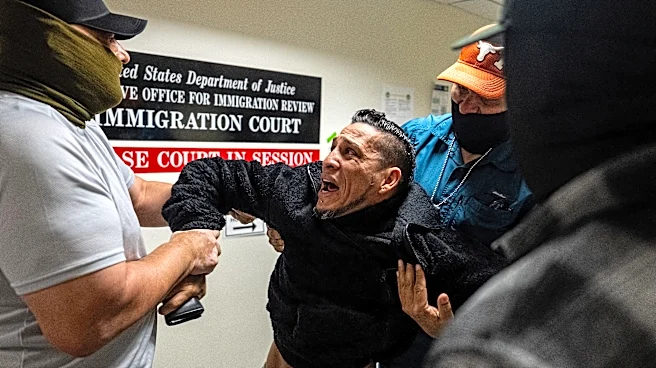
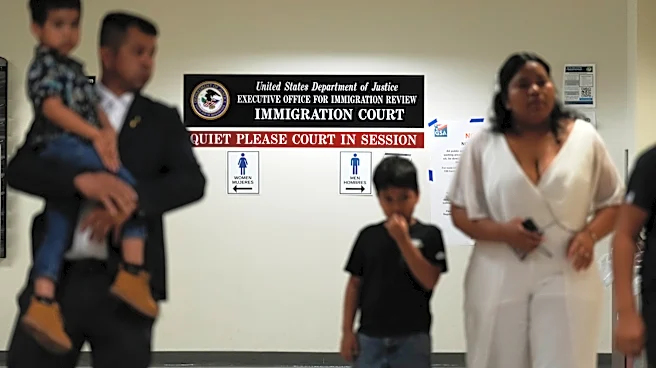
And in immigration court, it is an adversarial process. Migrants have to prove their case before an immigration judge, a lot of whom don't have the same specialized training as those USCIS officers. And there's also government lawyers who play a prosecutorial role in trying to get asylum claims denied by the judge. So it's a much more challenging environment for someone to be able to prove their asylum case.
Dana Taylor:
And then I wanted to get your thoughts on what that difference can mean for someone trying to explain why they need protection.
Christopher Cann:
Yeah, so it could mean a larger chance that your case is denied. So what we've seen is that across the immigration court system, asylum approval rates are down significantly. And some groups put that at an estimate around that they're at their lowest point in at least two decades. Immigration lawyers I spoke with said that migrants have a much better chance at getting their asylum case approved by a USCIS agent just because they're much more familiar with the asylum law and the criteria that applicants have to meet. There's also, for those who are maybe potentially funneled into that immigration court system, we've now seen across the country over the last few weeks that immigration courts have been holding what are called these master hearings. And some of them have as many as a hundred different cases crammed into one morning or afternoon court proceeding. And experts say that there's a risk that this will prevent people from having a meaningful review of their asylum claims.
Dana Taylor:
Immigration attorneys told you that small discrepancies can sometimes be explained during an asylum interview. What kinds of discrepancies are they concerned with here?
Christopher Cann:
So there's a lot of paperwork that someone has to fill out in order to apply for asylum in their case. So there could be anything from dates to the spelling of names, mismatches on some of the different immigration forms regarding maybe when events occurred or when the applicant left their home country, the arrival date noted on travel tickets versus application forms. There's all these different kind of very specific dates and names and these certain things that could be flagged in someone's application. And so these interviews, that these asylum officers conduct, gives the applicant a place to explain those and talk through them in, again, that non-adversarial environment.
Dana Taylor:
The immigration law experts you spoke with agreed that the asylum backlog needs to be addressed. Could this policy help or would it simply shift more cases into the court system?
Christopher Cann:
Yeah, so as you mentioned, the asylum system has an enormous backlog. There's about 1.4 million cases pending. And so there's a need, a legitimate need to move cases faster. And the average wait time for asylum cases is between four to seven years, according to the Migration Policy Institute. So there's many cases in which there's clear evidence that someone doesn't meet the standard for asylum such as those involving people who are convicted, let's say, of serious crimes. But experts said that implementing this rule beyond those cases and doing so without the advice of trained asylum officers could punish law-abiding asylum seekers, who've worked for years to gain a path towards citizenship. So there is a need, but there's a question of how the administration will implement this new rule. That's still kind of an open question. We haven't seen that yet.
Dana Taylor:
It seems clear that having an attorney does matter in these cases. What are applicants up against if they don't have one?
Christopher Cann:
So in the immigration system, immigrants are not entitled to a lawyer. So those who can't afford one have to go through the cases alone without legal representation. And that makes a big difference. Many asylum seekers aren't fluent in English and don't have formal education, and some are even disabled. So for them, especially if they're in immigration court and you're up against a trained government lawyer, you would have a very difficult time. There's also instances where people who had applied for asylum, they could still be arrested and detained and detained until they have their cases heard. And so those that are actually in immigration detention, especially those without a lawyer, are put in a very difficult situation where they're trying to keep up with their upcoming appearances and also just trying to manage their case while they're being held in immigration detention.
Dana Taylor:
Your story includes a case of a couple who were killed after returning to Guatemala, even though the wife still had an active asylum case. Why did you include that example and what does it show about the stakes here?
Christopher Cann:
Yeah, so I included that example because it really kind of shows the immense risk that asylum seekers face if they're sent back to their home country. So in that case in particular, on July 28th, authorities in Guatemala said a man deported from the US and his wife, who had self-deported to be with her husband, were found dead in a sugarcane field. According to authorities, their hands were tied behind their backs and their infant daughter was found near them. And so the wife had an active asylum case in the US with a hearing scheduled for next year, and that's according to a Missouri Workers Center group, of which the couple were members. And so there's a lot of questions about this case with what exactly led to their deaths. No suspects have been detained, but it still kind of highlights that risk that these asylum seekers face if they are sent back to their home country.
Dana Taylor:
What are you watching for next? Could this policy change face legal challenges and how soon might we begin seeing its effects in court filings, detention numbers, or deportation orders?
Christopher Cann:
Yeah, so government lawyers and experts say that they do expect legal challenges to this rule. This change went into effect immediately on July 27th. There was no chance for public comment. And so overall, looking into the future, we'll have to see how much the administration uses this as a tool. We'll certainly be following the cases going through USCIS and trying to see how many are sent directly to the DOJ and immigration court without those crucial initial interviews that people have historically been able to get.
Dana Taylor:
Christopher Cann is a USA TODAY national reporter. Thank you so much for sharing your reporting here.
Christopher Cann:
Thank you.
Dana Taylor:
You're caught up in under 20 minutes. Come back tomorrow for another take on a story that matters.
I'm Dana Taylor. Thanks for listening.
This article originally appeared on USA TODAY: What Trump’s asylum change means for people seeking protection | The Excerpt