






When Emma Fogarty was a child, doctors told her parents that she wouldn't survive a week.
Fogarty, who resides in Ireland, was born with epidermolysis bullosa (EB), a rare condition that makes her skin as fragile as a butterfly's wings. Approximately 500,000 people have EB globally, and individuals with the most severe cases have a life expectancy of up to 30 years, according to the EB Research Partnership.
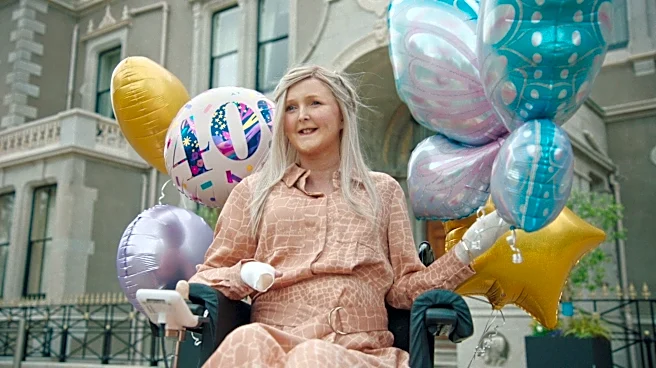
Despite the doctor's prognosis, Fogarty turned 42 earlier this year, becoming the oldest woman in Ireland to have a severe case of the skin blistering condition. To celebrate the milestone, she enlisted a friend: Irish actor Colin Farrell.
Farrell first met Fogarty at a 2010 charity dinner in Dublin. They'd email now and then, and whenever Farrell flew
in to Ireland, they'd catch up over a bottle of prosecco. Then, Farrell had an idea: The two should run a marathon and film it. To Farrell's surprise, Fogarty said yes.

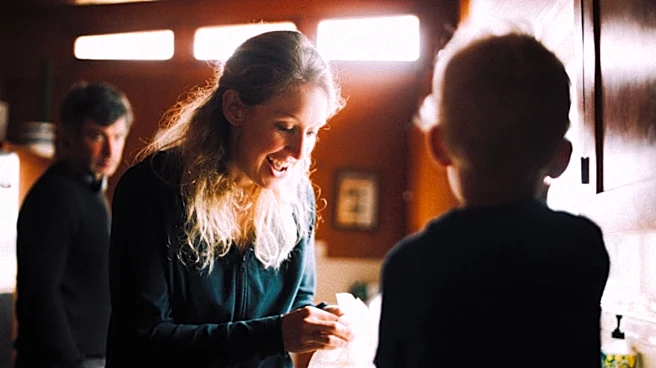
"The Slightest Touch," a documentary now streaming on HBO Max, captures the sacred friendship between Fogarty and Farrell, while detailing the unseen challenges of living with EB. The nearly 100-minute documentary, directed by Rachel Fleit, also offers a rare glimpse into Farrell's path to sobriety and raising his sons James, 23, and Henry, 17.
Farrell, who pushed Fogarty for the last four kilometers of the race, called it one of the greatest days of his life and saw the opportunity as a necessary feat to raise awareness.
"I knew what a dangerous experience it was going to be for Emma," Farrell tells USA TODAY. "What a physically exacting experience it was going to be, but also I suppose we knew without talking about it, what an emotionally euphoric experience it could be as well to do the marathon together."
Emma Fogarty on joining a marathon with Colin Farrell
With 80% of her body covered in open wounds, drinking, eating and getting dressed can turn into strenuous tasks. Fogarty's wound inside her throat leads her to drink hot teas and coffees because slurpees cause it to sting. When she tosses and turns in bed, she has to be fully awake to avoid injury. And since bandages cover her arms, torso and feet, she requires four-hour bandage changes on Mondays, Wednesdays and Fridays. On other days, she only removes half. A couple weeks ago, as someone helped Fogarty put on her new coat, the person's nail scraped her nose, causing a blister.
"Amateur hour," Farrell chimes in. "I hate EB for what it's imposed upon Emma and her life, for the kind of restrictions that it's caused her, for the constant pain that she lives in, and anyone else that suffers with EB that I haven't met."

Fogarty once lived an independent life, working in a bank after graduating college, and living in her own apartment in Dublin. After breaking her leg at age 23, she moved back in with her parents.
Because of her rare condition, often referred to as "butterfly skin," she's learned to embrace life's challenges. The race left a toll on her body and after the trek, Fogarty's mother said it looked like she was put through a "meat grinder."
"I will only have a certain amount of time that I am able to get up and out of the bed, and there will come a day that I am stuck in the bed and will never be able to get out because of pain or due to whatever is coming down the track for me," Fogarty says.
Although the race pain subsisted for weeks, Fogarty and Farrell look back at the feat positively. To date, they've raised more than $1 million with EB charity Debra.
"We wanted to do this for a laugh and to get as much out of life as we could," Farrell says. "We also wanted, and Emma was very clear from the start, to raise as much awareness as we could around this condition, and also just to be part of the conversation for a cure."

Colin Farrell offers glimpse into family life, path to sobriety
Farrell isn't camera shy. He's commanded roles in films like "The Batman," "The Banshees of Inisherin" and "S.W.A.T.," and has a number of Golden Globe Awards proving his prowess. Despite this, the Oscar-nominated actor doesn't like to document his personal life, unless he has a good reason.
"I can't blame anyone else for this f------- thing but myself," Farrell says. "Apparently, it was unusual and uncommon and uncomfortable. All the 'uns.'"
In the documentary, Farrell opens up about his heavy drinking habits, which began when he was a teenager, and waking up in rehab after filming "Miami Vice." He details his path to sobriety, following the birth of his son James, who has Angelman syndrome. He talks about the complex relationship he has with his father Eamon Farrell, who died in April 2025, and attending his wake with Fogarty.

"At the end of the day, it was just a couple of human beings in my house," Farrell says, crediting director Fleit for fostering a comfortable environment.
Fleit, known for her documentary work in "Introducing, Selma Blair" and "Bama Rush," notes her approach is to "always create the conditions to just let this person be themselves."
With the Dublin marathon behind them, Fogarty has already begun to brainstorm her next bucket list item: a 5K race for her 50th birthday. In the meantime, she is celebrating the little things: getting out of bed, grabbing lunch and going for walks in her motorized wheelchair.
"Days are certainly getting harder, but I do try and stay as independent as I can," Fogarty says. "With the days that I do have, that aren't a lot, but that I do have."
This article originally appeared on USA TODAY: She wasn't expected to survive infancy. Now she's changing lives with Colin Farrell