
Like so many others, the NFL had to have expected better of the Atlanta Falcons.
In May, the league's schedule-makers issued a vote of confidence for the team, granting it three prime-time games from Weeks 3-5. That sum put an organization with the second-longest active playoff drought on equal footing with the Jacksonville Jaguars and Denver Broncos, both playoff teams that returned an overwhelming bulk of their core.
And with flex rules not applicable except for the final one of those matchups – a Week 5 home tilt against the Baltimore Ravens – the league locked itself into showcasing the team in the early going.
Now, the Falcons might be leaving the league with broadcast buyer's remorse.
Ahead of its "Thursday Night Football" meetup with the
Green Bay Packers, Atlanta might hold the title of the NFL's biggest mess through the first two weeks.
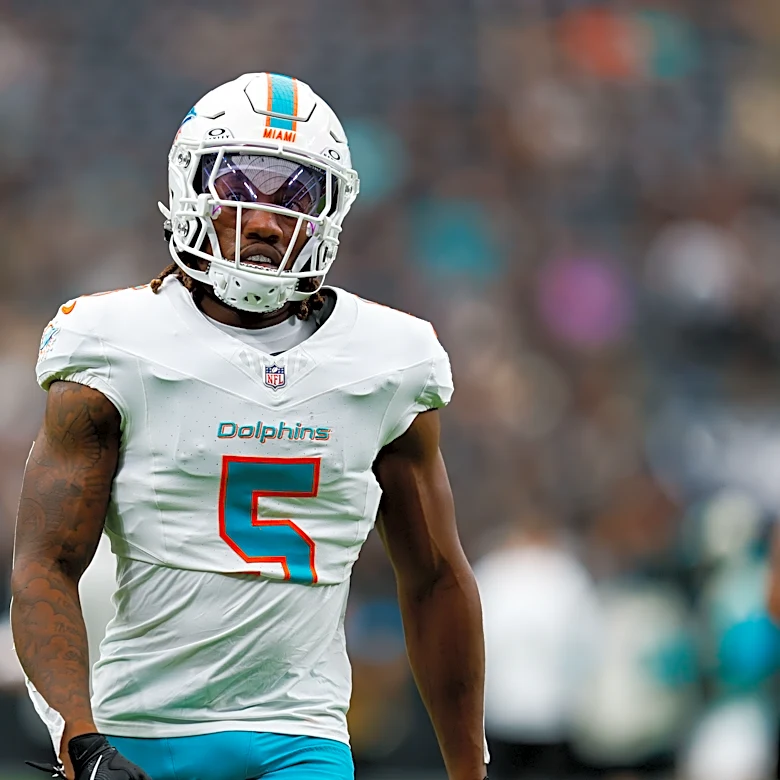
The Falcons own the league's worst point differential (-38), coming in just behind a Miami Dolphins team that entered the season as an admitted teardown. They've yet to run a single play in the red zone, making them just the fourth team since 1978 to be held out of that area entirely through their first two games, according to ESPN. And an offense that has scored just 16 points is responsible for generating more touchdowns for opposing defenses with pick-sixes (two) than it has trips to the end zone for itself (one).
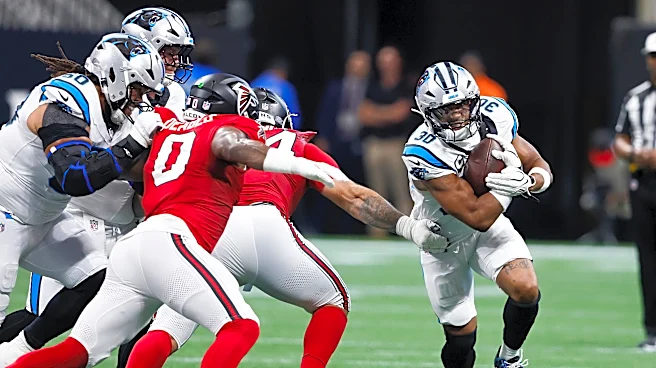
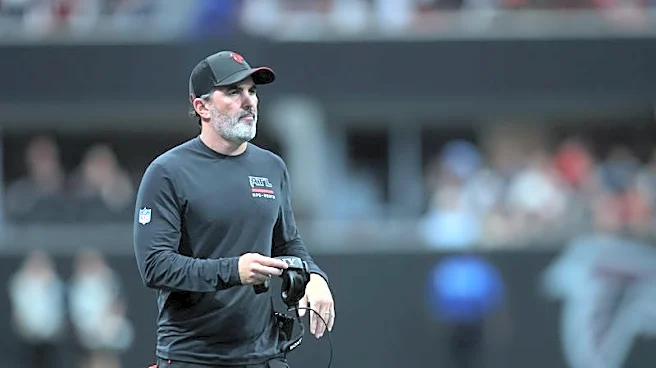
Fans quickly lost patience in the home opener, booing new head coach Kevin Stefanski and his group throughout a 34-3 loss to the division-rival Carolina Panthers.
Just ahead of having the spotlight trained on them, however, the Falcons have been afforded some degree of hope.
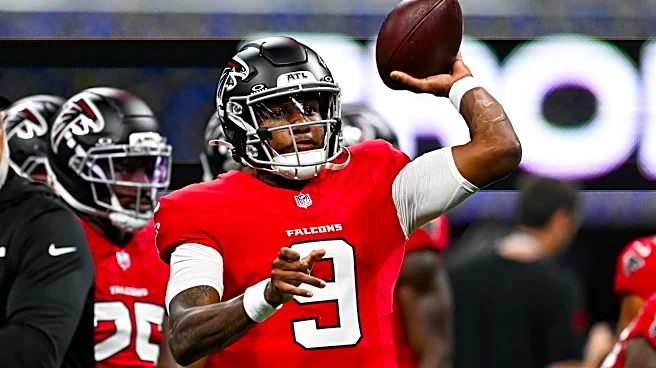
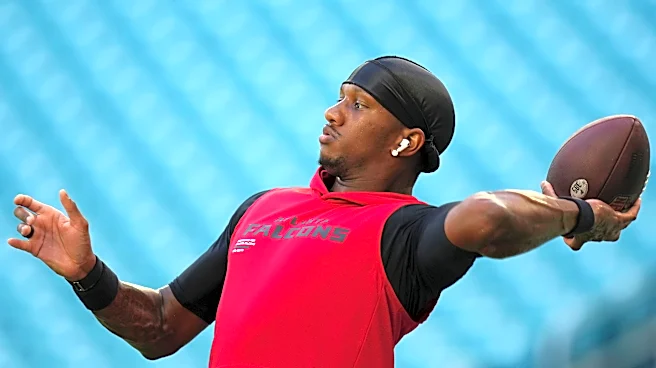
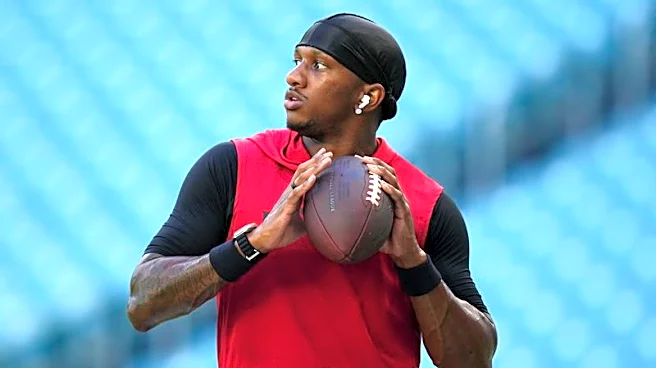
Quarterback Michael Penix Jr. will step in as the starter for the first time since Nov. 16, 2025, when he suffered a torn anterior cruciate ligament for the third time in his career. The volatile passer has hardly lived up to his billing as the No. 8 overall pick in the 2024 NFL Draft, but his return – along with veteran Tua Tagovailoa also getting healthy enough to serve as his backup – clarifies what had been a monthslong muddled mess behind center.
“You can just feel it when he’s out there,” offensive coordinator Tommy Rees said on Tuesday, Sept. 22. “We just want to pour everything in to help him showcase all that talent that he has.”
But can Penix make a real difference for a floundering franchise in his first work in nearly a year?
It might be a stretch to expect the offense to be rescued by a player still trying to prove he can be trusted to merely steer it. Still, how much of a lift Penix can provide for the attack – and vice versa – could go a long way toward defining whether this season is salvageable for all parties in Atlanta.
Falcons' most pressing problems all trace back to QB
Assigning blame to quarterbacks tends to be an exercise in oversimplification. For the Falcons and Cooper Rush, however, the problems of the first two weeks might really be as straightforward as they seem.
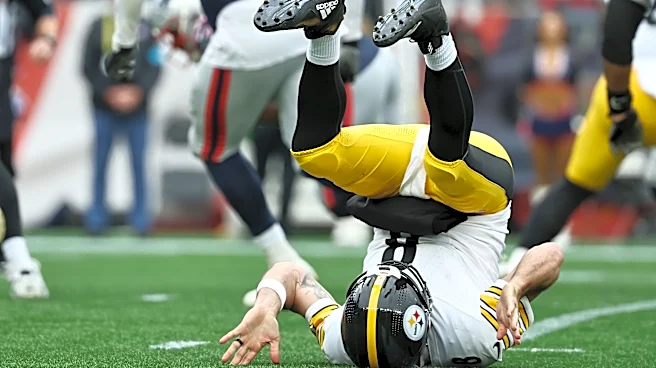
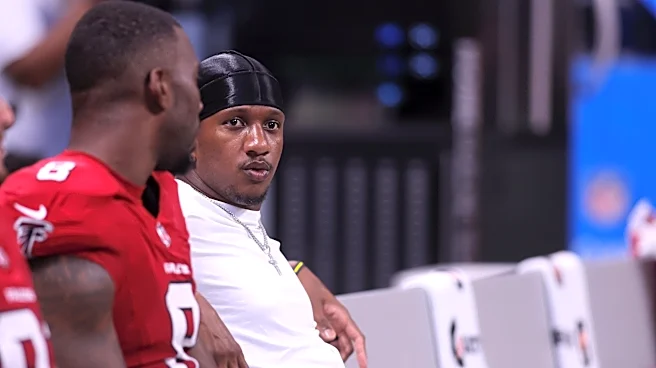
A veteran backup, Rush only stepped into the starting lineup as a matter of last resort. With Penix not being cleared for 11-on-11 drills until late August and expressing reservations about his physical recovery, Tagovailoa was initially declared the team's Week 1 starter. But when the Miami Dolphins castoff suffered an oblique injury in the week leading up to the opener against the Pittsburgh Steelers, Rush was forced into action.
The results were nothing short of disastrous.
Through two games, Atlanta has posted the fifth-worst passing DVOA of all time, according to FTN Fantasy's Aaron Schatz. Rush ranks dead last in passer rating (42.5) and EPA per dropback (-0.79), per Next Gen Stats, with the next closest in each category (Drake Maye at 63.1 and Aaron Rodgers at -0.49) not anywhere close to his level of inefficiency. His five turnovers also lead the league, with only two other players having accounted for more than three.
Several offenses around the league have been hamstrung by poor quarterback play. Rush, however, weighed Atlanta down to a point that the rest of the attack could not compensate for him.
That outcome was particularly deflating for a franchise that had made sizable investments in a proper support system amid years of incessant pivots behind center. Despite the lack of a passing threat, most of the other key figures on offense did their part. Bijan Robinson ranks fifth in the NFL in yards from scrimmage (254) despite the Falcons not presenting any compelling reason for opponents not to gear their attacks against stopping him. The offensive line, meanwhile, ranks third in pass-block win rate, according to ESPN.
Still, Falcons coaches weren't prepared to lay the blame on Rush.
"Cooper is giving us everything he's got," Stefanski said after the loss to the Panthers.
That, of course, has been precisely the problem for Atlanta.
Can Michael Penix Jr. save Falcons' season?
Getting even passable play at quarterback would be a substantial boon for Atlanta. To date, however, it's not yet clear that Penix can consistently clear that bar.
For all of the promise that the 6-foot-3, 220-pound passer has offered as a vertically inclined thrower from the pocket, erratic ball placement has plagued him throughout his first two years. In 2025, his 60.1% completion rate ranked 30th among qualified throwers.
Through 10 games last season before Penix was knocked out for the year, Atlanta ranked just 27th in the NFL at 19.5 points per game. That stretch included a 30-0 shutout against the Panthers that might have felt similarly dispiriting to last Sunday's rout.
And it wasn't until Kirk Cousins finished out the season in Penix's stead that the Falcons managed to close out the season by winning five of their final seven games, including their last four, to force a three-way tie atop the NFC South.
With only 12 starts under his belt, the third-year signal-caller remains an unreliable entity for an offense that has invested so heavily around him in recent years, from the top picks in preceding years for Robinson, wide receiver Drake London and tight end Kyle Pitts Sr. to the top-dollar extensions the franchise handed out to each − as well as left guard Matthew Bergeron − this offseason. And as a player who will be making his way back from his fifth season-ending injury since the start of his college career, Penix hardly seems like a guarantee to stay in the lineup, whether that's due to health or performance.
Still, Penix could help redeem this season even if he doesn't orchestrate an odds-defying playoff run. His value to the organization, however, might require a shift in perspective to appreciate.
After Falcons owner Arthur Blank cleared house in January by firing former coach Raheem Morris and general manager Terry Fontenot, this campaign was widely billed as an evaluation year for the organization. That might just be corporate parlance for treading water. Not only did the team barely add any free agents of note, but it also was without its first-round pick after trading it away in the prior draft to pounce on edge rusher James Pearce Jr.
Giving Penix another shot while bringing on necessary competition and insurance in Tagovailoa afforded the organization flexibility while not locking the Falcons into anything beyond what was shaping up to be a trying year.
But evaluating the team under Rush would have been nearly impossible. With the downfield passing game disappearing, cornerstones like London (six catches, 80 yards) and Pitts (one catch, 15 yards) have vanished as well. Meanwhile, Stefanski and Rees haven't been able to fully shape the offense to their liking. An attack that's typically predicated on play-action has featured those looks on a league-low 8.1% of its plays, according to Next Gen Stats.
Penix isn't always terribly efficient throwing deep and to the sidelines, as he tends to prefer to do. But there's little question he forces defenses to respect that threat. London, who in Week 2 got into a verbal altercation with a home fan as the Falcons' loss unfolded, could be revived by the swap behind center. The Pro Bowl wideout eclipsed 100 yards in five of Penix's nine starts last season, with his above-the-rim play aligning well with Penix's passing predilections.
And for all his shortcomings, Penix might help stop the incessant run of negative plays that has repeatedly buried the Falcons. In 2025, he proved adept at not allowing pressures to snowball into sacks, with his 4.5% sack rate ranking sixth-best among all qualified passers. He also seldom put the ball in harm's way, as reflected by his league-leading 1.1% intercepton rate.
“He’s got a tremendous skill set, and we have to do things that fit him and make him comfortable out there,” Rees said. “It’s been a little bit since he has played, and we have to make sure we as coaches, and the 10 guys with him, go out there and give him a great shot to have success.”
Those traits could keep Atlanta competitive in a division that still feels like a toss-up. More importantly, however, Penix gives the chance for the Falcons to get a better handle on what they need to address in the crucial upcoming offseason. Not only could the team be poised to identify his successor with an early pick in a potentially rich draft class for quarterbacks, but Atlanta also currently projects to have a league-leading $150 million in cap space for 2027, according to Over The Cap.
For now, though, Penix at least offers a safeguard against the team bottoming out and losing the already restless fans. Playing out a transition year can be tough, but having to rely on Tagovailoa, Rush or undrafted rookie Jack Strand − who threw a pick-six immediately after Stefanski granted fans' calls for him to be put into the game Sunday − might have led to a breaking point.
Penix's return to the lineup for the prime-time run might not be appointment viewing, but at least Falcons fans shouldn't have to cover their eyes.
This article originally appeared on USA TODAY: The NFL's biggest mess is headed to prime time. Can a QB fix the Falcons?