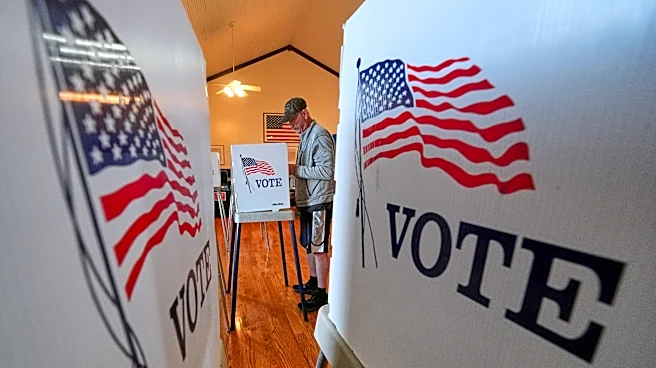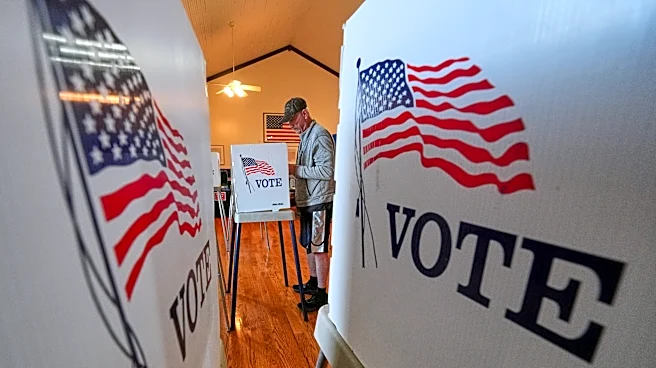







WASHINGTON — Democrats, riding high from a wave of stunning midterm results, face an inflection point.
Armed with comfortable majorities in both chambers of Congress, Democrats will have a powerful new political weapon in their effort to regain the White House in 2028.
Exactly how Democrats choose to wield their control of Capitol Hill over the next two years could significantly shape not only the next presidential election but also the direction of both national parties as they move beyond President Donald Trump's second term.
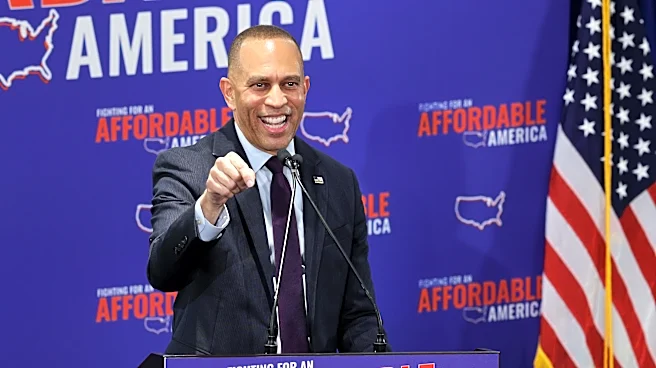
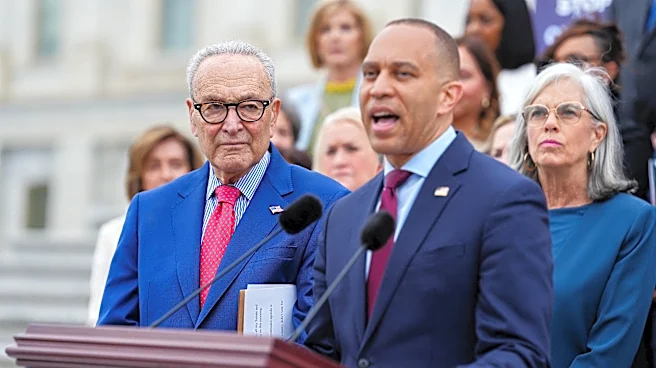
At the center of those decisions will most likely be Rep. Hakeem Jeffries, the House Democratic leader who is poised to become speaker, and Sen. Chuck Schumer, the Senate Democratic leader who is confident he'll be chosen
as majority leader. As the size of the blue midterm wave became apparent, both laid out two top priorities for the next Congress: affordability for everyday people and accountability for Trump.
How they balance those two goals will pose a critical test.
Even as they celebrate, some Democrats are already laying out the impending political stakes in stark terms — and cautioning against spooking off the voters they just won back.
"Two years ago, they sent a message. They're sending a message now. And if we don't deliver in the next few years, you're going to see them send another loud message," Rep. Debbie Dingell, D-Michigan, said on NBC News.
Looking ahead to 2028
The midterm results were largely seen as a repudiation of Trump, who barnstormed the country and urged Republicans to "pretend" he was on the ballot, despite a record-low approval rating.
With Trump's term halfway over, Republicans will be spending much of the next two years trying to reshape their party's identity without him empowered at its center. Democrats will face a similar challenge of defining themselves outside of Trump.
Part of that strategy should include "laying down the gauntlet" of policy ideas they want to make up their presidential campaign platform, according to Saru Jayaraman, a labor activist and advocate for raising the federal minimum wage.
"What better way to win in 2028 than to pass that in the House and Senate, put it on the president's desk, and see if he's going to sign it?" she said. "It's got to be meaningful, bold reform."
Polls leading up to the midterms showed voters overwhelmingly named cost of living issues as their top concern. Those worries helped propel Democrats deep into GOP territory to pick up Senate and House seats, and some worry those seats could be lost just as fast if Democrats don't address the price increases driven by Trump's tariff policies and war in Iran.
Adding to the concern are recent polls showing the Democratic Party's approval ratings are underwater — though they are notably higher than Trump's. That's led some moderate Democrats to caution against diverting too much energy or too many resources away from passing legislation specifically targeted at voters' pocketbooks.
Matt Fried, former chief of staff to moderate New York Democratic Rep. Tom Suozzi, said Democrats need to be wary of intraparty divisions creating the same kind of political “undertow” that dragged them down in 2020. He cautioned them to "be wary of distractions."
Democrats made big gains in the House the last time a midterm election was held while Trump was in office, gaining 40 seats in 2018 to control a total of 235. Then they pursued two successful presidential impeachments — one before the 2020 election and one after — neither of which resulted in Trump's removal from office or prevented him from seeking reelection.
"There was a certain lack of focus on delivering for the American people that we need to learn the lessons of today," said Fried, who now runs communications for Welcome, a centrist political group aligned with Democrats.
Election results in 2020 were mixed. Democrats lost more than a dozen House seats in 2020, but they kept control of the House, gained seats to capture the Senate, and former President Joe Biden defeated Trump.
But as the 2026 electoral dust settles, Democrats appear to be taking that message mostly to heart.
"The American people don't want us to get even. They want us to get things done on their behalf," Jeffries said on MS NOW's "Morning Joe" the morning after the election.
Appetite for investigations
Still, there appears to be an appetite for pursuing accountability investigations.
Exit polling conducted by NBC News showed voters putting concerns about the cost of living and government corruption on similar planes of importance; about nine in 10 of those surveyed identified both issues separately as a crucial or major factor in how they cast their ballots.
Jeffries, later in the same interview, said Democrats will still have a responsibility to make sure "wrongdoers are being held accountable" in the Trump administration. Incoming House Oversight Committee Chair Robert Garcia, D-California, was even more explicit.
"Lawyer up," he posted on social media as midterm results rolled in.
While the president has said he'd be open to working with Democrats on some measures, it's not entirely clear exactly which issues could bring imminent deals across Pennsylvania Avenue. And the extent of Democrats' investigations into the Trump administration could jeopardize bipartisan compromises, too.
In a CNN interview the day after the election, Rep. Jamie Raskin, D-Maryland, a former Trump impeachment manager and likely the next Judiciary Committee chair, threw cold water on the notion of another impeachment push. But he didn't fully rule it out either.
"We'd be doing them a favor," he said, referring to Republicans, later adding: "It might be called for."
Zachary Schermele is the congressional correspondent for USA TODAY. Reach him by email at zschermele@usatoday.com and on Signal @zachschermele.02. Follow him on X at @ZachSchermele.
This article originally appeared on USA TODAY: Democrats in Congress are on the precipice of a critical test ahead of 2028