




Space enthusiasts will soon be able to watch live rocket launches, spacewalks and other cosmic activity on even more streaming platforms.
NASA has announced that its live content will soon be heading to both HBO Max and discovery+. That means regular daily coverage and rare high-profile missions will be available on the sister streaming platforms, the space agency said.
That includes a mission known as Artemis III, which is due in 2027 to be the final mission to set the stage for a historic human moon landing the following year.
"These continuous streaming agreements strengthen NASA’s promise to public engagement, making the agency’s mission and educational content available on multiple devices for viewers on their preferred channels," NASA said
in an August press release.
NASA content available on discovery+, HBO Max
NASA has announced that its live space content is now available on the streaming platforms discovery+ and HBO Max, both subsidiaries of Warner Bros. Discovery.
On discovery+, a continuous live feed of NASA+ is now streaming on the platform's live channels, NASA said in an Aug. 10 press release. That includes a 24/7 livestream of Earth from the International Space Station, Warner Bros. Discovery said in a press release.
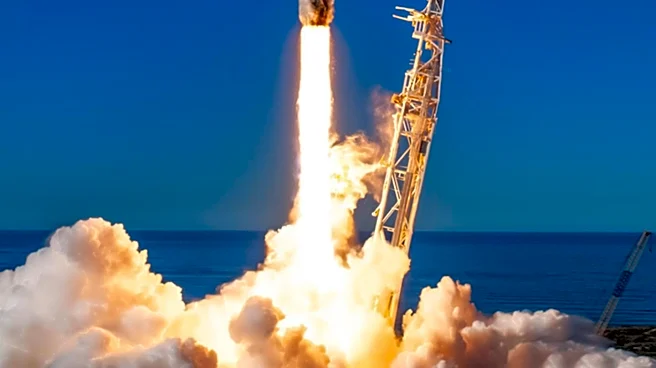
HBO Max, meanwhile, is due to stream special NASA events like major rocket launches and other flagship missions.
The content will be available in Dolby Vision, a technology using laser projection to enhance brightness, color and contrast on viewers' screens.
Artemis III moon mission to stream on HBO
NASA's upcoming launch of its cutting-edge Nancy Grace Roman Space Telescope at the end of August from Florida is likely the space agency's biggest mission before the end of 2026. Another four astronauts are also due to launch atop SpaceX's Falcon 9 rocket for the International Space Station in September on a mission known as Crew-13.
But it doesn't appear either will stream on HBO Max.
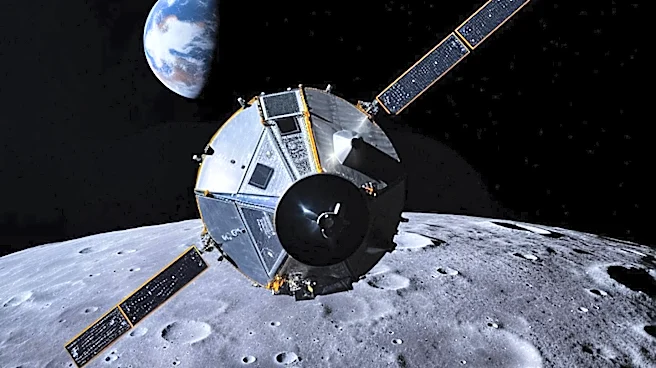
Instead, the next mission under NASA's lunar program, Artemis III, will be among the first major missions to stream on HBO Max, an agency spokeswoman confirmed to the USA TODAY Network. Targeted for mid-2027, the mission would be the highly anticipated follow-up to the Artemis II mission that in April sent four astronauts on a trip around the moon as NASA aims to return humans to the lunar surface by 2028.
“Artemis II captured the hearts and minds of viewers globally, inspiring the Artemis generation," Rebecca Sirmons, general manager of NASA+, said in a statement. "As we return to the moon to stay, our goal is to provide transparent, engaging content coverage every step of the way.”
What is Artemis III?
Artemis III will be the third mission under NASA's new lunar program and the second with a crew.
Similar to Artemis II, which went off in April without a hitch, the mission will serve as a vital test flight before NASA attempts to land astronauts on the moon's surface as early as 2028 for the first time since 1972.
The primary objective during Artemis III is for astronauts aboard NASA's Orion spacecraft to meet and dock in low-Earth orbit – the same region where the International Space Station operates – with both commercial lunar landers being developed by SpaceX and Blue Origin.
NASA on June 9 announced that NASA astronauts Randy Bresnik, Andre Douglas and Frank Rubio, as well as Italian Luca Parmitano with the European Space Agency would crew the mission.
SpaceX to provide front row seat of Orion spacecraft orbiting Earth

The partnership comes at a potentially optimal time, as NASA has also unveiled that SpaceX will help provide viewers with a front-row seat to the Artemis III mission.
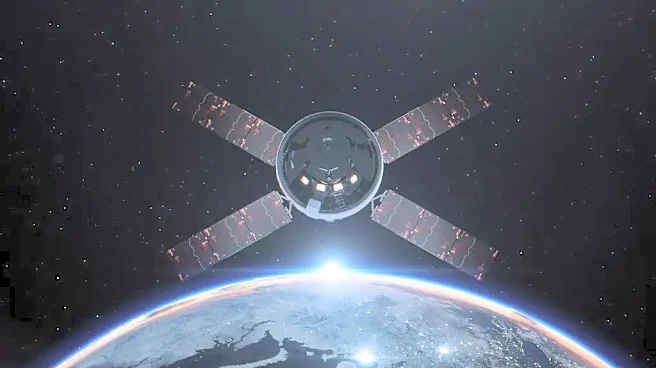
NASA announced in July that laser crosslink technology used in SpaceX's Starlink internet satellite constellation will be installed on the outside of the Orion spacecraft the astronauts ride in Earth orbit. The technology will allow NASA to downlink 4K imagery and video to the Mission Control Center at the Johnson Space Center in Houston, which then will be shared widely with the public.
How much is discovery+, HBO?
Subscriptions to discovery+ start at $5.99 a month while HBO Max plans start at $10.99 a month.
Where else is NASA+ available? Content streams on Netflix, Prime
NASA has ceased broadcasting programming via satellite for NASA TV, which was a widely available channel under most cable packages and live streaming services.
Instead, the space agency replaced NASA TV with NASA+, a free platform to stream all of the same content.
Content through NASA+ is available to watch on desktop both from the agency's official site and YouTube channel. The platform is also available to download as a mobile app on smartphones.
Watch NASA+ content with Amazon Prime Video
NASA+ made its debut in summer 2025 on Prime, with free content streaming live all day that does not require a subscription. Select NASA+ content has also been available to stream on Netflix to those who pay for a a subscription, the most recent of which was a spacewalk at the end of June outside the International Space Station.
Eric Lagatta is the Space Connect reporter for the USA TODAY Network. Reach him at elagatta@usatodayco.com
This article originally appeared on USA TODAY: Viewers will be able to watch NASA's next Artemis mission on HBO Max