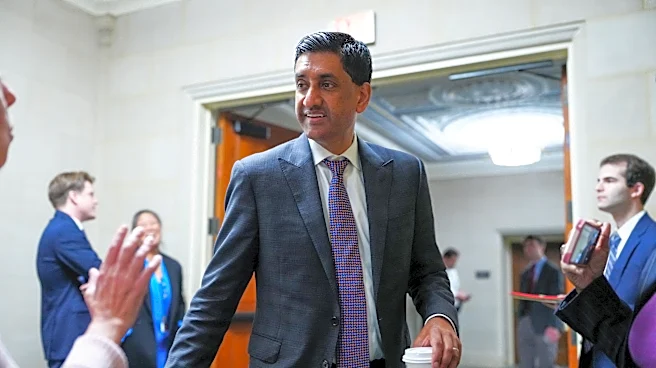


Rep. Ro Khanna, a prominent House progressive, says the Democratic majority in the new Congress should pursue a simple strategy: Send single-issue, affordability-related bills to President Donald Trump's desk, and dare the president to either support or veto the individual issues.
"One by one, we should get these bills on Donald Trump’s desk and then say, 'Now, Donald Trump, you want to sign it, or are you going to hurt the cost of living for the American people?'" Khanna told USA TODAY in an exclusive sit-down interview.
Democrats are set to regain control of Congress with commanding margins in January, but the party is navigating how to approach Trump in addition to their own internal rift between moderates and progressives. Khanna is a member
of the progressive faction of Democrats, but he still supports party leadership.
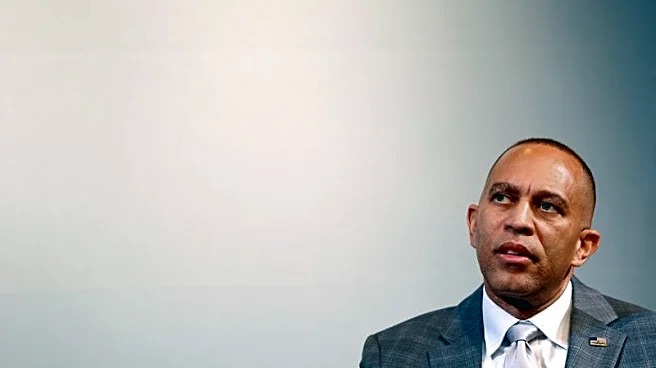
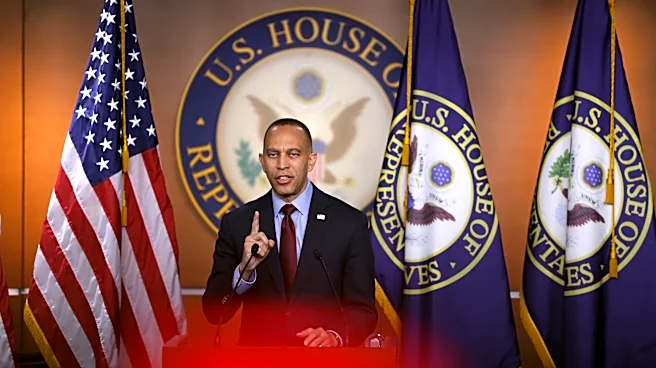
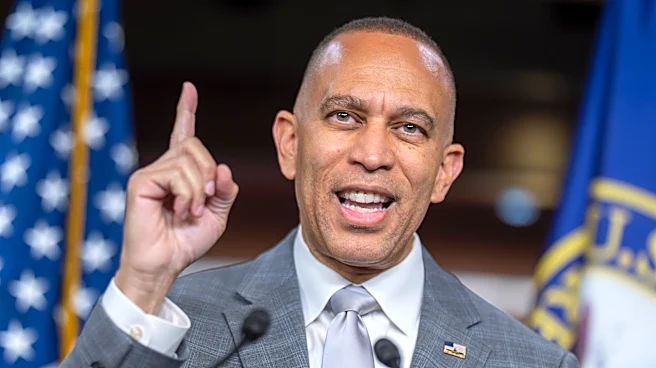
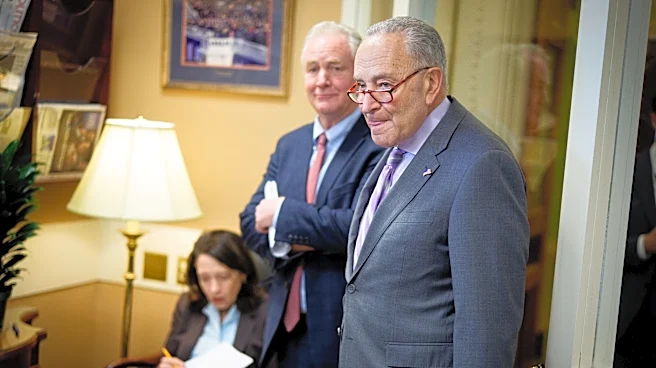
On Nov. 18, a moderate win came when Democrats overwhelmingly nominated New York Rep. Hakeem Jeffries for speaker of the House. But longtime Democrat leader Sen. Chuck Schumer's future as Senate leader is up in the air, as he faces a progressive challenge from Maryland Sen. Chris Van Hollen.
Schumer, though, contends that he has the votes to win.
The party also faces potential hurdles with Trump, who has said he plans to use his presidential veto power "a lot," and with only having 56 Democratic senators, just shy of the 60-vote threshold needed to skirt the Senate filibuster.
What Ro Khanna wants to see on Trump's desk
Khanna, who is considered a potential 2028 presidential contender, told USA TODAY that Democrats should approach working with Trump by passing and sending him single-issue bills "so that people know Donald Trump's not for raising your wage, or he is."
Healthcare reform is one area that Democrats are likely to address when they officially regain control of Congress in January. Democratic leadership has advocated for undoing cuts to Medicaid and extending Affordable Care Act tax credits that expired at the beginning of the year. Some more progressive members of the party, including Khanna, are pushing for Medicare for all.
"I believe we need Medicare for All," Khanna said. "Let Trump take credit for it, if he signs it, or Donald Trump vetoes the fact that healthcare is a human right in this country."
Michigan Sen.-elect Abdul El-Sayed previously called on Trump to work with him on Medicare for All, coining the name "Trumpcare for All."
Khanna also advocated for paid family leave, relief in childcare, restoring cuts to SNAP and increasing the federal minimum wage as policy ideas that he hopes Democrats will put on Trump's desk.
"We should pass a minimum wage. Get that above $7.25, get it to 15 bucks," Khanna said. "I'm for $25, but at least get a test to $15."
Democrats balance between progressive, moderate factions
Democrats saw wins across the political spectrum in the midterms, from moderates to democratic socialists.
"You could have been a Democrat with no ideology who won," Khanna, who is progressive, said. "We had moderate Democrats who won. Centrist Democrats won. Progressives who won. And what we had is people who are outsiders, who won. A Muslim public health official with no elected experience, winning in Michigan, a district attorney in Mississippi, a young preacher in Texas, a doctor in South Carolina, a logger in Maine."
The faction of democratic socialists in Congress is set to grow in 2027. In the current Congress, Reps. Alexandria Ocasio-Cortez and Rashida Tlaib are both members of the Democratic Socialists of America, while Sen. Bernie Sanders is not an official member but aligns with the democratic socialist ideology. Reps.-elect Melat Kiros (Colorado), Darializa Avilia Chevalier (New York), Claire Valdez (New York), Chris Rabb (Pennsylvania) and Donavan McKinney (Michigan) will join the pack in January.
Elsewhere in the country, more moderate Democrats swung contentious House districts. That includes a group of eight veteran women who flipped red seats blue and 21 new "Blue Dogs", adding to the congressional caucus of moderate and fiscally conservative Democrats.
Asked by USA TODAY, Khanna pushed back the idea that moderates won in swings while progressives carried largely safe Democratic districts. He pointed to progressive Michigan Sen.-elect Abdul El-Sayed winning in a purple state, Rep.-elect Will Lawrence's Michigan win in a district that Trump won in 2024, and Rep.-elect Randy Villegas' victory with over 60% of the vote in a district that moderates previously ran in.
"If you look through the map, a lot of progressive candidates are winning at red districts and in purple districts." Khanna said.
Khanna said that despite the different brands of Democrats, midterm winners were "people who were outside the traditional mold and who questioned the system and the establishment and said, this country is not working for ordinary Americans, it's only working for a few billionaires in Silicon Valley."
Despite the moderate caucus growing more than the progressive caucus overall, Khanna said that there is a mix of some people who joined both.
"Some are on the Progressive Caucus, some are the New Democrats, some are on both," Khanna said. "But I would just say that we had wins across the board. We had a lot of progressive Democrats who won. We had a lot of moderate Democrats who won. I'm not saying the moderate Democrats can't win. We had some Democratic socialists who won. It was across the board, all wings of the party won."
This article originally appeared on USA TODAY: Ro Khanna's strategy for working with Trump: Dare him on affordability