


On the Friday, July 31, 2026, episode of The Excerpt podcast:
At more than 5,500 miles, the U.S.-Canada border is the longest international border in the world — yet most Americans rarely hear about the agents policing it or those risking dangerous crossings. What actually happens along our northern front? USA TODAY National Correspondent Trevor Hughes embeds directly with Canadian authorities to show what security and migration really look like.Hit play on the player below to hear the podcast and follow along with the transcript beneath it. This transcript was automatically generated, and then edited for clarity in its current form. There may be some differences between the audio and the text.
Podcasts: True crime, in-depth interviews and more
USA TODAY podcasts right here
Dana Taylor:
At more than 5,500 miles, the US-Canada border is the longest international border in the world. Yet most Americans rarely hear about the Mounties and border agents policing it or those risking the dangerous crossings there. What actually happens along America's northern border?
Hello, and welcome to USA TODAY's The Excerpt. I'm Dana Taylor. Today is Friday, July 31st, 2026.
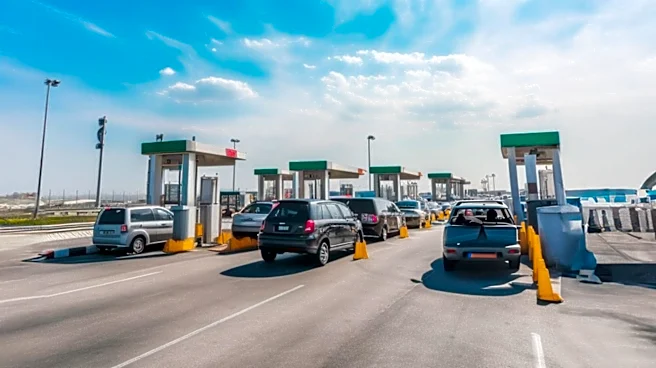
As a new international bridge opens between Detroit and Canada amid escalating trade tensions, USA TODAY National Correspondent Trevor Hughes embedded with Canadian authorities to see what life is really like on our northern border.
So good to have you here, Trevor.
Trevor Hughes:
Yeah, good to be here.
Dana Taylor:
After spending time with Canadian border agents, what struck you as the biggest difference in how the US and Canada think about border security and enforcement, Trevor?
Trevor Hughes:
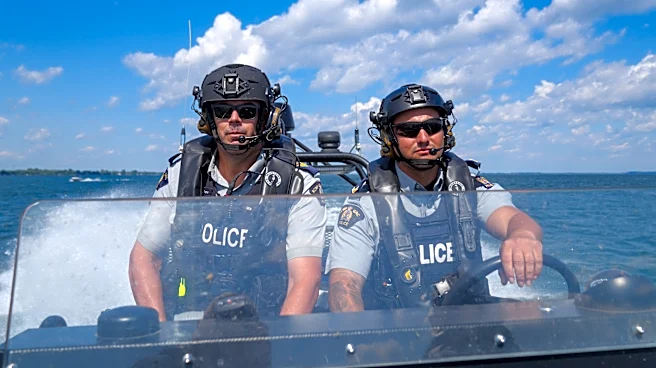
The biggest difference between the way the US and Canada handles things is that the United States does not have a national police force. We have the Federal Bureau of Investigation, which investigates crimes. We have Homeland Security, but we don't have a national police force. Policing is really done at the state level, at the local level. Canada does it differently, and they have the Mounties, the Royal Canadian Mounted Police. And so what I was really struck by is that the folks who are doing border patrolling, border policing in Canada are the same people who might respond to a drunk driving crash, who might deal with a domestic violence call. These are police officers rather than immigration enforcers primarily.
Dana Taylor:
There is common ground here though, right? What does cooperation actually look like between the US and Canada?
Trevor Hughes:
Oh, it's really important to remember that the US and Canada, they talk to each other constantly throughout the day. I mean, I got there in the morning on the day I was doing this patrol, and the Mounties had just gotten done calling their American counterparts to say, "Hey, we got a group of people that just crossed the border from Canada into the United States." They were on camera. They weren't going to get away, so the US authorities stepped in and intercepted them just after they snuck across.
The Mounties get the same kind of calls from the Americans. Both sides have lots of cameras. Both sides have people out there. There's drones everywhere. This border is very well looked after and there is a lot of cooperation between the US and Canada, but also with the Mohawk Nation, which plays a role in this as well.
Dana Taylor:
So I'm going to stick with the start of your reporting. Who were the Mounties you were embedded with and what do they want you to understand about what they do?
Trevor Hughes:
The Mounties that I spend time with, they're parents. They have children. They grew up in Canada. They are police officers, and they wanted folks to understand that in Canada immigration enforcement is one of their jobs, and that really colors how they think about people.
The other thing that I was really struck by is that although these police officers carry guns, most of the people they encounter are not carrying guns. That's a real shift in policing compared to America where American police officers almost always expect to encounter someone with a gun on any given day.
But they really wanted us to take away from this reporting that the border is closed, that you're not to come across it illegally, that you will be taken into custody and returned to America if you're caught crossing it. But also that they understand why people do come across the border. They really understand that idea, that search for a better life that drives parents in particular. But they also were real prepared to drop the hammer on drug smugglers and gun runners who are trying to bring guns and drugs into Canada.
Dana Taylor:
I know that, depending on the season, this can be tough terrain to cover. What are both migrants and border agents dealing with here?
Trevor Hughes:
The story's dear to my heart because I actually grew up right around here, and I know what the winters are like. You're talking about waist-deep snow through forests that can be miles long. In the summer, there are bugs, there are ticks, there are bears, there are coyotes. It is frankly a pretty wild area. There are rivers, there are lakes. And in the winter, people take snow machines and try to drive across the St. Lawrence River, which is frozen, but it's not always perfectly frozen and sometimes people drown. We've seen a number of instances, terrible instances where people being smuggled across drowned in storms, just tragic.
Dana Taylor:
You noted that many of the migrants are women and children. Trevor, how does that inform the response from the Canada Border Services Agency?
Trevor Hughes:
What I saw when I talked to these Mounties is that they really understood what drives migration. This idea that people want safety, they want security, they want a better life. And they understand that, in many cases, people who have fled horrible situations in their home countries, not just poverty, but terrible violence, terrible crime, gangs, corruption. And so they understand that crossing the border illegally, they see that and they understand that as something understandable. They can see why people will be driven to do that because they're coming from such a terrible situation that, frankly, anything is better, and so that really informs how they looked at it.
One of the Mounties I talked to, he told me a story about chasing these people through the woods for five or seven hours through waist-deep snow. He was trying to catch them, of course, but he was also trying to make sure that they didn't die because they have seen amputations, they have seen frostbite. People really get hurt trying to do this.
Dana Taylor:
Plenty of attention's been paid to our southern border. President Donald Trump has gone as far as deploying the military on the US border with Mexico. How active is the northern border by comparison?
Trevor Hughes:
Well, it's important to remember that border crossings on the Mexican border have dropped to almost zero under President Trump. He has done, as he said, he has closed the border, and there are very, very few people coming across now. That means that more attention has shifted to Canada.
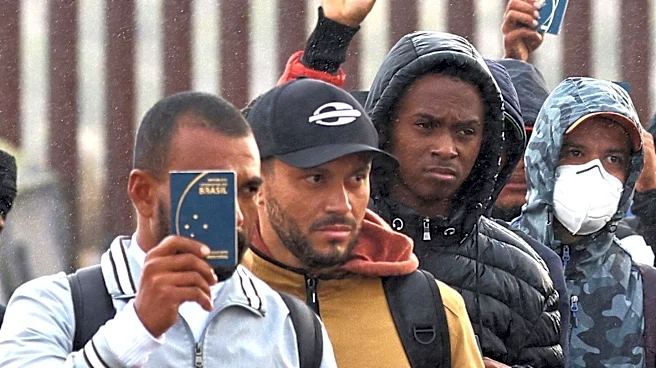
What I was really struck by was the number of people sneaking out of the United States and coming to Canada, people seeking asylum, particularly Haitians. Haiti is a French-speaking country, and the province of Quebec, they speak French there as well. And so many people have families or extended family in the province, and so they're coming to Quebec, coming to Montreal, seeking that connection, that community in a country that they think will be more welcoming to them given that President Trump is ending TPS for Haitians.
Dana Taylor:
Well, sticking with that and looking at why migrants are pushing into Canada, are they correct in seeing Canada as a sanctuary?
Trevor Hughes:
This is a controversial situation. Under an agreement struck between Canada and the United States back in 2023, people who seek asylum in Canada from the United States are basically automatically returned to the United States on the assumption that Canada and the United States treat asylum seekers equally. And so if you've already gone to the United States and requested asylum, that's the best place for you to continue seeking asylum.
There is a quirk, however, which is that if you can sneak across the Canadian border and remain uncaptured by authorities for 14 days, then you essentially reset that asylum clock and you can then make an asylum claim in Canada.
So yeah, people have this idea that Canada is a nicer place that is a better place. And I would say that that is what I heard from the Mounties that they're hearing from the people they talk to. They're leaving the United States because they believe that they will get a fairer shake in Canada, that President Trump has made things so uncomfortable for people that they are leaving the United States.
Dana Taylor:
You looked at the humanitarian side of what's happening at the border. In what you just described, is that what happened with the Honduran family who sought asylum in Canada last year? Can you tell me a little bit more about that?
Trevor Hughes:
That's right. This Honduran family's a great example of that. They were living in the United States. They requested asylum, and under President Trump's immigration policies, they essentially had their asylum claim canceled. They felt like they never got a clear answer for why, and they were facing deportation from the United States, so they fled to Canada.
Canada then sent them back to the United States to say, no, no, as part of our agreement, you have to seek asylum here in the US. The US then held them in detention and deported them back to Honduras, which they had fled in the first place. And so now they're in hiding and they are suing, with the help of Amnesty International, they are suing the Canadian government on the grounds that Canada is violating the human rights of migrants by sending them back to the United States, which some advocates would say the United States is no longer treating people with the human rights or giving them the human rights that they deserve.
Dana Taylor:
I want to circle back to something that you touched on earlier because much of the public conversation focuses solely on migrants. But based on your experience being embedded there, how much of the job is about targeting human trafficking and drugs or guns?
Trevor Hughes:
That was one of the really interesting things about this reporting. I was with the Mounties, and they got a call that a group of migrants had come across the border from the United States into Canada. And I said, "Well, what are you going to do? Are we going to go chase them down? Are we going to go swoop in on them?" And they said, "No, we're just going to wait. We have them on camera. Our colleagues are in the area in unmarked vehicles. They're not going anywhere," it's a very rural area, and the Mounties really focus on trying to get the people who are going to pick them up. They call them coyotes. And it's the same term that we use on the southern border, people who have smuggled them across who are helping them get to safety. And so the Mounties want to track back those people who are running those human trafficking organizations.
That's the same kind of work the United States does, just to be clear. And so the Mounties very much waited until someone came to pick them up, and then they try to backtrack who that person is. Is that a taxi driver? Is that an Uber driver? Or is that someone working for a human trafficker sitting in a hotel room in Montreal?
Dana Taylor:
Finally, Trevor, you obviously set out in search of answers here. Was there anything that challenged your own assumptions about what's happening along our northern border?
Trevor Hughes:
One of the things I was really struck by was how many people are still trying to sneak into the United States. We live here, and it is a fantastic country to live in, but President Trump said, "You cannot come here illegally. You have to do it the right way." And that right way is very hard. It is very complicated, and I understand why people try to sneak in. But I was really struck by folks who know all of those things and still think it's worth the risk to come to the United States.
Dana Taylor:
Trevor Hughes is a national correspondent for USA TODAY. It's always a pleasure to speak with you, Trevor.
Trevor Hughes:
Absolutely.
Dana Taylor:
Thanks to our senior producer, Kaely Monahan, for her production assistance. Our executive producer is Laura Beatty. Let us know what you think of this episode by sending a note to podcasts@usatoday.com. Thanks for listening. I'm Dana Taylor. We'll be back Monday morning with another episode of USA TODAY's The Excerpt.
This article originally appeared on USA TODAY: Why America's longest border is suddenly a major crisis | The Excerpt