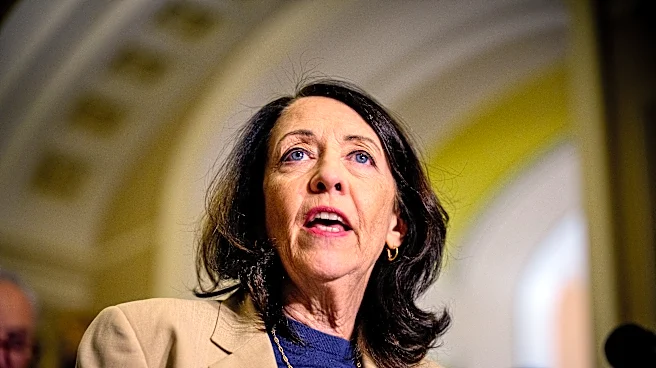



With the Clarity Act voted down Tuesday on the Senate floor, the path cleared for an imminent vote on the Protect College Sports Act, the bill with eight co-sponsors and headlined by the work of Sens. Maria Cantwell (D-Wash.), Ted Cruz (R-Texas) and Eric Schmitt (R-Mo.).
As Senators spoke on the floor late Tuesday afternoon ahead of an expected floor vote Wednesday, Cantwell released a financial report that she first touted during Monday’s press conference just steps from the U.S. Capitol.
Cantwell had cited during that session a “300% increase in recruiting” costs for many collegiate athletics departments.
The report cited July 2026 Government Accountability Office data that showed “94% of all (NCAA) Division I athletics programs now spend more
than they generated in athletics revenue in academic year 2023-24, resulting in campus deficits that must be covered through institutional subsidies, student fees, public support or resources that could otherwise strengthen the academic mission.” It also noted that in the past three years, the timeframe in which Cantwell and Cruz worked together to form the 171-page bill, that NCAA institutions have eliminated more than 100 women’s and Olympic (non-revenue) programs.

The NCAA also has denoted increased overall participation nationwide in recent years, per statistics released by the organization.
“This report demonstrates how the unsustainable growth in spending on college sports is amplifying the broader financial pressures on colleges and universities,” Cantwell said in a statement to USA TODAY. “We're seeing universities transfer general fund money to cover athletic department deficits, dip into endowments to sustain their general funds, and beg state legislatures for even more sports dollars.
“We must rein in runaway athletics spending or face the consequences of a brain drain that threatens our global leadership in science and technology.”
The Protect College Sports Act, despite its bipartisan roots with four democrat and four republican co-sponsors, as well as broad support from the NBA, NFL, WNBA, NHL and Major League Baseball, also still has staunch opposition. Sen. Chris Murph (D-Conn.) hosted a videoconference Monday that featured several voices, including from some current NCAA student-athletes, who spoke out against the Protect College Sports Act.
“Do not give the institutions permanent legal protection without having independent athlete representation," said Jackson Pruitt, Temple University football player, in a statement via AFLCIO.
Cantwell's report underscored the tenuous financial system that's widespread throughout college athletics, per data. It reflected that "only 14 of 53 publicly reported Power Four athletic departments generated sufficient revenue to cover expenses in 2024-25."
It additionally cited financial records that reflected a "322% increase" in recruiting costs in the 18-year span from 2005-2023.
The Protect College Sports Act proposes to essentially double the current revenue-sharing agreement as established in June 2025 via the House Settlement. That landmark case set the current revenue-sharing marketplace at $21.35 million per fully participant athletics departments; the Protect College Sports Act would elevate that to more than double -- approximately $44-45 million with up to an additional $5 million in monies earmarked for women's and Olympic, non-revenue sports.
The bill does not address employment status of collegiate athletes nor establish a potential framework for collective bargaining. It does seek to implement a one-time transfer rule and also address age-based eligibility matters.
This bill provides stability and a pthway forward for the betterment of our student athletes.
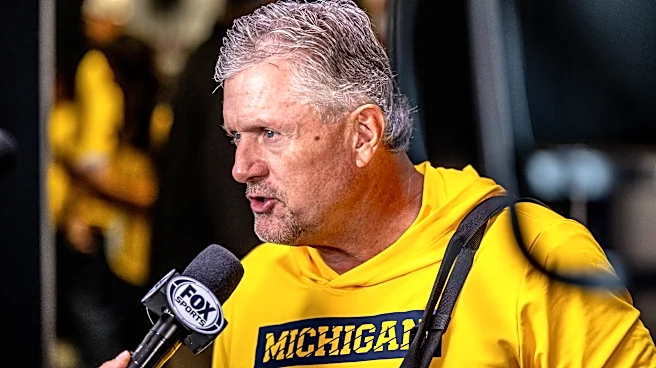
"One of the ways we think is a real positive for the bill is clarity on eligibility," Craig Bohl, who heads the American Football Coaches Association and its 11,000 members, exclusively told USA TODAY Sports Tuesday. "Right now, coaches – I have no hair but some that do have hair, with what’s going on with a local judge, you can come up with a favorable ruling to get an extended year here or there.
"We even had the potential of NFL players going back to LSU. Everyone is frustrated to no end. It’s beyond chaos. Clarity on eligibility is a big deal for us as coaches. This has been a winning argument in the House and Senate on both sides of aisle."
The NCAA on Tuesday released a new video, "Sorry to Interrupt," from current student-athletes across a broad cross-section of sports and university campuses who called upon Congress to pass the Protect College Sports Act.
"I think this vote, this bill, will define the trajectory of college athletics for decades," Schmitt said on the Senate floor. "That doesn’t happen every day, that we’re confronted with those kind of issues with a solution in front of us that has been worked on in a bipartisan way to try to solve these issues to protect an American institution in college sports."
But Sen. Cory Booker (D-N.J.) utilized his floor time to slam the bill.
"I want to speak forcefully against the Protect College Sports Act," Booker said. "But while a college student and player, I saw how unjust the NCAA is. It is a serial monopolist, controlling an industry of over $15 billion strong and rapidly growing. The NCAA protects its members, it protects the colleges and it has repeatedly put college athletes in horrible positions."
This article originally appeared on USA TODAY: Sen. Cantwell reveals difficult NCAA financial picture as College Sports Act is debated