





Across the country, a curious trend is taking hold in the Democratic Party: The left has found God in politics.
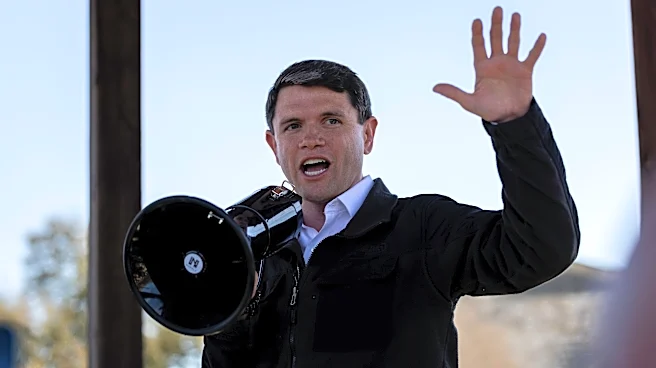
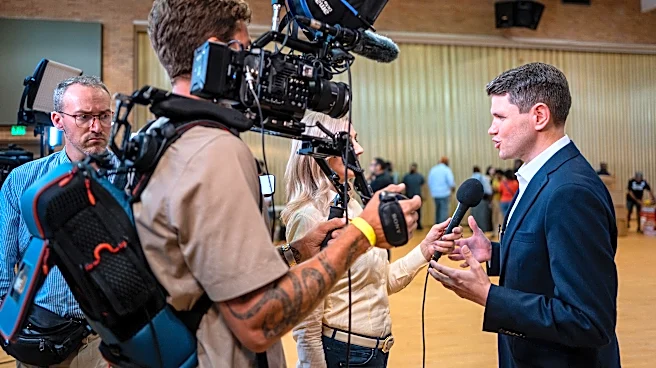
As Politico noted most recently, Democrats are running for Congress by leaning on their Christian bona fides. Democrats hope they have found the key to political salvation in states like Texas. However, as Democratic candidates like Texas senatorial candidate James Talarico campaign on their religious credentials, the result has been to insert faith into the broader political debate, which now includes questions ranging from the gender of God to whether Christians have to believe that Jesus actually existed.
The rival views on Christianity by Talarico and his Republican opponent for the U.S. Senate, Texas Attorney General Ken Paxton,
are now being debated by voters. Republicans have long emphasized faith-based politics, and the new Democratic shift has created arguably the most religious-themed election season in modern history.
For a country with strong separation of church and state values, the sudden shift toward religious testimonials is one of the most surprising changes in American politics in decades. The result has been a debate over the character of candidates based on their religious views and associations.
'Resistance preaching'
Morality and faith have long been part of American politics. However, the November midterm elections at times have sounded like candidates are running for the College of Cardinals rather than Congress.
For more secular voters, the debate has the unnerving sense of a plebiscite of the devout covering church dogma.
For religious voters, it can be equally unnerving as religion is reduced to political sound bites and bumper stickers.

In Texas, Talarico has long leaned heavily on his identity as a seminarian, using religion to support everything from transgender boys playing in girls' sports (a stance he recently changed) to abortion to immigrants.
His statement that God created six genders (something he also recently walked back) and that God is nonbinary has become a focus of the campaign. In addition to declaring that God is not a Christian, he has insisted that the Bible supports abortion.
Figures such as the Rev. Robert Jeffress, pastor of First Baptist Dallas, publicly denounced Talarico as "not a Christian” and “evil.” His candidacy has even led to a new political expression: PINOs, or "pastors in name only."
Even Talarico's church, St. Andrew's Presbyterian Church, has drawn intense scrutiny. A member of the church's clergy allegedly admitted in an undercover recording that most of its members are likely agnostic or atheist. Talarico himself once publicly declared, “I always think of myself as a Christian who hates Christianity.”
St. Andrew's minister, Babs Miller, appears to say in the surreptitious video: "We have no way of knowing if Jesus really existed, any more than we have of knowing that the original Buddha ever existed. And whether or not Jesus existed doesn't really matter to me. The fact remains that that message that was delivered by someone named Jesus supposedly and it could have all been made up for all I know."
The same debate is occurring in other races.

In Iowa, Democrats fielded three ministers to try to wrestle back seats from Republicans, with two remaining after the primary elections.
Lutheran minister Sarah Trone Garriott is under attack for participating in the wedding of a satanist couple. She recounted her role with pride, though saying that she was not sure if she should use a passage referencing Satan to "make them feel more at home."
Trone Garriott is part of a movement of "resistance preaching" to organize far-left ministers to use religious pitches to support an election blue wave. She contributed to the book "Preaching as Resistance: Voices of Hope, Justice, and Solidarity." In the book's introduction, Phil Snider, a self-described "White male cishet pastor" – according to Fox News – explained that "pastors of the resistance" are united in fighting Trump, "White supremacy," "exploitation," "greed" and "heteropatriarchy."
These ministers are part of the same trend I have seen up close in higher education over the past couple of decades as departments veered radically to the left, including divinity schools. A new generation of activist ministers have been groomed in divinity schools that tie faith to liberal activism.
Crumbling wall between church, state
The curious result of resistance preaching on the left is to increase the role of religion in politics.
In fairness to Talarico and his fellow political ministers, they are not calling for greater entanglement of religion. However, they are infusing the Democratic campaigns with a progressive evangelical element.
Historically, heavy use of religious rhetoric by government officials has been seen as suspect in America (though this changed for Republicans starting in the 1980s). Lacing campaigns with religious pitches produces discomfort for many Americans who fear the type of sectarian violence common in other countries. At the same time, seeking to advance faith-based or morality-based policies go back to our founding.
Thomas Jefferson famously used the term "wall of separation" of church and state in his 1802 letter to the Danbury Baptist Association to emphasize the need to avoid entanglement of religion with the government. Generations of politicians have been cautious about the same entanglement with politics. Indeed, federal laws have restricted religious organizations, as not-for-profit groups, from directly contributing to political causes.
The opposition to religious-themed campaigns has been a touchstone of Democratic politics for generations. This historical opposition has now been abandoned to make room for a new generation of political proselytizing clergy. It seems the Democratic National Committee hopes that the wall of separation between the parties on the use of faith-based politics – a wall already breached by the GOP – has now come completely down.
As far-left ministers rally voters to oppose the GOP as a matter of faith, the DNC is apparently singing a familiar song before the critical midterm elections: "Amazing grace! How sweet the sound that saved a wretch like me! I once was lost, but now am found."
Jonathan Turley, is a law professor and the New York Times best-selling author of “Rage and the Republic: The Unfinished Story of the American Revolution.”
This article originally appeared on USA TODAY: Left follows right in abandoning wall between church, state | Opinion