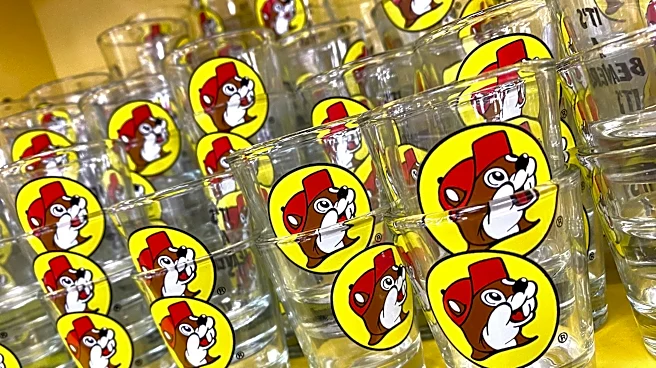





Buc-ee’s is growing fast, putting its smiling beaver mascot in front of customers well beyond Texas.
That growth has also brought a series of legal fights over logos, mascots and names that Buc-ee’s says come too close to the image the brand has built.
The latest business in Buc-ee's legal crosshairs is Beaver’s Mini Mart, a family-owned store in Beavercreek, Ohio. According to the Cincinnati Enquirer, part of the USA TODAY Network, Buc-ee’s filed a federal lawsuit July 28, alleging that the store’s smiling beaver, name and red-letter branding could cause consumers to believe it is affiliated with the roadside super-station chain.
It's an unusual-looking dispute: a neighborhood store without gas pumps, miles from the nearest interstate, facing
off against a company known for its massive travel centers. But as a business matter, the case gets at a straightforward question: How far should a growing national brand go to protect the visual identity that helps customers recognize it?
What Buc-ee’s says is at stake
Not unlike its complaints in the past, Buc-ee’s argues that Beaver’s Mini Mart’s logo – a smiling beaver next to the name of the family-ownedstore – is close enough to its branding to create confusion. The company alleges trademark infringement, unfair competition and deceptive trade practices.

Buc-ee’s is essentially arguing that its mascot is not just imagery. The beaver itself is a shortcut for the company’s larger retail brand – something customers see on signs, merchandise and inside its stores – and Buc-ee’s has invested in protecting it. That carries more weight as the business reaches new customers across the country.
The next brand fight may not look like the last one
The Beaver’s Mini Mart lawsuit isn't happening in a vacuum. Buc-ee's has been fighting trademark disputes for more than a decade, including a lawsuit against Texas-based convenience store Chicks that began in 2013. According to The Texas Lawbook, a partner of The Dallas Morning News, Buc-ee’s has turned to the federal courts at least 10 times to accuse companies of infringing on trademarks since registering with the U.S. Patent and Trademark Office in 2007 and 2010.
In May, Buc-ee’s sued Teddy’s Market, a two-location Georgia convenience-store business, alleging it copied elements of Buc-ee’s mascot and branding strategy. The complaint took a broad view of what makes a brand recognizable. Buc-ee’s pointed to the cartoon-animal logo and argued that the names “Buc-ee’s” and “Teddy’s” could confuse customers because both are six letters, two syllables and end with an “eez” sound.
Buc-ee’s is not only focused on whether another company uses a beaver. Its lawsuits show that it is examining the total package – the name, mascot, colors, style and overall customer impression – as it works to protect a retail identity that is reaching more markets.
Teddy’s owner and operator Karan Ahuja disputed Buc-ee’s allegations but declined additional comment because the case is ongoing.
Why growth changes the equation
Buc-ee's rapid expansion has made its beaver mascot an increasingly valuable part of the company's business. Before its June opening in Goodyear, USA TODAY reported that the Arizona store would be Buc-ee's first in the Grand Canyon State. At least 12 additional Buc-ee's locations are planned across 10 states through 2031.

As Buc-ee’s moves into places where customers may be seeing the company for the first time, a consistent brand can quickly signal what it sells. That also gives the company a stronger incentive to challenge businesses it believes are benefiting from a look that is too close to its own.
That does not mean every animal logo invites a lawsuit, or that Buc-ee’s will prevail in every case. But it helps explain why a company widening its physical footprint is also devoting attention to the cartoon character at the center of its brand.
What Buc-ee’s lawsuits can cost smaller brands
For a small business, a mascot or playful name is not just ornamentation. It can be tied to an identity that regular customers recognize. That is the tension in the Beaver’s Mini Mart case. The neighborhood store has been in the Beavercreek neighborhood for more than two decades, before Buc-ee’s first expanded outside Texas in 2018 and before the company opened its first Ohio store in April.
But the stakes can go beyond a new sign.
In its lawsuit against Teddy’s Market, Buc-ee’s seeks monetary relief that includes profits tied to the alleged infringement and damages, along with an order barring use of the disputed branding and requiring allegedly infringing materials to be removed or destroyed. Buc-ee’s also asked the U.S. Patent and Trademark Office to deny four trademark applications filed by Teddy’s in May 2024.
When does a logo dispute become a money problem?
For a smaller operator, that creates a difficult business decision: keep investing in a challenged brand, spend money responding to a lawsuit, or change the look customers already know. In Beavercreek, Cincy Shirts began selling a T-shirt and hat to benefit Beaver’s Mini Mart’s legal fund, turning the battle into a community effort to help pay for a response.
Buc-ee’s allegations in its pending cases are not findings by a court. But as the company expands, the disputes show that its trademark strategy reaches beyond a mascot: For smaller brands, a fight over a name or logo can affect cash flow and the ability to keep building a brand while the case plays out.
Whatever the outcome, the conflicts highlight how branding can have consequences beyond the courtroom.
This story was created by Jason St. Angelo with the assistance of Artificial Intelligence (AI). Journalists were involved in every step of the information gathering, review, editing and publishing process. Learn more.
This article originally appeared on USA TODAY: Buc-ee's is expanding, and so are the legal fights