






Two or three generations ago, if you had a couple of kids, you probably went out and bought a station wagon to haul the family around.
Since the mid-2010s, the family vehicle of choice has increasingly been the SUV.
The evolution of the family car is a story about shifting preferences of American consumers and changes in the products carmakers are offering for sale as they try to keep up with those very shifts, said Stephanie Valdez Streaty, Cox Automotive’s director of industry Insights.
"Families increasingly gravitated toward SUVs and crossovers for their versatility, passenger space and utility, while automakers responded by expanding those lineups across more sizes and price points," she said. "Fuel-economy and emissions requirements were
also part of the product-planning environment for automakers. Over time, those forces helped move the center of the family-vehicle market from station wagons and minivans toward SUVs and crossovers."

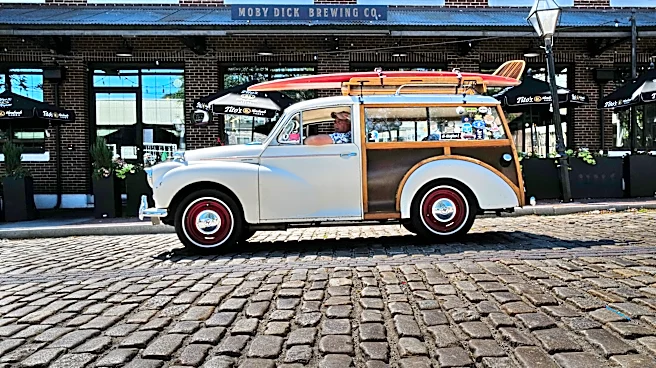
In the 1970s, having a family probably meant buying a station wagon
Station wagons peaked at about 10% of all U.S. vehicle sales in 1976, according to the U.S. Environmental Protection Agency, which regulates air pollution from cars among other environmental issues. Today, station wagons account for just 1% percent of the U.S. new car market, according to Accio.
"At some point in the history of America’s auto industry, the station wagon became the car that represented middle-class families. And it maintained this standing for over 40 years," MotorBiscuit.com said. "While the station wagon is no longer viewed this way, its imprint on automotive design can still be felt today."
The first mass-market, widely successful steel station wagon was the 1946 Willys Jeep Station Wagon. It was developed after Willys and Jeep merged after partnering with Ford to produce cars after World War II.
For most of the 20th century, Ford dominated station wagon sales in the United States. The Dearborn, Michigan, automaker sold nearly 2 million station wagons from 1929 to 1960, according to Hemmings.com. The Ford Country Squire was widely regarded as Ford's flagship station wagon. In modern times, the Subaru Outback, marketed now as a crossover SUV, is considered the top-selling station wagon, with annual sales above 150,000, according to Accio.
In the 1980s, families sought out minivans
The first modern minivans, the Dodge Caravan and Plymouth Voyager, were introduced in the United States in 1983, according to the EPA.
Chrysler, which prides itself on inventing the minivan, said its designers first started working on what became the vehicle in the late 1970s. The company, now a part of Stellantis, said in a news release that it sold more than 15 million minivans from 1983 to 2019.
"In 1977, a small team of Chrysler designers and engineers began working on what they called the 'magic wagon,'" the company said in a website post. "With the program formally approved in 1980, the 'minivan,' as it would become, was as comfortable as any traditional American station wagon, but more spacious, versatile and economical, and it would fit into an average garage."
Minivans took off in the 1980s, eventually peaking at about 7% of the U.S. auto market in 2000, according to CNBC. Overall van sales that year reached 10%, according to the Department of Energy.
The best-selling minivan of all time is the Dodge Grand Caravan, according to Business Insider.

In the 2010s, SUVs became the dominant family car
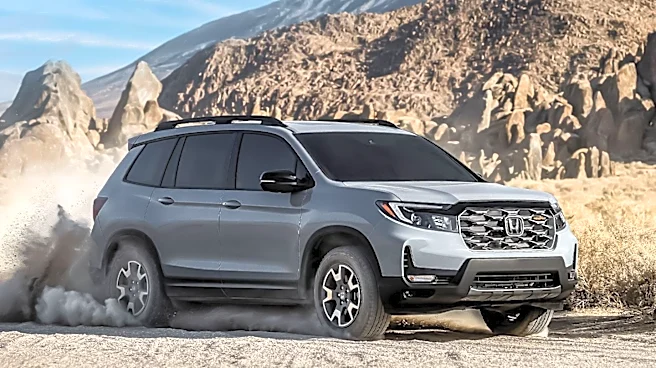
American automakers began producing more SUVs for sale than sedans and wagons for the first time in 2016, according to the EPA.
The percentage of large mid-size SUVs registered to drive on U.S. roads increased from 66% to nearly 75% from 2017 and 2026, according to market data compiled by Cloud Theory's MotoMiner platform and USA TODAY Co.'s LocaliQ Automotive. During that same period, the percentage of mid-size vans fell from 12.3% to 8.1%.

Station wagons accounted for 24,629 new car registrations in 2017 and just 4,493 in 2026.

Chris Wood, vice president of automotive client strategy for USA TODAY Co.'s LocaliQ Automotive, said at least some of the shift toward SUVs was a result of some automakers making different bets on larger crossovers as family haulers than others.
"The American family didn't stop needing space, versatility or practicality," Wood said, noting that automakers like Honda, Toyota and Nissan followed different trajectories with their minivan models in the past decade.
"What changed was the vehicle manufacturers offered to meet those needs," Wood continued. "Our registration data shows that evolution continuing today, with larger midsize SUVs gaining share while traditional minivans lose ground. It's a transformation of the family vehicle, not the disappearance of the family-vehicle buyer.”

As car shoppers gravitated toward SUVs in large numbers in the past decade, automakers made vastly different bets on the future of the family car.
Honda's Odyssey sales remained over 100,000 from 2017 to 2026, according to LocaliQ's data. Toyota's Sienna minivan sold at least 50,000 units in those years.
Nissan, meanwhile, stopped making its Quest minivan in 2017, prioritizing popular SUVs like the Nissan Murano and Pathfinder as its most marketable family haulers.

Like Nissan, Ford discontinued its last minivan, the Freestar, in 2007. Chevrolet stopped selling their minivan, the Uplander, in 2009.
But other automakers added new minivans, albeit with SUV-like designs. Chrysler converted its Pacifica SUV into a minivan in 2017, and Kia rebranded its Sedona minivan as the Carnival, giving it curves that were designed to make it look like an SUV.
The best-selling mid-size SUV of all time is the Ford Explorer, which has sold over 4 million units, according to GoodCarBadCar.
Wood said Americans have always sought out family cars, even as the vehicles they choose have changed drastically over time.
"The station wagon gave way to the minivan, and eventually SUVs became the dominant choice," he said.
Keith Laing is an automotive reporter on the National Trending Desk at USA TODAY. Contact Keith at klaing@usatodayco.com.
This article originally appeared on USA TODAY: From wood paneling to third rows: Tracing the family car's evolution