





Aug. 15
Today in history
Today is Aug. 15. On this date in:
1057: Birnam Wood came to Dunsinane, at least in legend. At the Battle of Lumphanan, Malcolm Canmore killed King Macbeth of Scotland, who had killed Canmore’s father, King Duncan I, 17 years before. Contrary to Shakespeare’s play, Canmore didn’t become king until 18 weeks later, after he also killed Macbeth’s stepson.
1790: John Carroll was consecrated as the Roman Catholic Church’s first U.S. bishop. The Maryland native chose Baltimore to be the seat of the first diocese. He had already founded Georgetown College and was later named the country’s first archbishop.
1914: The Panama Canal opened to traffic with a U.S. ship sailing from the Atlantic to the Pacific. The project had required
decades of engineering, tens of thousands of lives and a U.S.-supported Panamanian independence bid.
1939: “The Wizard of Oz” premiered at Grauman’s Chinese Theatre in Hollywood. The Los Angeles Times said it “will unquestionably appeal to a world-wide audience,” writing that when Dorothy steps into Oz, “you are transported with her into a realm beyond the moon and in the sphere of the rainbows.”
1947: After three decades of agitation led by Mahatma Gandhi, India and Pakistan won independence from Great Britain and were partitioned into separate countries. The Indian Independence Act was effective at midnight, while Pakistan celebrates its Independence Day on Aug. 14.
1948: Provisional government leader Syngman Rhee announced the establishment of the Republic of Korea (South Korea). North Korea marks the same date as Liberation of the Fatherland Day, marking the end of Japanese colonial rule.
1960: After decades of forced labor and compulsory cash-crop farming, the Republic of the Congo declared independence from France. U.S. President Dwight D. Eisenhower sent President Fulbert Youlou a congratulatory message, writing, “It is with deep satisfaction that we welcome this historic event.”
1961: Two days after putting up 30-plus miles of barbed wire to separate East and West Berlin, East Germany began replacing the wire with concrete. Troops with machine guns guarded the workers, a few of whom cried as they put up the pilings. The wall came to symbolize the Iron Curtain.
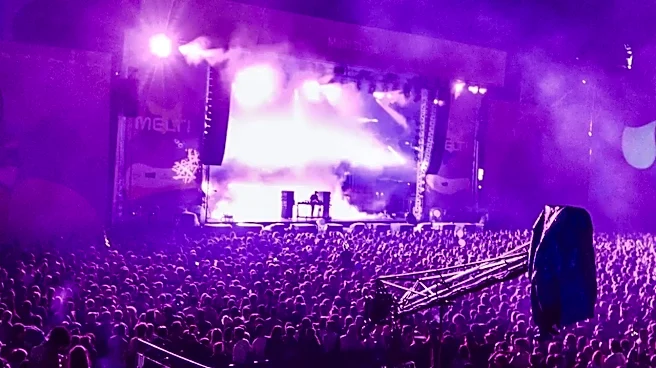
1969: The Woodstock Music and Art Fair opened on a farm in Bethel, New York. Richie Havens was the first performer, rocketing into stardom as he played for close to three hours while other musicians were stuck in the equally legendary traffic.
1971: President Richard Nixon declared his New Economic Policy, nicknamed the “Nixon Shock,” with an executive order freezing wages and prices for 90 days to address inflation. It was the first time the U.S. government had imposed wage and price controls since World War II.
2021: With full U.S. troop withdrawal imminent, Afghanistan’s democratic government collapsed as Taliban leaders took control of Kabul. U.S. and NATO allies’ troops temporarily rushed back in to airlift their nationals to safety.
– USA TODAY Network
This article originally appeared on USA TODAY: Today in history, August 15