





On the Wednesday, September 9, 2026, episode of The Excerpt podcast:
Mike Kelly, columnist for The Record of northern New Jersey and author of “After Ground Zero,” joins USA TODAY’s The Excerpt to discuss why remembering individual stories matters. Through accounts of victims, survivors, first responders and the "Jersey Girls" who pushed for accountability, he examines how the legacy of 9/11 continues to influence America.Hit play on the player below to hear the podcast and follow along with the transcript beneath it. This transcript was automatically generated, and then edited for clarity in its current form. There may be some differences between the audio and the text.
Podcasts: True crime, in-depth interviews and more USA TODAY podcasts right
here
Dana Taylor:
When columnist Mike Kelly of the Record of northern New Jersey jumped into a tugboat headed for Lower Manhattan that cloudless, bright Tuesday morning, he couldn't have imagined what awaited him on the other end of that journey. Thus began a decades-long journey through the painful scars left in terrorism's wake, stories that are now memorialized in his book, "After Ground Zero: Everyday Americans and the Unhealed Scars of 9/11."
Hello and welcome to USA TODAY's The Excerpt. I'm Dana Taylor. Today is Wednesday, September 9, 2026. Mike, it's so good to have you here.
Mike Kelly:
Dana, thanks for inviting me. It's a real privilege.
Dana Taylor:
It's now been 25 years since the horrific events of 9/11 that resulted in the deaths of 2,977 people. What compelled you to write this book, and why now?
Mike Kelly:
Well, as we approach the 25th anniversary, I wanted these people to be remembered. I think it's only natural when we write histories, particularly on anniversaries, that we think in terms of numbers. So yes, there were 2,977 people who died that day, but these were all ordinary people with names, and I wanted them to be remembered. And secondly, I wanted to really bear witness to what not only they experienced on 9/11, but also what happened afterwards, because what happened afterwards in the 25 years has been consequential for many of these folks.
Dana Taylor:
Your book follows the stories of a broad spectrum of Americans from that September day in New York, Pennsylvania, and DC to Iraq and Guantanamo Bay. How did you decide on whose stories to focus in on?
Mike Kelly:
Well, I had been writing a lot about the events, not only of 9/11, but also in the days thereafter. As you correctly point out, I covered the 9/11 Commission. I then went down to Guantanamo Bay to see the detention center there. I followed a unit to Iraq as part of the extended war on terror that we had. I came back and I spent a lot of time with families and that sort of thing. So I had the material, but what I wanted to do was pull together a narrative that reflected, really, the ordinary voices of people.
Most histories of these large events are written top-down, and that's completely understandable. We want to hear what the president was thinking, the military leaders were thinking, and that sort of thing. I wanted to write this history from the bottom up. I wanted the voices of ordinary people to be here. So I spent a lot of time looking at how I could do this in terms of reflecting the diversity and the cross-section of stories, and so I pulled together some material that I had and characters that I had worked with early in the timeframe, but I also developed some new characters as well that I wanted to help pull the narrative together from beginning to end.
Dana Taylor:
The first few chapters of your book captured the urgency and immediacy of the attack in New York based on your firsthand reporting on 9/11, and also in the months and years that followed. What was your experience of writing about 9/11 like 25 years later?
Mike Kelly:
It was very emotional, Dana. I guess I could say I was surprised at how emotional I got sometimes. As I was writing this, I had to stop sometimes, not just at chapter endings, but also as I was finishing a scene because I was brought back to that moment.
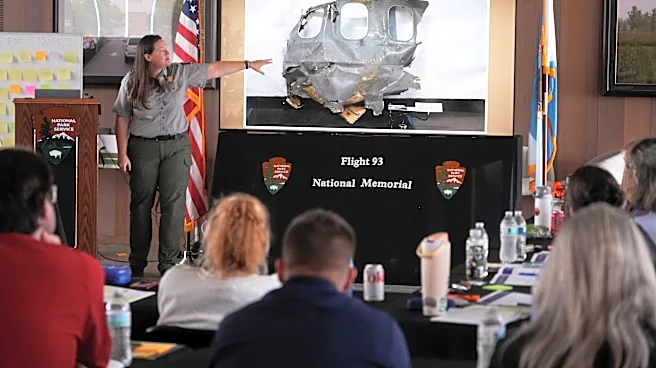
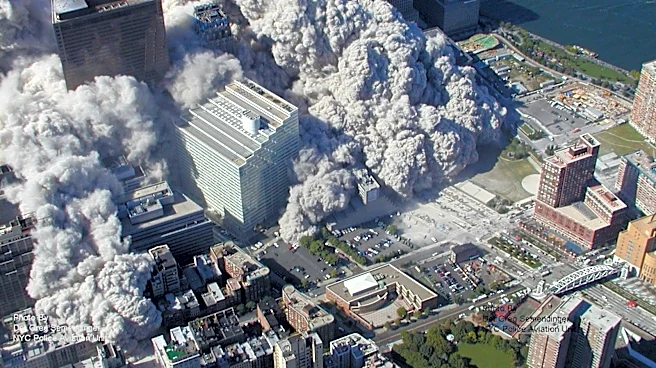
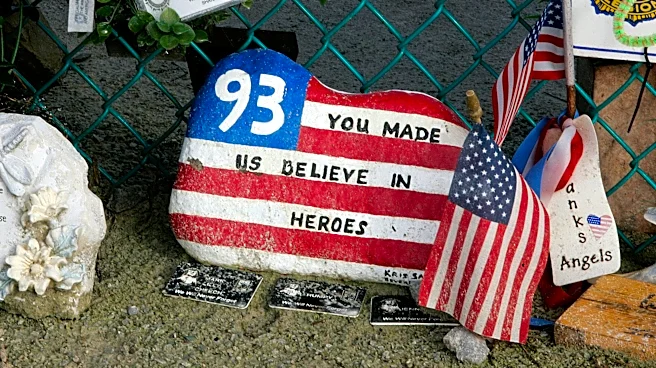
I experienced a lot of what happened that day, but I also, in my subsequent reporting, I wanted to take the reader inside the towers, for example, inside the firehouses, inside the hearts and minds of the firefighters and the police officers who responded, but also the people who survived and escaped the burning towers. And the same thing with the Pentagon. I wanted to really get inside what was going on there as people were trying to respond to this sudden attack on the headquarters of the US military. And then finally, we had this plane that went down in Shanksville, Pennsylvania, a very different piece of the narrative. I wanted to reflect what was going on inside that plane as the passengers decided to revolt essentially and fight the hijackers.
And so I wanted to pull those together and bring the reader into that. Again, 25 years later, I wanted readers to feel what happened that day and feel what ordinary people, what people just like them were experiencing.
Dana Taylor:
You wrote about ordinary people, but there are many stories of everyday heroes detailed in your book. People understood in the moment that by acting, they could save lives. Some of them survived, others didn't. Can you tell me about one of them?
Mike Kelly:
The one that sticks in my mind the most is a man named Dereck Lovell. Dereck wasn't even an American citizen. He had just come a year earlier from the country of Guyana. He was working here on a green card as a $10-an-hour security guard, and he was assigned that day to the 70th floor of the South Tower of the World Trade Center. He had never been on the 70th floor of the South Tower, so he considered this a bit of a promotion.
That particular day after the plane crashed into the South Tower, the plane hit about 10 floors above the 70th floor. Dereck took it upon himself to make sure people got off the floor and he guided people out. But there were about a half dozen members of a team from the Morgan Stanley investment group that had been delayed. And when they finally emerged near the elevators, they found that all of the escape stairways, at least the ones that they knew about, that those had been blocked.
And Dereck, there's a scene in the book where Dereck has a flashlight and a bullhorn, and he says, "In the darkness, all the lights were out." Try to picture this. Lights were out, fire was starting to creep up the walls, the building was shaking, and there was smoke everywhere. And all of a sudden, this group of staffers hears this voice, "If you can hear my voice, come to the light." And he had a flashlight, and this group of Morgan Stanley staffers came to Dereck. They had never met him before. And then he guided them to a stairwell that he had found that led them to safety.
And then, wait to hear this, then Dereck, after guiding them down the stairs, went back up the stairs to make sure that everyone else was off the 70th floor. And after doing that, he came down the stairs himself and escorted two elderly men who were having a hard time coming down the stairs. Dereck barely got out of the towers. He literally had to run for his life as the tower came down.
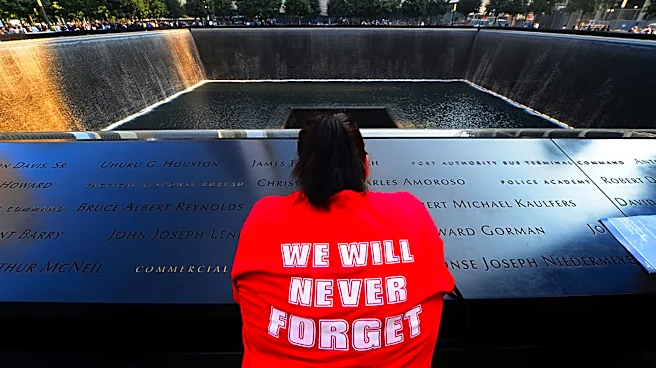
He's alive today. He's in Brooklyn. I end the book with Dereck going back to the memorial to visit the memorial and the name plate for the one person on the 70th floor who died. And this particular person, his name is Tom Swift, just happened to be in an elevator, wrong place, wrong time when the plane hit and the jet fuel from the plane went right down the elevator shaft and incinerated it. Dereck still feels guilty that he did not guide Tom to the right stairwell.
Dana Taylor:
Mike, you wrote quite a bit about Tom Swift. What was it in particular about his story that drew you in?
Mike Kelly:
Tom Swift was just like many of us. He had gone to school. He was the first person in his family to go to school, to college, I should say. He got a job on Wall Street. He was trying to climb the corporate ladder, and he was just getting to the point where he was starting to succeed. He had just completed, on his own time, night courses for an MBA. And on that particular morning, he was supposed to give a very consequential presentation to a meeting of his Morgan Stanley investment team.
I think Tom reflected so much of the ordinariness of the folks who died that day. He was just going to work, and he had dreams for the future and dreams for his own personal success, wanted to do the best he could. And I really focused on him, first of all, because he was the only one on the 70th floor who perished, but also because I felt Tom really reflected so many of the other victims in terms of his hopes and dreams.
Dana Taylor:
Many thousands of the firemen, police officers, construction workers, and others who felt a calling to go to Ground Zero and help dig out their friends and colleagues subsequently got sick from the toxic air that they breathed. In fact, you wrote that their numbers topped the victims of the 9/11 attacks. Did any of the people you spoke with regret spending so much time at Ground Zero without masks or other protective gear?
Mike Kelly:
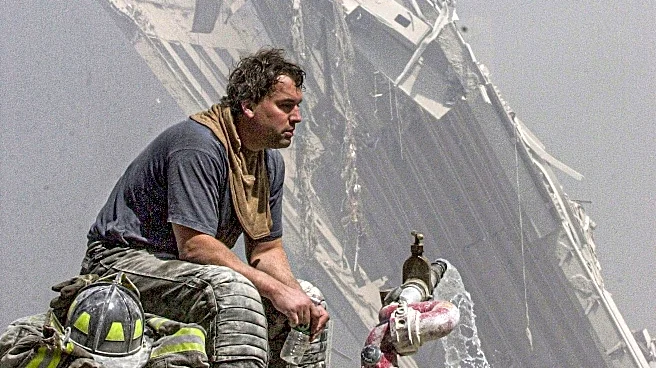
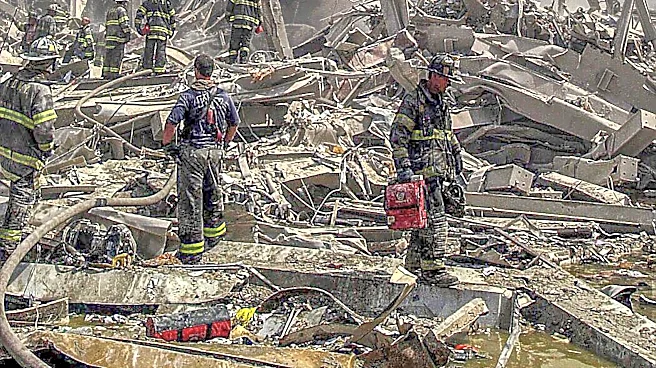
No. These folks, the first responders are real heroes. More than 400 police, firefighters, FBI agents, Secret Service agents. There were courthouse guards who ran from Foley Square. Perhaps your listeners have watched Law and Order, the courthouse with the pillars that appears in Law and Order at the beginning, that's the courthouse they ran from, and they came to Ground Zero to try to help. All these men and women were running toward the fire and they helped more than 50,000 office workers to escape. And I never met a single one who regretted what they did.
Afterwards when they went down to, we call it Ground Zero to try to search through the rubble for survivors or human remains, many of them worked day and night, sometimes without respirators or masks. And even today, even though many are getting sick, they don't regret it. These are true American heroes. They really are.
The health issue is one of the themes that I tried to develop in this book. It is a hugely consequential issue. We are talking about thousands of people who have already died from health-related problems, but the numbers I think are going to climb in the coming years. There are 60,000 cancer cases now being treated at Mount Sinai Medical Center here in New York, which is monitoring all of the health-related issues for 9/11. 60,000 cancer cases. I think the next 10, 15, 20 years, we're going to see a tremendous uptick in numbers of deaths, and I don't think our country or our government has really faced up to that fact yet.
Dana Taylor:
Mike, you focused some of your later chapters on the sustained efforts of a group of 9/11 widows who lobbied for transparency and accountability for the 9/11 attacks. The widows were given the nickname the Jersey Girls. Tell me a little bit about their story.
Mike Kelly:
Well, these are four heroines. These young women lost their husbands in the attacks and they decided, "We're not going to just sit home and grieve." They decided to go down to Washington and lobby for what became the 9/11 Commission. Basically, what they wanted to know was how did this happen? Why was our country so unprepared for this? And how can we fix this to make our country safer?
And these women would meet at a rest stop on the Jersey Turnpike. On the road down, they would change clothes into suits and dresses and that sort of thing, and then they would spend a day banging on doors of congressional representatives and US senators. And finally, they were able to get President Bush to appoint the 9/11 Commission. These women really started the ball rolling toward accountability, which is another theme that I try to develop in this book, this sense or the lack of accountability continues even to this day. We still don't know all the answers about who was behind this plot.
Dana Taylor:
It's been 25 years. As you know, there's now a whole generation of kids who weren't alive or were too young to understand what 9/11 meant. What do you hope they understand about that day?
Mike Kelly:
Couple of things I hope younger people take away from this book and also from this anniversary. The first is that the scourge of terrorism has been a horrible piece of our history for the past, really, 50 years. If you look back at the terrorism that our country has experienced, whether it's the bombing of the Marine barracks in Beirut or the Lockerbie terrorist bombing or even some of the other bombings that took place, and even now some of the domestic terrorism that takes place now and then, this is something that I think our country is going to have to live with going forward and find ways to deal with, and I'm not sure we have.
The second piece that I would like younger readers to come away with is, again, the people who died on 9/11 were just going to work. They weren't soldiers on a battlefield. They went out to do their jobs and they showed up for work, and some of them showed up in the wrong place, the wrong time. But I want people to realize that these were people just like us, just ordinary people who were showing up to work on a given day.
Dana Taylor:
The terrorist attacks of 9/11 were obviously a huge tragedy for this country and all of the families and friends who lost loved ones that day. As a reporter who's followed the work of America's intelligence agencies before and after those attacks, do you feel like we're still as vulnerable as we were back then?
Mike Kelly:
Yes. I'm not sure we're vulnerable to the kind of attack that took place on 9/11. I mean, most countries tend to prepare for the war that happened years ago. I think our country has to think about the kind of attack that could happen in the future. For example, cyber attacks, chemical attacks, that sort of thing, dirty bombs.
And also, I'm not sure our country has really focused in on the dangers of domestic terrorism, just lone wolf terrorists who decide to carry out, say, a mass shooting or that sort of thing. And we're seeing some of that in recent months, whether it's the attack on a synagogue or a Jewish school that took place a number of months ago, and even some of the other attacks that took place. Look at what happened in Boston at the Boston Marathon in 2013. I went up there and covered that. This was the work of two lone wolves who decided to set off a bomb at the finish line of the Boston Marathon.
How do we prepare for these things? I think we just have to be aware of it and have better intelligence from our police departments and better cooperation with some of the intelligence agencies at the national level.
Dana Taylor:
The stories you tell in "After Ground Zero" are sometimes raw, often painful, even after a quarter of a century. What are you most hoping readers take away from your book?
Mike Kelly:
I wanted readers to really feel this story, as I said in the beginning of our talk, as the voices of ordinary people. I wanted them to know that this was a deeply emotional experience for so many of us. Here in the New York metropolitan area, I would argue that we're all two degrees of separation from this attack. And there's 20 million of us in this region. We either knew somebody who died or we know someone who knows someone who was lost. And I think those ripples really spread around the country in terms of the connection that people had to that particular day. And I hope as we approach the anniversary, and one reason why I wrote this book was to remind people of that connectedness. I think as time rolls on, it's only natural that we tend to forget, and I just wanted people to remember. And that's one of the primary reasons why I wrote this book.
Dana Taylor:
"After Ground Zero: Everyday Americans and the Unhealed Scars of 9/11" is on bookshelves now. Mike, I so appreciate you coming on to talk about this important book that you've written, this work that you've done. Thank you.
Mike Kelly:
Thank you, Dana, and I really appreciate the work you're doing as well. Take care.
Dana Taylor:
100 million Americans, one in four, were born after 9/11. On tomorrow's episode, we'll look at how educators are teaching children about 9/11. I'm Dana Taylor. Thanks for listening.
This article originally appeared on USA TODAY: The untold 9/11 stories of ordinary Americans | The Excerpt