







Cases of COVID-19 began spiking across the United States during late summer in what's become an annual seasonal surge. Now, as the weather cools and respiratory virus season gets into full swing, COVID infections continue to grow, with Pennsylvania seeing more cases.
Whether or not viral levels within the state are categorized as "low" depends on what source you're looking at. But data across the board points to a rising level of COVID activity in Pennsylvania and most of the United States.
States seeing a fall 2026 wave of COVID-19 cases
According to CDC data, at least 12 states are experiencing moderate to very high levels of COVID-19 activity.
Wastewater data shows viral activity throughout the country. Pennsylvania is experiencing very low levels of COVID-19 viral activity, meaning the state
was seeing up to 2.6 times the baseline of viral activity. Here's a look at rates across the United States:
Wastewater data shows COVID-19 activity rising in Pennsylvania
While the CDC reports low levels of COVID-19, data from WastewaterSCAN, a wastewater surveillance program operated out of Stanford University, indicates that COVID-19 activity remains high nationwide and has risen sharply in recent weeks.
In Pennsylvania, data show an increase from early August into early September, with some dips and peaks as viral activity continued to rise between Sept. 10 and Sept. 24 (the most recent date available as of Sept. 30).
Overall, COVID-19 viral activity in Pennsylvania began rising in July after dropping off to relatively low levels in April, though it wasn't until August that levels began to rapidly increase, according to WastewaterSCAN.
In the past 12 months, the highest level of viral activity in Pennsylvania took place in December 2025, when COVID levels peaked on Dec. 30, 2025.
Map shows which states see rise in COVID-19 activity
According to CDC Rt Estimates, which measure how quickly seasonal respiratory viruses are spreading, COVID-19 infections are growing or probably growing in 27 states, declining or probably declining in 13 states, and remaining unchanged in 10 states.In Pennsylvania, COVID activity is growing, according to estimates.
What are COVID-19 symptoms in 2026?
Doctors and health professionals are recommending that everyone six months of age and older get vaccinated against COVID-19 during the flu season because the symptoms overlap. Your immune system may be weakened by one infection, leaving you more vulnerable to others.
COVID-19 and the flu have several symptoms in common. Here's how you can tell between the two viruses:
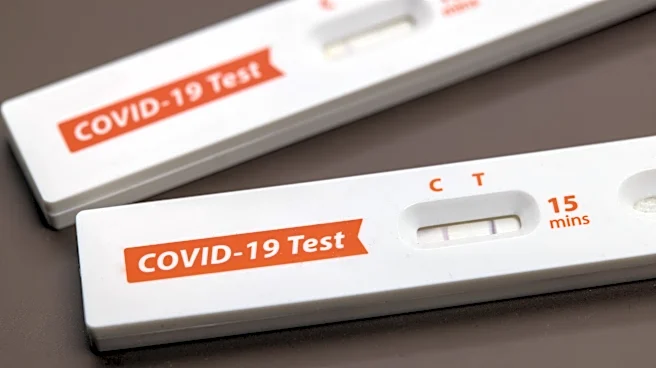
If you're testing for COVID, you're probably using an antigen test, also known as a rapid test, as those are the least expensive and most accessible to the general public. These tests are less likely to detect COVID than PCR tests, which are more sensitive, so one test alone can't rule out an infection, according to the CDC. A single positive result is a reliable way to confirm you have COVID.
According to the FDA, it's a good idea to take two tests 48 hours apart to confirm you don't have COVID if you have symptoms, and three tests 48 hours apart if you don't have symptoms but have been exposed.
Finch Walker is the Pittsburgh Connect Reporter for the USA TODAY Network. Contact Walker at FWalker@usatodayco.com. Instagram: @finchwalker_. X: @_finchwalker.
This article originally appeared on USA TODAY: COVID cases are on the rise in Pennsylvania. Here's what data shows