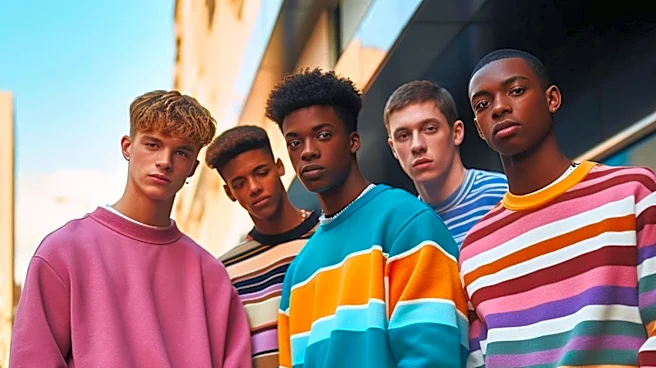




Gen Z is ruining everything.
We’re checking out of life. We dress like we've never worn clothes before. We’re creating new insults left and right. We stare at people weirdly. We're mid. We don’t drink enough. We're not having enough sex. We're doomed.
These are just a few examples of recent accusations lobbed at Generation Z, search engine optimized to drive me insane.
It’s not even that these claims are completely baseless; they’re just an annoying part of a cultural obsession with the minutiae of today’s youth.
The way we speak, our drinking habits, sex lives and social behaviors are constant topics of discussion. Sure, there are lucid critiques to be had of Gen Z – as a Gen Zer, I have plenty – but the constant, surface-level regurgitation of these
topics ignores the crumbling institutions that shape our existence. There’s an overwhelming lack of sensitivity and empathy in the way Gen Z is discussed online.
Of course it’s easier for older generations to argue over the terms and conditions of our sunscreen use than it is to grapple with the burning planet they’ve left for us.
Everyone thinks they know Gen Z
 zeitgeist is 'larping.' Though it traditionally referred to live-action-role-play, it's become a way to say poser, try-hard or fraud." id="91239080007">
Generational warfare is a tale as old as time. Boomers and Gen Xers blamed millennials for everything. But something about the current cultural obsession with Gen Z feels different.
Perhaps it’s because, for the first time ever, all generations coexist on the same digital plane, creating a sense of hypervisibility that breeds false overfamiliarity. Flattened social media presences create stereotypes and strawmen about Gen Z that are easy for our detractors to ridicule and dismiss. So much gets lost in translation from those who weren’t keen on understanding us anyway.
To many, we’re just socially inept and rude, sexless and puritan, moralist and conservative. These aren’t exactly untruths, but ardent Gen Z critics posit these phenomena as uniquely ours when they’ve appeared across generations for centuries. None of Gen Z’s unsavory behaviors are particularly new.
The moral panic around Gen Z ignores the milieu that influences these behaviors and seems more focused on poking and prodding than actually understanding.
Take, for example, the trite attempts at decoding Gen Z language that only mystify us more.
Gen Z 'lingo' has deeper meaning
Gen Z "lingo" and humor are largely based on niche references. Some things don’t need to be explained.
Being “in the know” is the entire joke most times. The news media has a job to do, but plucking these terms out of relative internet obscurity and presenting them to an unknowing audience kills the exclusivity that “birthed” these terms and opens them to misinterpretation. As a Gen Zer, there are plenty of “Gen Z terms” that I don’t know and have no interest in learning because they have no place in my vocabulary.
This decontextualizing is ironic, though, since most Gen Z lingo is divorced from its original meaning. Incel, or involuntary celibate, culture has wormed its way into the popular youth lexicon with suffixes like “-maxxing,” “-pilled” and “-mog” that are tacked onto everyday words to give them new meaning.
“Looksmaxxing” is the most popular out of these incel-borne terms and we have influencer Clavicular to thank. Perhaps, in this case, it's good that most people who use these terms are unaware of their dangerous origins, but it's still worrisome that language based on eugenicism, racism and misogyny has become so ubiquitous.
In other cases, this decontextualization erases the marginalized communities who originated certain terms. Much of what’s deemed as “Gen Z” slang can be attributed to African American Vernacular English and queer, Black ballroom culture.
Much of Gen Z lingo (like “LARP” and “polyester,” #ew) spawns from our desire for authenticity in a commercial, curated digital landscape. What if, instead of presenting these “insults” as fleeting trends (by the time legacy media picks up on them, they’ve already fallen out of fashion), we worked toward a culture where Gen Z doesn’t feel the constant need to run from ourselves?
Despite pedantic cultural narratives, Gen Zers are not all aloof snowflakes incapable of dealing with the hardships of life. Instead of engaging with divisive, cyclical generation spats, we’d be better served listening and learning.
Kofi Mframa is currently LARPing as a columnist and digital producer for USA TODAY.
This article originally appeared on USA TODAY: Why is everyone so weird about Gen Z? | Opinion