

On the Thursday, August 6, 2026, episode of The Excerpt podcast:
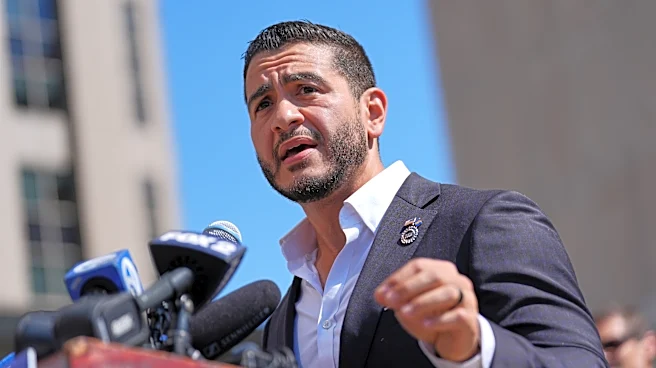
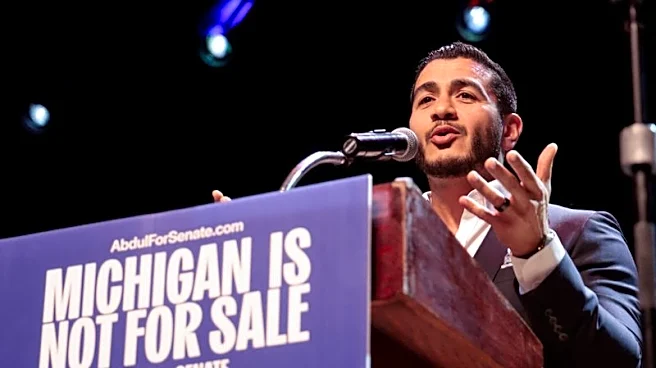
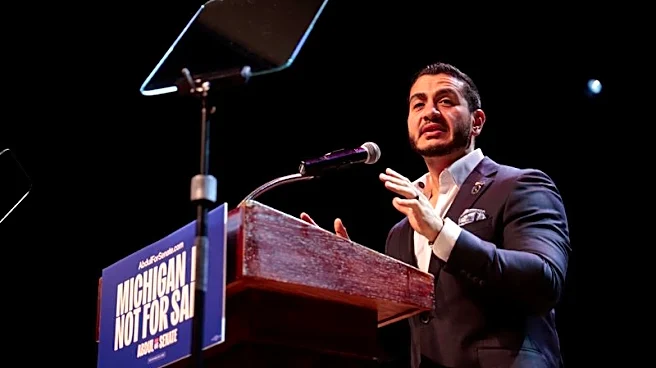
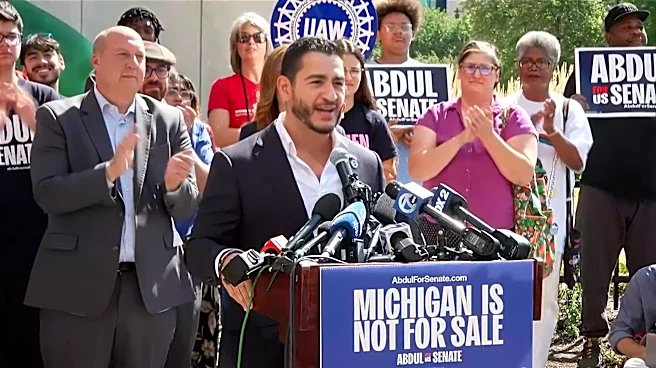
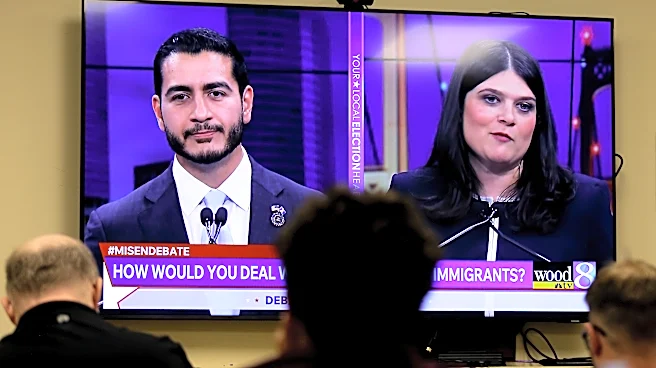
In a nail-biter Democratic senate primary in Michigan, progressive insurgent Abdul El-Sayed defeated establishment candidate Representative Haley Stevens, a four-term centrist congresswoman, in what could signal a further sign of change to the party’s direction. USA TODAY Washington Bureau Chief Susan Page joins The Excerpt to share her analysis of the race.Hit play on the player below to hear the podcast and follow along with the transcript beneath it. This transcript was automatically generated, and then edited for clarity in its current form. There may be some differences between the audio and the text.
Podcasts: True crime, in-depth interviews and more USA TODAY podcasts right
here
Dana Taylor:
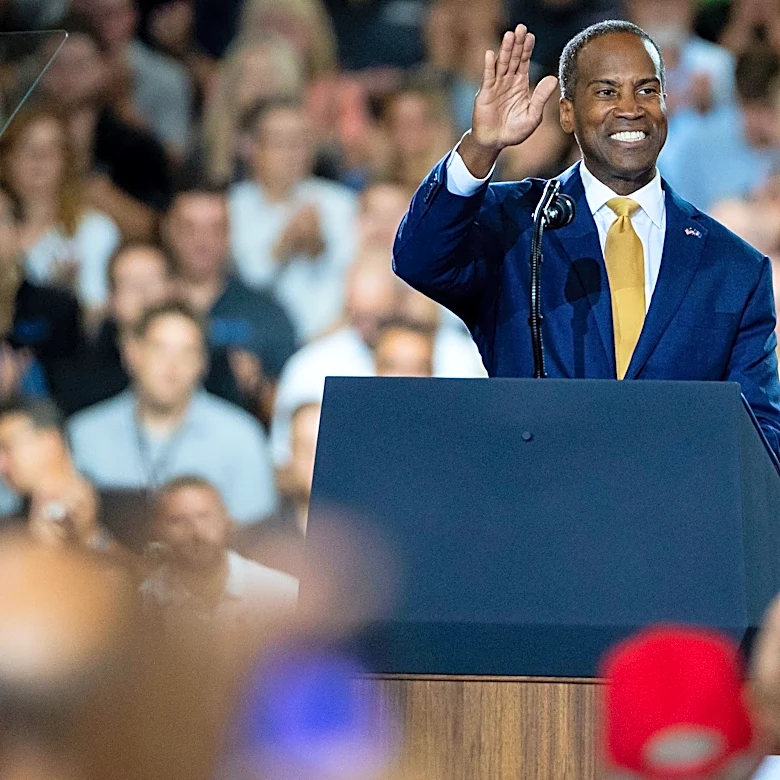
In a nail-biter Democratic Senate primary in Michigan, progressive insurgent Abdul El-Sayed defeated establishment candidate Representative Haley Stevens, a four-term centrist congresswoman in what could signal a further sign of change to the party's direction. While there were four other state primaries on Tuesday night, the Michigan Senate race has been seen as pivotal to the Democrat's bid to reclaim control of the chamber this November. The question now, can El-Sayed galvanize enough voters to win over Republican Mike Rogers?
Hello, and welcome to USA TODAY's The Excerpt. I'm Dana Taylor. Today is Thursday, August 6th, 2026. Joining me now to share her analysis of this heated contest for the Michigan Democratic Party is USA TODAY Washington Bureau Chief Susan Page. Susan, thank you so much for joining me.
Susan Page:
Hey, Dana, glad to be with you.
Dana Taylor:
Let's talk about El-Sayed's very narrow win here. A lot of money was poured into this race. Tell me what stood out to you in the campaign.
Susan Page:
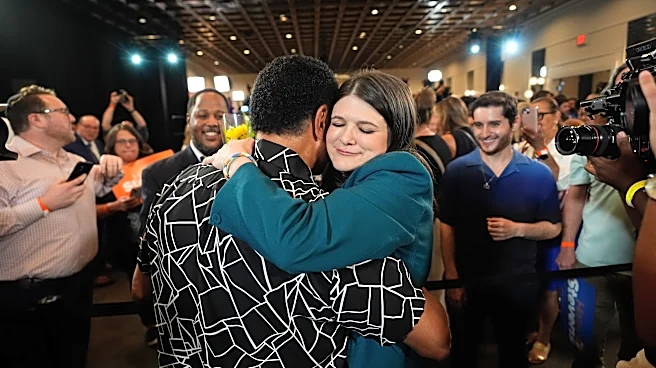
Man, what an election night. It went on forever. The race didn't get called until the next morning. It turned out to be closer than we expected, and it featured a lot of spending. This was the most expensive Senate primary in the history of Michigan. It was the third most expensive Senate primary of anywhere in the country ever. And it was really marked by a flood of outside money, much of it going to Haley Stevens and much of it from AIPAC and other pro-Israel groups. So the money itself became one of the issues in the campaign, and it was one that was a mixed blessing for Haley Stevens because while it gave her a lot of TV ads on the air, it also gave an issue about the role of money in politics to her opponent.
Dana Taylor:
What was the turnout here?
Susan Page:
Man, turnout was high. More than 1.5 million Democrats voted in this Senate primary. That's one of the highest numbers in Michigan for any primary in a non-presidential year. And it could be encouraging news for the Democrats. If Democrats can unite, that's a lot of voters, many more voters than turned out for the Republican primary, about 900,000 voters turned out there. Of course, they didn't have this very heated nomination race, so not really an apples to apples comparison. But the turnout showed just how much attention Democrats in Michigan were paying to this race. Democrats not only in Michigan, Democrats all across the country.
Dana Taylor:
Susan, tell me a bit more about El-Sayed. Who is he and what were his main campaign messages?
Susan Page:
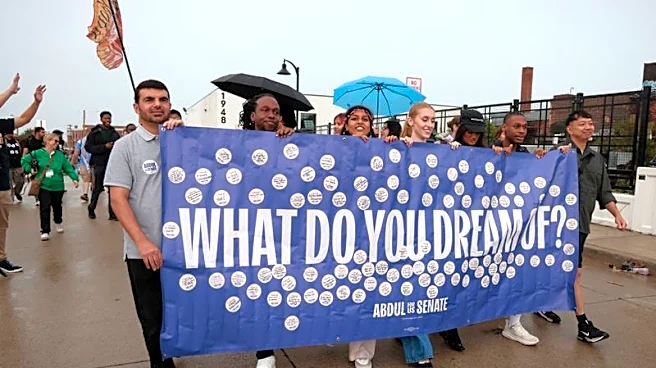
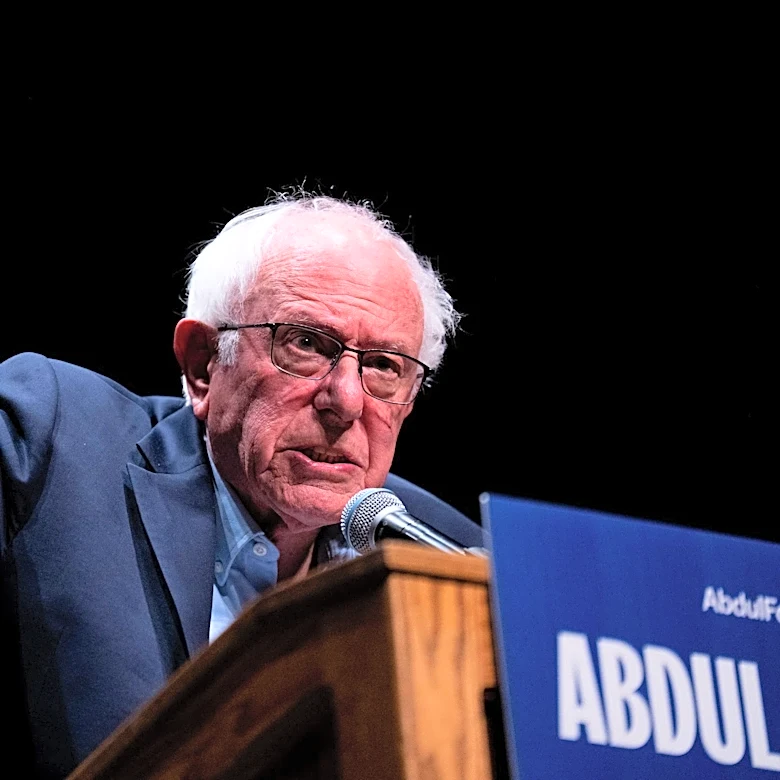
Well, he was the leftist insurgent in this race. He's a former public health official in Wayne County, the biggest county in Michigan, the one that includes Detroit. He is not a member of the Democratic Socialists of America, although he was supported by some of their leaders. Very liberal positions he took, but he insists he is not a socialist. He says he's a capitalist. He had the clearest campaign message we've heard in a long time. Three parts, he repeated it at every rally he gave. It was money out of politics, money in your pocket, Medicare for all. And that is, we know, a really smart campaign strategy for candidates to take to be very clear and simple and choose a few things that they're going to focus on and things that they know are important to the voters they're trying to get.
Now, one other thing that should be noted about El-Sayed, son of Egyptian immigrants. If he wins election in November, he'll be the first Muslim in the US Senate. And he didn't shy away from his identity. He campaigned a lot and relied on Arab-American votes in Dearborn and elsewhere. And he didn't try to moderate these liberal positions against this more centrist candidate he was facing, Haley Stevens.
Dana Taylor:
What did the polls predict for this race and why were they so wrong?
Susan Page:
So wrong. The polls were so wrong. There were four big polls in the last weeks of the campaign. Three of them said that El-Sayed would win by double digits, and one of them said that Haley Stevens would win by seven percentage points. All of them were wrong. It turned out to be a very close race. El-Sayed won by about one percentage point. That's one reason the count took so long and so long to come to a conclusion about who had won. And the reason we think that the polls were so wrong was that they miscalculated who it was going to turn out to vote, because that is the job number one for a pollster to do. I think all of them missed the mark on this one.
Dana Taylor:
Why does this Michigan Senate nomination matter so much?
Susan Page:
Two reasons. One is we had this contest once again between a leftist challenger and an establishment favorite. Now we've seen that before in Maine and New York City and California and Colorado, but this was a race not in safely democratic territory. This was a race in swing territory. Michigan is really the quintessential swing state. You just look at its presidential history. Michigan voted for Barack Obama twice, it then voted for Donald Trump in 2016. It switched to Joe Biden in 2020 and back to Donald Trump in 2024. So this is a swing state, and the question going into this race was could the leftist candidate do as well in Michigan as they had done in these other bluer states?
There's a second thing, and that is the Michigan Senate contest is crucial to Democratic hopes of winning control of the Senate. They have a really high task when it comes to the Senate. Democrats are reasonably confident they're going to win back control of the House of Representatives. The Senate is a tougher task. To win control, Democrats need to flip four seats now held by Republicans. That's pretty hard. And they need to keep all the Senate seats that they have themselves. And of the Democratic seats that are up for election in November, Michigan is seen as the most competitive one. So the question is, can El-Sayed hold on to the Senate seat that's been held by Gary Peters, the retiring Democrat?
Dana Taylor:
And what does El-Sayed's win say about the future direction of the Democratic Party? Does this get read as a Mamdani moment for the Midwest?
Susan Page:
Well, the progressives had hoped this would be a Mamdani-like moment for the Midwest because after that big victory in New York City, electing the first Democratic socialist as mayor of New York City, there was a hope they could show real strength in the heartland. And they did show strength. They won the race. That's something, but it was so much closer than expected. It was only less than 15,000 votes out of 1.5 million cast. And so the closeness of the race made this less than a Clarion call that said that the most progressive Democrats can thrive everywhere. They did okay, but not quite as well as they had hoped.
Dana Taylor:
As I mentioned, we had primaries in four other states on Tuesday night, Kansas, Missouri, Virginia, and Washington. Any big takeaways from those elections?
Susan Page:
Yes, let me talk first about my home state of Kansas. There was a matter on the ballot that would've changed the selection of the Kansas State Supreme Court from making it a gubernatorial appointment process to elected positions. This is something that Republicans were pushing and voters rejected it decisively by almost two to one, even though Kansas is a pretty red state.
And in neighboring Missouri, voters also rejected another ballot proposal that would've made it harder for citizens to amend the state constitution. In both these cases, they were red states where the voters rejected proposals that were pushed by the Republican Party. I thought that was interesting.
Dana Taylor:
Taken together, do Tuesday's results add up to a clear story about the overall direction of the Democratic Party?
Susan Page:
The thing that I thought was most fundamentally interesting about the Senate race in Michigan was the contrast in coalitions. You look at Haley Stevens, her greatest strength was among Black voters in Detroit. That's very traditionally such an important part of the Democratic Coalition. She did well among Jewish voters and amongst some working class voters, workers without a college education. El-Sayed had a different coalition. He had, as I mentioned, the support of a lot of Arab-American voters. He also was the overwhelming favorite among young voters and among white voters with a college education. And in fact, you saw him just swamping the opposition in the college towns of Ann Arbor and East Lansing. This is the question for the Democratic Party. What composes the Democratic Party? What voters? And where do they stand, including on some of the issues that really divided them in this race, like support for Israel and how to view the conflict in Gaza?
Dana Taylor:
What will you be looking for next, Susan?
Susan Page:
Next week, another primary this time in Wisconsin next door to Michigan. And once again, you have a race that will have a very liberal candidate, Francesca Hong, running for the Democratic nomination for governor this time. And the question is, will more centrist Democrats be able to defeat her bid for that nomination?
Dana Taylor:
Susan Page is USA TODAY's Washington Bureau chief. It's always great to have you here, Susan.
Susan Page:
Hey, thank you.
Dana Taylor:
Thanks for listening. I'm Dana Taylor. Our stories come from USA TODAY journalists across the country. Like and subscribe to stay connected.
This article originally appeared on USA TODAY: With a nail-biting win, Dems pin their hopes on Michigan in midterms | The Excerpt