








Recent deaths in the nation's South from waterborne microorganisms raises fresh awareness of the threat from two rare but potentially deadly pathogens.
In Louisiana, an 8-year-old girl died after contracting Naegleria fowleri, also known as brain-eating amoeba, after swimming in a northern Louisiana reservoir.
Meanwhile in Florida, a third death in less than a month was attributed to the flesh-eating bacteria Vibrio vulnificus, which thrives in warmer, brackish seawater or by eating raw or undercooked shellfish.
According to the Centers for Disease Control and Prevention, the two pathogens have become increasingly common in U.S. freshwater lakes and brackish waters in recent years, a trend linked to rising water temperatures driven by climate change.
How do these pathogens enter the body?
The brain-eating amoeba and flesh-eating-bacteria are known to thrive in warm-water environments.
The brain-eating amoebas are more commonly found in warm freshwater lakes and rivers, while the flesh-eating bacteria are primarily found in warm brackish water, which is a mix of fresh and salt water.
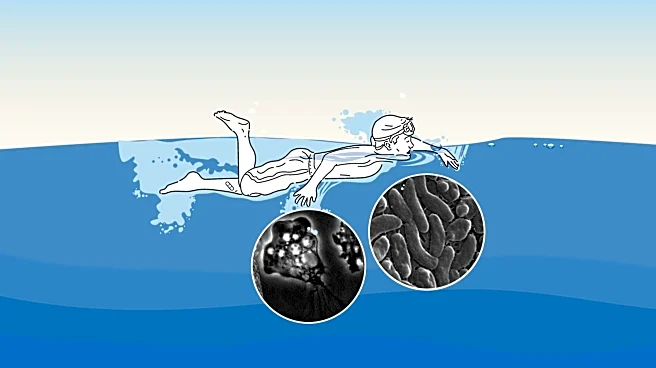
Here's how both pathogens can enter the body during water activities:
Why is it called a brain-eating amoeba?
The amoeba is often referred to as "brain-eating" because it can cause an deadly infection called Primary Amebic Meningoencephalitis (PAM) that destroys brain tissue.
The brain-eating amoeba usually kills fewer than 10 Americans each year. In particular, only four survivors have been identified out of 167 instances that have been recorded in the U.S. between 1962 and 2024, according to the CDC.

Why is it called a flesh-eating bacteria?
The bacteria is often referred to as "fleshing-eating" because it can cause necrotizing fasciitis, which destroys muscle and skin tissue. It can enter through a cut, but it cannot penetrate unharmed skin. The bacteria can also enter your body when you eat uncooked or undercooked shellfish.
The flesh-eating bacteria is rare, but it can be life-threatening. Without treatment, death can occur in just a few days. An average of 150 to 200 cases are reported each year, with most of them in Gulf Coast states, according to the CDC.
Take these precautions during water activities
Swimmers, particularly those in southern states and warm coastal waters, should expect a minimal risk of contracting a pathogen in warm freshwater lakes, rivers, brackish waters and hot springs. How to lower your risks:
Medical experts always recommend keeping a close eye on children when they play or swim in the water. While it's uncommon for adults to swallow water while swimming, children are far more prone to do so, according to VCU Health.
Researchers are unsure why boys appear to be most at risk of being infected. It may be because they are more prone to play in the sediment at the bottom of lakes or jump and dive into the water, according to the CDC.
Progression of infection: Know the symptoms
Because of the life-threatening results, it is important to be know of symptoms and significance of seeking immediate medical assistance following any exposure. Here is a comparison of symptoms of the flesh-eating bacteria vs. the brain-eating amoeba:
CONTRIBUTING Julie Garisto, T. Sudore and C.A. Bridges/USA TODAY NETWORK, Christopher Cann and George Petras/USA TODAY
SOURCE Centers for Disease Control and Prevention, National Institute of Health, Cleveland Clinic, WebMD, VCU Health, The Florida Department of Health, Nature.com, New York Times, WFLA (Tampa) and USA TODAY research
This story was updated to add new information.
This article originally appeared on USA TODAY: Recent deaths spotlight flesh-eating bacteria and brain-eating amoebas