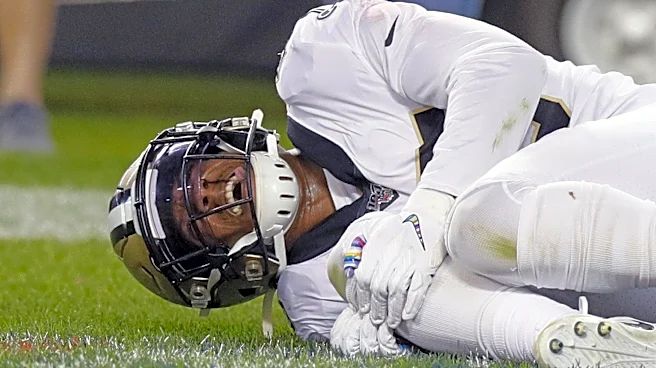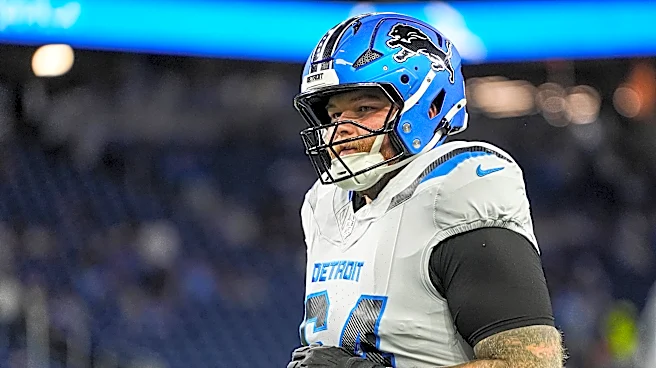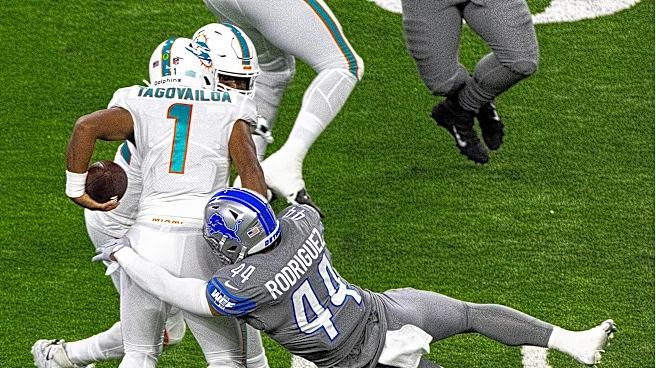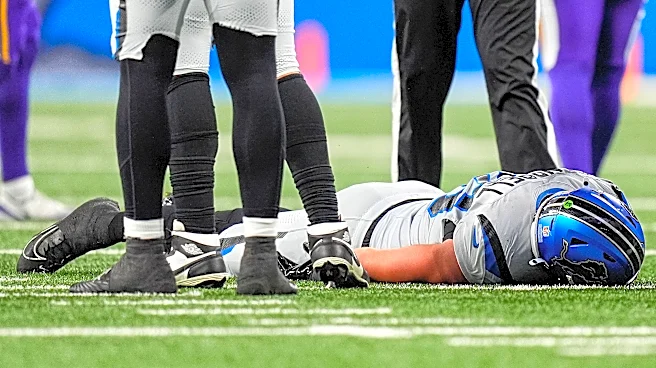


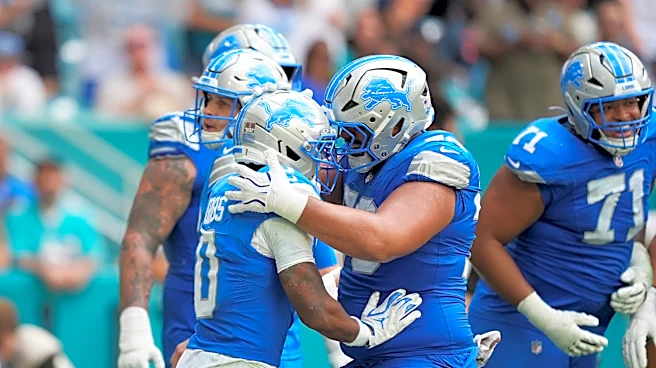
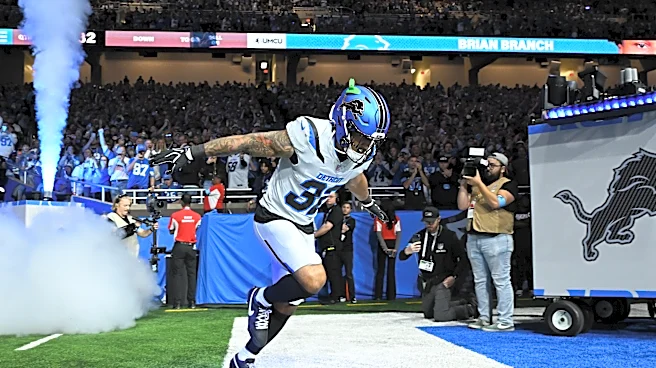
Last Sunday at Ford Field, when Detroit Lions linebacker Jack Campbell went down on what seemed like a routine tackle, and he didn’t get up, and he still didn’t get up, and his inert body on the turf resembled a man who had been dropped from a plane, I was, like many of you, stunned and saddened.
But I also flashed back to another game, in the Pontiac Silverdome 35 years ago, when Lions offensive lineman Mike Utley, on a touchdown pass, lost his balance during the block and was driven into the turf at a horrific angle, causing his head to snap back and leaving him paralyzed from the neck down.

I then realized both tragedies occurred on the first play of the fourth quarter, and I flashed back once again, this time to 1997, another fourth quarter at
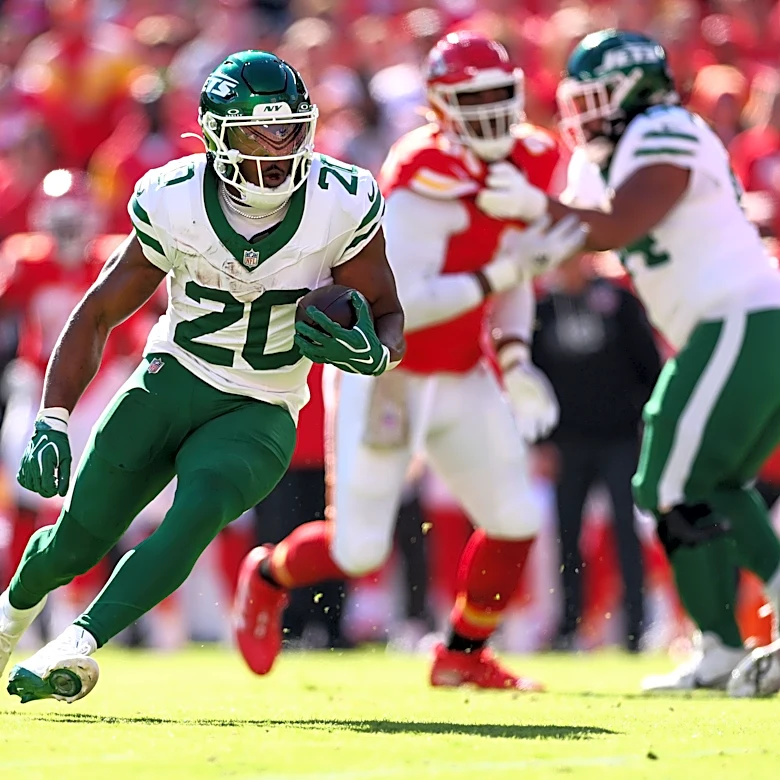
the Silverdome, when Lions linebacker Reggie Brown went to tackle a New York Jets running back and collided with another Jets lineman right at the head and the neck.
Brown stopped breathing. His esophagus locked. His lips turned blue. The Lions medical team literally had to bring him back to life, and he, too, was initially paralyzed. He eventually recovered, but his NFL career was done.
He was 23.
In all three cases, the reaction was the same. A hush over a previously raucous crowd. Players shaking their heads, fighting back tears, on their knees in prayer. TV announcers dropping their voices to somber-toned declarations about “we hope he will be all right” and “this is the hard part of football.”
And in each case, after a stretch of time, the player was carted off to cheers from the home crowd. The broadcast came back from commercials.
And play resumed.
Three Lions. Similar fates. And I have found myself, after each awful incident, asking the same question: Should we still be playing this sport?
It's entertainment
We all know NFL football is tremendously violent and wildly dangerous. We also know it’s optional. It isn’t firefighting, a perilous job necessary to society.
No, the NFL is entertainment. One of the richest forms of entertainment in the world. Hundreds of millions of viewers around the globe, a Super Bowl that is the single biggest sports night in America. Players get paid crazy salaries, with quarterbacks now earning north of $60 million a year.
But it’s not mandatory. There are many nations that don’t play football and some cultures that would find it violent to the point of illegality.
Which leads you to play this game in your head: If football didn’t exist, Jack Campbell would be walking today, Mike Utley would be walking today, Darryl Stingley would not have been a quadriplegic, countless players wouldn’t have spent their older years with issues related to CTE (chronic traumatic encephalopathy) or have died as a result of them.
Then again, if the world had banned boxing, Benny Paret, Kim Duk-koo, Davey Moore and Maxim Dadashev might still be alive, instead of dying shortly after fights with severe brain injuries.
And if they banned race car driving, Dale Earnhardt and Ayrton Senna might still be with us, instead of dying in crashes.You can go on and on. Professional bull riding. Mixed martial arts. No sport, no death from the sport.So why does that never get raised when a horrific scene like Campbell going down last Sunday happens?
The price they pay
It doesn’t get raised because the athletes and coaches are never the ones raising it. It’s always someone from the outside. A spine specialist. A neurosurgeon.
When Dr. Bennet Omalu, a Nigerian-born forensic pathologist and neuropathologist, first discovered CTE in American football players in 2002, the NFL’s response — instead of being, “Wow, we need to step back and make changes” —was to discredit him for years and attack his research.
That’s because the business of football has always been a bigger concern to owners than the casualties of it. But you can’t lay the blame solely on them.
The fact is, virtually all the men playing in the NFL want to be there. They know the risks. Or they believe they know the risks. Maybe they think it won’t happen to them. And maybe they think differently when it does.

Or maybe not. Utley, 25 years after his injury, told the media at his College Football Hall of Fame ceremony, "I miss [football] tremendously, and I would go do it all over again even though I'm sitting in here a crippled dude."
A different breed
Football has often been likened to the Roman gladiators, who often fought to the death to the pleasure of crowds. There are similarities. Cheers for hits. Louder cheers for bigger hits. But did you know that every gladiator had to take an oath before joining the fraternity: "To endure to be burned, to be bound, to be beaten, and to be killed by the sword"?
In other words, they knew what they were getting into. So do football players like Campbell. You rewatch that scene of him flat on Ford Field, you read about his college sweetheart wife and their 4-month-old baby, and your heart breaks, and maybe you say, “If only he hadn’t played football.”
But I don’t think he says it.
These NFL guys are not the same breed as the rest of us. Same for race car drivers and boxers. A reporter once asked Mike Tyson why he was coming back to boxing after numerous controversies, declining skills, and continued risks to his body and head.
“I’m a fighter,” he said, simply. “A fighter fights.”
His choice. Campbell’s choice. And our choice to watch or turn away.
Contact Mitch Albom: malbom@freepress.com. Check out the latest updates on his charities, books and events at MitchAlbom.com. Follow @mitchalbom on x.com.
This article originally appeared on Detroit Free Press: After injuries like Jack Campbell's, a question remains | Mitch Albom