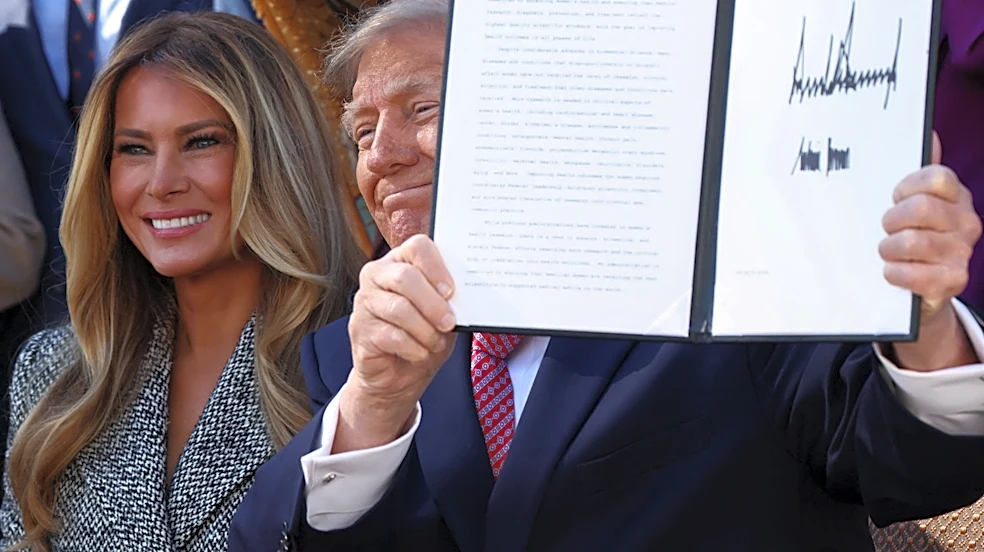





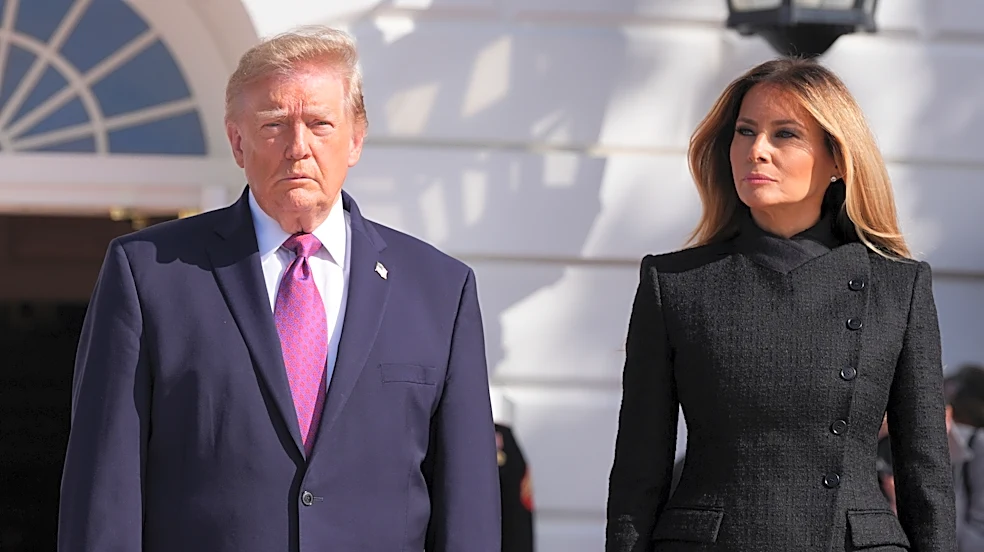
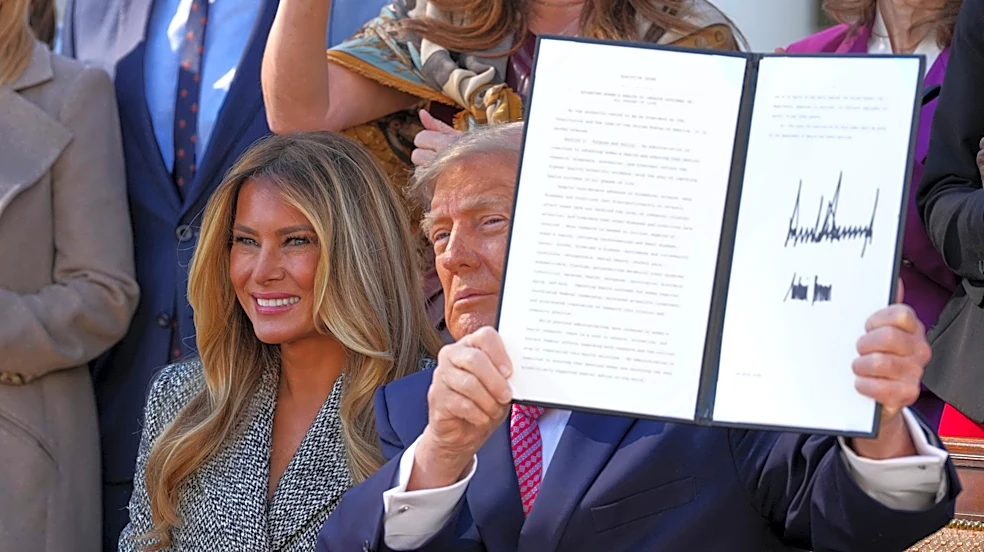
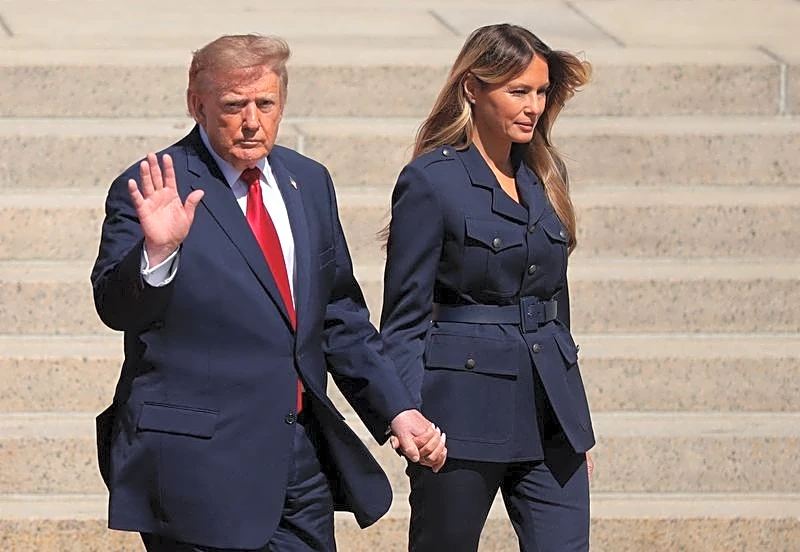

An executive order signed by President Donald Trump at the behest of first lady Melania Trump is promising changes to women's healthcare - and leaving some to wonder what it means.
The Oct. 19 EO commits to "advancing women’s health" through the creation of a dedicated task force and office within the National Institutes of Health, an idea USA TODAY exclusively reported came to fruition after the first lady met with officials from the Department of Health and Human Services and undertook working sessions with doctors and other experts in public and private health.
Notably, the order outlines plans to support and enhance research and medical care through grants and other initiatives, but it did not commit specific funds to the projects.
Some experts
in the space, like the Society for Women’s Health Research (SWHR), the American College of Obstetricians & Gynecologists (ACOG), and the Women First Research Coalition (WFRC), praised the move, saying in a joint statement on Oct. 19, "(we) welcome the administration’s announcement of an Executive Order that would establish a new women’s health division within the National Institutes of Health as well as create a White House Women’s Health Task Force that will better prioritize and integrate women’s health and research across the federal government."
Trump's second term has been marked by the targeted reduction of projects it considered to be about "illegal DEI", or diversity, equity, and inclusion, which included research grants and educational programs aimed at women's issues. As a result, some groups have raised questions about the order and its implementation.
“Women’s health has long been ignored as a federal priority, and while we agree that steps must be taken to close disparities in women’s health care, it’s hard not to point out the blatant hypocrisy of this unfunded order coming from an administration that is actively decimating health care access for women,” Dorianne Mason, senior director of health equity and contraceptive access at the National Women's Health Center, said in a statement shared with USA TODAY.
USA TODAY contacted the White House for comment Oct. 21, but has not received a response.
The president's order focuses mainly on reorganization and policy planning, leaving American women to wonder if their healthcare will be meaningfully impacted in the near future. Here's what we know about what the executive order does, doesn't do and may mean down the line.

What changes for women now?
The average American woman is not likely to see any significant, immediate changes to their healthcare following the order, as it mostly focuses on reorganization and policy commitments.
It does not create a new healthcare entitlement, guarantee insurance coverage for treatment, restore funding cuts to reproductive health programs, expand abortion access or create new research funding levels.
What it does do is promise more research on conditions that affect women, which could eventually lead to new drugs, better treatments, diagnostic tools and clinical guidelines, and establish a commitment to more focus on menopausal care. It also aims to coordinate research and healthcare efforts across the federal government, rather than leaving it scattered among various agencies, which could create a more streamlined process for medical advancements.
The full extent of the potential impact will depend heavily on funding, which has yet to be disclosed or determined.
What has been done already
A fact sheet accompanying the executive order outlined actions the administration says it has already taken to advance women's health, including:
- The Working Families Tax Cuts Act, part of the One Big Beautiful bill, which expanded child tax credits, permanently extended existing tax cuts from 2017 and created "Trump Accounts,"a new savings account program for children.
- Removed the "black box” warnings on hormone replacement therapy products for menopause, making them more accessible to women.
- Made 26 deals with pharmaceutical manufacturers and launched TrumpRx.gov to make drugs, including fertility treatment, cheaper.
- Launched Moms.gov to "support new and expecting mothers."
- Releasing updated nutrition guidelines that include specific advice for pregnant and lactating mothers.
What the executive order says will be done
The order outlined the establishment of the Women’s Health Division within the NIH and the White House Women’s Health Task Force. These won't replace the NIH Office of Research on Women’s Health, but instead aim to coordinate research and policy across federal agencies.
The new NIH division will help oversee research grants, coordinate studies across agencies, improve data collection, and push for faster advances in diagnosis and treatment for conditions affecting women, according to the White House. It is to be established within 90 days of the order.
The task force will be led by Trump’s Chief of Staff Susie Wiles, who has recently been vocal about her breast cancer diagnosis and treatment, and Health and Human Services Secretary Robert F. Kennedy Jr., USA TODAY reported.
Other members will include the secretaries of Defense, Agriculture, Labor, Education and Veterans Affairs; the heads of the Environmental Protection Agency, Food and Drug Administration, Centers for Disease Control and Prevention, National Institutes of Health, Advanced Research Projects Agency for Health and Centers for Medicare and Medicaid Services; as well as other administration officials selected by the task force's co-chairs. Under the current administration's appointments, this would entail a task force that is 62% male (8) and 38% female (5).
Like the NIH division, the task force will help shape research priorities, guide funding and grants and work with states, healthcare providers and other organizations, per the White House. Previous initiatives were also revoked as part of the overhaul, including an executive order on women’s health signed by President Joe Biden in March 2024, which also focused on heart disease, menopause, perimenopause, endometriosis and Alzheimer’s Disease.
The order also said it will aim to enable more research on health conditions that disproportionately affect women or have limited research on how they affect women, including:
- Cardiovascular and heart disease
- Cancer
- Stroke
- Alzheimer’s Disease
- Autoimmune and inflammatory conditions
- Osteoporosis
- Mental health
- Chronic pain
- Endometriosis
- Fibroids
- Polyendocrine metabolic ovary syndrome (formerly PCOS)
- Infertility
- Maternal health
- Menopause
- Neurological disorders
- Aging
- "and more"
However, the administration has yet to say how much, if any, money will be allocated toward these efforts. The NIH already spends about $5 billion annually (10% of its budget) on women's health research, according to USA TODAY's previous reporting. If Congress or the administration directs significant new funding toward women's health research and treatment, the effects could be substantial over time, including new and more easily accessible treatments and drugs, better medical understanding of women's health issues, improved clinical guidelines and more awareness and education on issues affecting women.
If it primarily remains a reorganization effort, the effects may be felt less widely.
The Trump administration and women's health
While the announcement touts accomplishments like releasing new nutrition guidelines and the Working Families Tax Cuts Act, the Trump administration has drawn criticism for its handling of women's health issues during both the president's first and second terms.
Since returning to office in 2025, the administration has reduced funding and staffing for several women's health programs. Some of these actions included freezing funding for some Title X family planning providers, cutting public health staff at the CDC Division of Reproductive Health, removing or revising reproductive health information from federal websites, halting some maternal-health data collection, reviewing the abortion pill mifepristone against scientific consensus and signing legislation making substantial changes to Medicaid and ACA funding.
Some of the most visible cuts came through DOGE and broader agency restructuring efforts.
According to the Center for American Progress, DOGE eliminated at least $3 billion in grants tied to women's health, safety and economic security as part of the administration's rollback of DEI-related initiatives. Among the canceled projects were studies on menopause, uterine fibroids, pregnancy risks, breast cancer and Alzheimer's disease. DOGE also cut funding for programs supporting domestic-violence survivors, women in STEM fields, and initiatives designed to increase the number of Black women entering biomedical research careers.
The administration also sharply reduced capacity in federal health agencies tasked with overseeing women's health issues. Most staff in the CDC Division of Reproductive Health were terminated or reassigned, according to a review by the American Society for Reproductive Medicine, including teams responsible for fertility surveillance, contraception guidance and assisted reproductive technology monitoring. The administration also paused data collection for the Pregnancy Risk Assessment Monitoring System (PRAMS), a long-running maternal and infant health survey.
Supporters say the changes reduce government spending, streamline federal agencies and refocus programs on core health priorities rather than DEI initiatives. Detractors argue the cuts weaken women's health research, reproductive-health services and maternal-health programs, making it harder to address health disparities and expand access to care.
This article originally appeared on USA TODAY: Trump's women's health order promises change. What's next?