







Most people are at least familiar with the concept of the "Big Bang" – the violent, chaotic moment when the universe is theorized to have burst into existence.
But about 380,000 years after the Big Bang, cosmic forces combined to plunge the fledgling universe into something of a dark age.
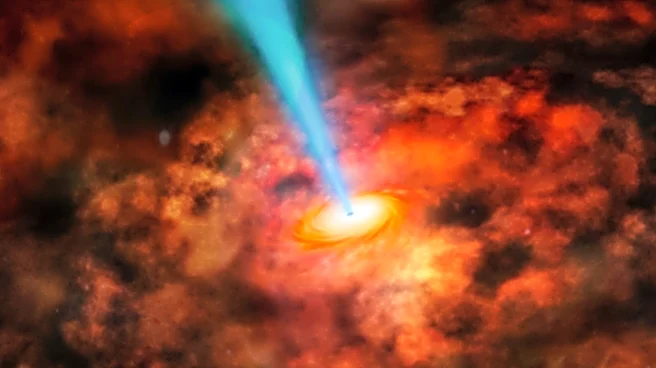
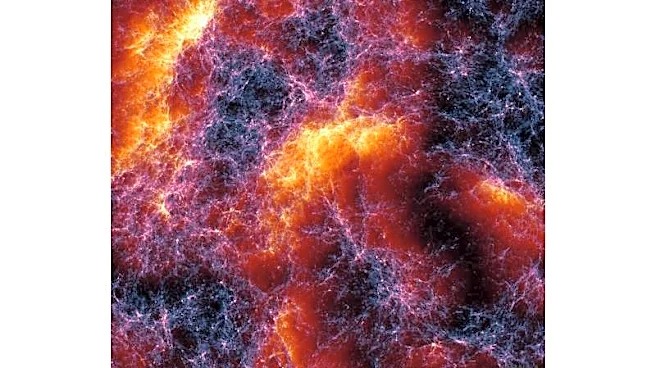
Now, one of the largest and most detailed simulations of the universe ever created shows the cosmos emerging from that period and evolving into what astronomers observe today.
Known as "Lumina," the complex computer simulation shows how the first galaxies, stars and other astral phenomena developed and evolved over the ensuing millennia.
Here's how you can watch the cosmic dawn and the early days of the universe.
of 2026
New simulation shows how dark age following 'Big Bang' came to end

A team of physicists from the Massachusetts Institute of Technology (MIT), Harvard University and elsewhere are behind the new computer simulation named Lumina, which purports to detail 2 billion years of cosmic evolution.
The simulation, which is available to peruse and explore on the project's website, shows "one of the most dramatic transformations in the history of the universe," the team explains. The project was simultaneously introduced in a study published Oct. 26 in the journal Monthly Notices of the Royal Astronomical Society, as well as a press release.
Lumina's simulations begin around 45 million years after the "Big Bang," when the universe is still ensconced in a cosmic dark age, as neutral hydrogen shrouded the universe, preventing light and other forms of radiation from traveling.
The simulation covers a massive patch of the early universe, spanning about 1.6 billion light-years, as phenomena like dark matter, gas and stars form and grow. The scale is massive, the team explained, encompassing "a volume that is 100 times larger than previous best simulations,” study author Mark Vogelsberger, a physicist at MIT, said in a statement.
Lumina data could be compared to Webb, Roman telescope observations

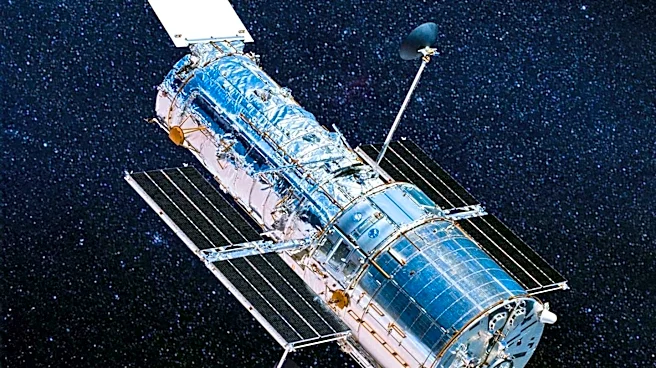
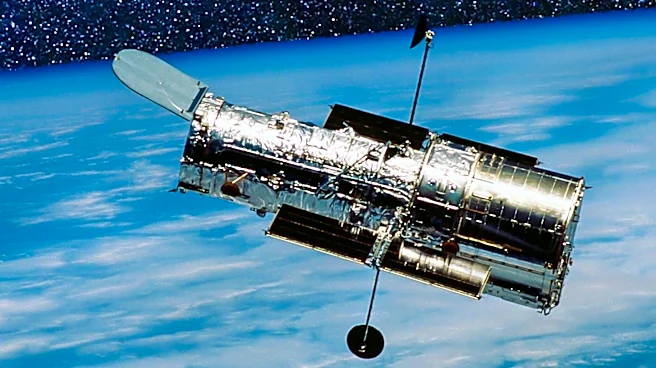
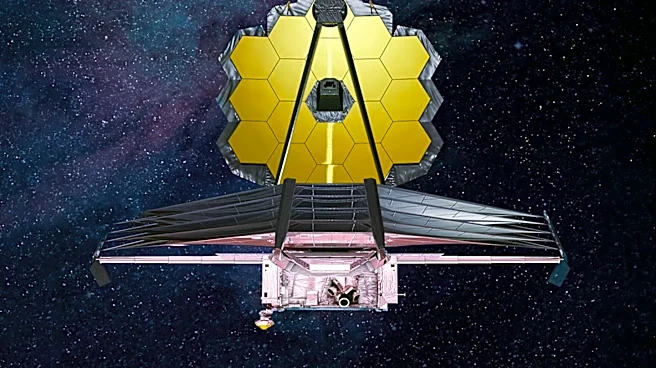
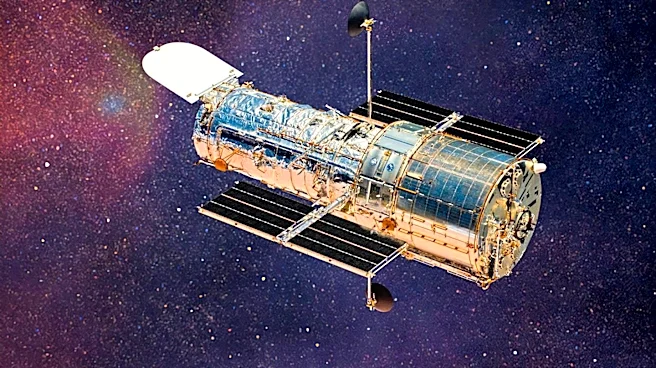
State-of-the-art observatories like the James Webb Space Telescope and NASA's newly launched Nancy Grace Roman Space Telescope are positioned to help astronomers study the universe's earliest days.
The team behind Lumina, though, believe the predictions from its computer simulation can be compared against observations from those space telescopes to determine whether scientists "understanding of the laws governing the universe remains accurate," according to the press release.
That's why the team made Lumina available to not just the scientific community, but the public at large.
“One of Lumina's major advantages is its sheer size,” MIT physicist Xuejian (Jacob) Shen, a study co-author, said in a statement. “It produces enormous populations of simulated galaxies, finally allowing us to make comparisons with the very large galaxy samples that upcoming surveys will observe.”
Eric Lagatta is the Space Connect reporter for the USA TODAY Network. Reach him at elagatta@usatodayco.com
This article originally appeared on USA TODAY: Watch 2 billion years of cosmic evolution in new universe simulation