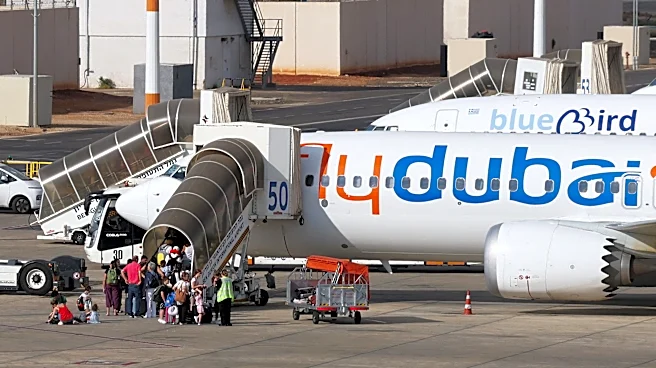




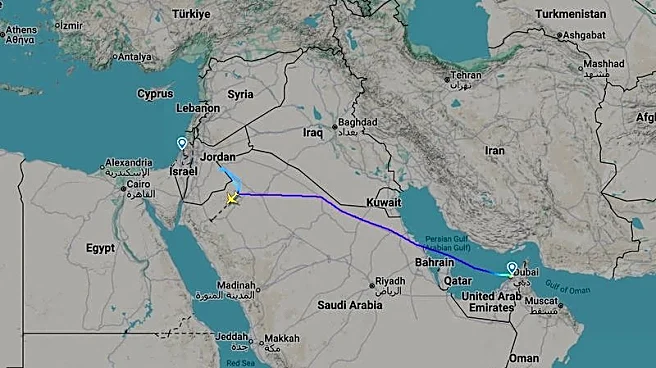
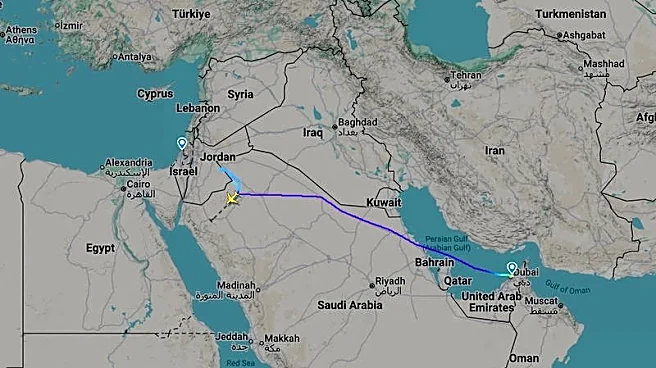
A Flydubai flight from Dubai to Tel Aviv was forced to make an emergency landing in Saudi Arabia on Sept. 30 after a violent incident unfolded in the cockpit.
Flight FZ1073 was traveling toward Israel when it rapidly descended more than 17,000 feet, according to the airline, officials and reports in Israeli media. The Boeing 737 MAX 8 transmitted a general emergency code, followed minutes later by a code signaling unlawful interference.
The plane ultimately diverted to Tabuk in northwestern Saudi Arabia, where it landed safely. Flydubai said all passengers were safe and accounted for, while Saudi airport officials said both pilots were injured and taken to a hospital.
Exactly what happened inside the cockpit remains under investigation, but the incident
has prompted questions about how something like this could happen and what protocols are in place to prevent anything like it from happening again.
Israeli Prime Minister Benjamin Netanyahu said the co-pilot stabbed the captain and attempted to crash the aircraft. Netanyahu, citing a passenger account, said passengers and a crew member broke into the cockpit as the plane plunged and restrained the co-pilot, while other pilots aboard helped land the aircraft. He stopped short of calling it a terrorist attack.
But another Israeli official identified the co-pilot as an Omani national and called the incident an attempted terrorist attack; Saudi authorities were expected to question him.
Those conclusions have not yet been established by an official investigation, and Flydubai has so far described what happened only as an “incident.” The airline said it was working with authorities as the investigation continued.
What happened to the passengers?
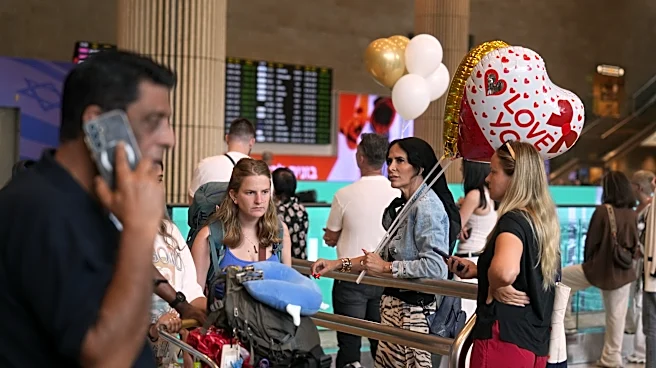
Flydubai told news media that after FZ1073 landed at Tabuk Airport, "all passengers are safeand accounted for." Saudi airport authorities separately confirmed the safe landing.
There's video showing the passengers clapping and cheering when the flight finally landed safely.
A passenger, Miryam Shira Ohayon, was quoted by The Guardian saying, "The co-pilot tried to murder the pilot and basically carry out a suicide attack on the plane."
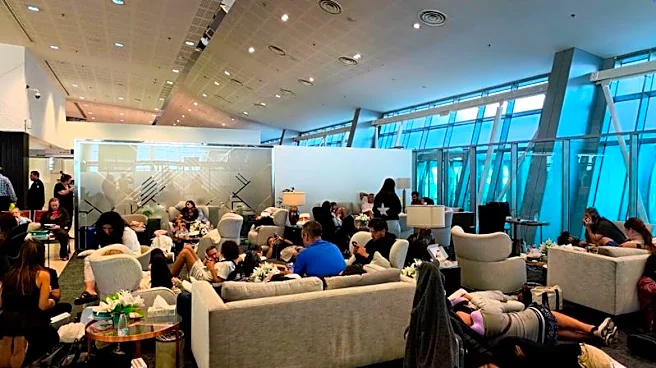
Passengers were taken into the Tabuk airport terminal (Prince Sultan Bin Abdulaziz International Airport) to receive assistance and a new routing. Flydubai eventually sent another aircraft, but there are reports of some passengers being reluctant to get on another flight.
Has something like that happened in the US?
- Alaska/Horizon Air (Flight 2059) in 2023: An off-duty Alaska Airlines pilot riding in the cockpit jump seat allegedly tried to shut down the engines of a Horizon Air flight traveling from Everett, Washington, to San Francisco. The two pilots operating the flight wrestled with him and removed him from the cockpit before the plane diverted safely to Portland, Oregon. No one was injured. The pilot, Joseph David Emerson, later pleaded guilty to interfering with a flight crew.
- JetBlue (Flight 191) in 2012: During a trip from New York to Las Vegas, the JetBlue captain began behaving erratically, prompting the first officer to lock him out of the cockpit when he stepped away. Passengers and crew restrained the captain when he tried to get back inside, and an off-duty JetBlue pilot helped the first officer divert the plane safely to Amarillo, Texas. The captain was later found not guilty by reason of insanityof interfering with a flight crew.
- FedEx (Flight 705) in 1994: A FedEx employee and pilot traveling as a passenger aboard a cargo flight attacked the three-person flight crew shortly after takeoff from Memphis, Tennessee. Armed with hammers and a speargun, Auburn Calloway severely injured the pilots in an apparent attempt to take control of the aircraft. Despite their injuries, the crew fought him off and managed to return the plane safely to Memphis. Calloway was later convicted of attempted aircraft piracy and other charges and sentenced to life in prison.
How do Air Marshals work? Are they on every flight?
No, there is not a Federal Air Marshal on every U.S. flight.
Federal law gives the Transportation Security Administration authority to deploy marshals broadly, but requires them on flights the agency determines as high security risk. Airlines must accommodate them once TSA assigns them.
Their core role is to deal with criminal or terrorist activity that threatens the aircraft and/or the passengers aboard.
If a Flydubai-type event occurred on a U.S. flight and Air Marshals happened to be on the flight, there would be an initial roadblock. If the confrontation were entirely inside the locked cockpit, the marshal might not initially have direct access to what was happening.
Contributing: Josh Rivera, Kim Hjelmgaard, USA TODAY
This article originally appeared on USA TODAY: Could a cockpit attack happen on a US flight? It already has