



Amazon had staked much of the future of its up-and-coming satellite internet service on the United Launch Alliance's new Vulcan rocket.
The commerce giant, founded by billionaire Jeff Bezos, had contracted with the ULA to launch the Vulcan rocket on 38 missions delivering batches of its Amazon Leo satellites to space.
It failed on the first one.
The mission marked the first failure in the two-decade-old ULA, a joint venture between aerospace contractors Boeing and Lockheed Martin. It also marked a major setback for its Vulcan, meant to become the ULA's flagship rocket as it phases out its Atlas V.
In fact, the Vulcan had already encountered anomalies on two of its previous four flights, though neither issue was serious enough to thwart the overall
mission.
The unsuccessful mission also dealt a blow to Amazon, which was relying on Vulcan to begin a regular cadence of launches for a satellite internet constellation meant to rival SpaceX's massive Starlink internet network.
Here's what to know about the ULA's Vulcan launch failure, and what it means for Amazon.
What is the ULA Vulcan rocket?
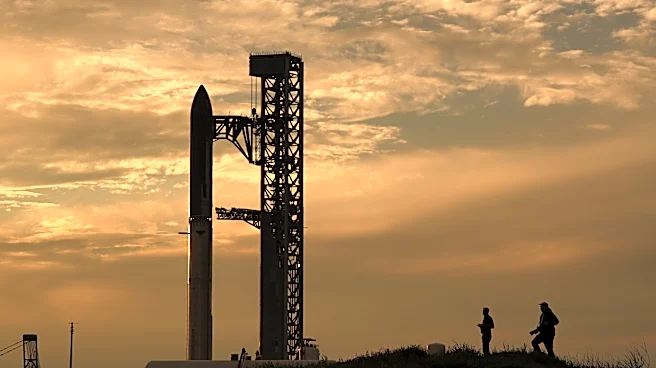
The United Launch Alliance's Vulcan rocket is a two-stage heavy-lift launch vehicle.
The Vulcan rocket stands at 215 feet tall when fully stacked and is designed to fly with anywhere from zero to six solid rocket boosters – in addition to the main 109-foot-tall booster.
What sets Vulcan apart from its ULA predecessors is its 35-foot Centaur V upper stage, which is equipped with two engines of its own to make more complex missions to extreme orbital heights possible.
Vulcan rocket launch failure: Here's what happened
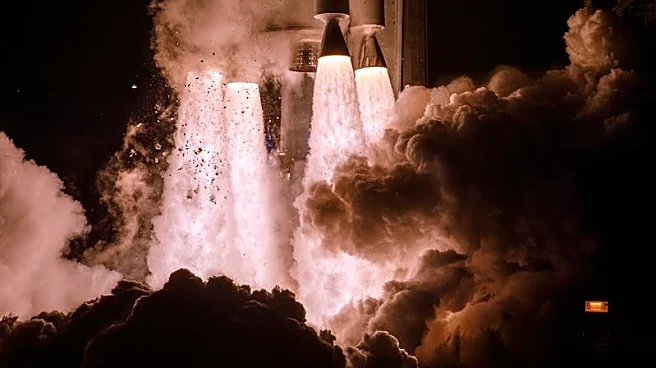
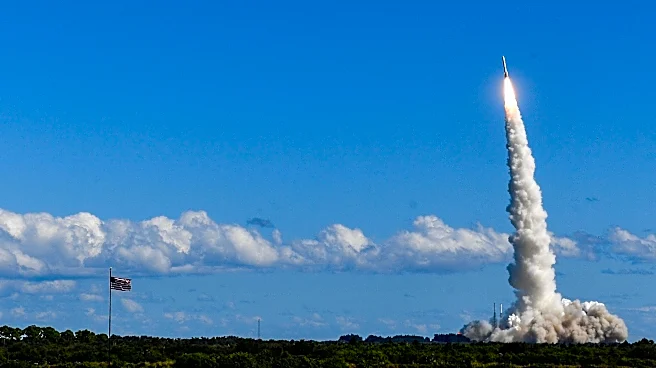
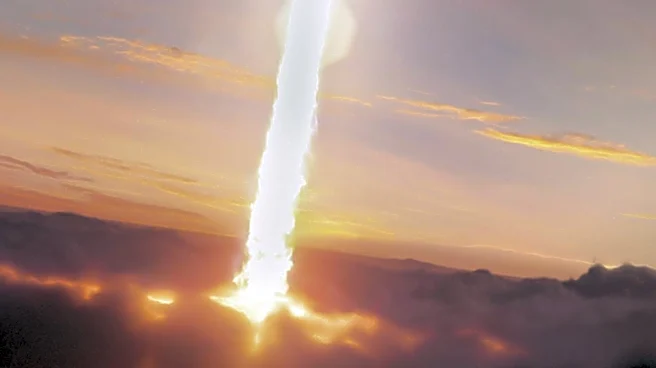
The ULA had originally been working toward a Friday, Nov. 13, launch of its Vulcan rocket before the mission was twice delayed. The Vulcan finally managed to get off the ground at 12:40 p.m. ET Sunday, Nov. 15, at the Cape Canaveral Space Force Station in Florida.
But just 10 minutes into the flight, the rocket appeared to encounter trouble following the separation of Vulcan's second stage, which was carrying the Amazon satellites, from the first-stage booster. The issue, which the ULA confirmed was an anomaly, resulted in a mission failure as the rocket was unable to deliver the Amazon satellites to orbit.
And LIFTOFF of the first Vulcan Amazon Leo mission, carrying 40 broadband satellites to low Earth orbit! pic.twitter.com/dv1MSjJUMF
— ULA (@ulalaunch) November 15, 2026
"Since the anomaly just occurred, we don’t have any specific data yet to understand what occurred today," the ULA said in its most recent online update about the mission. "We will work closely with our customer and other appropriate organizations to find the cause, determine the appropriate corrective action, and return to flight as quickly as possible."
'Anomaly' is Vulcan's 3rd in 5 total flights
The Sunday flight was Vulcan's fifth since its January 2024 debut and first in nine months. While the mission marked Vulcan's first complete failure, it was the third time the Vulcan had experienced an "anomaly."
In fact, that's why the rocket had not seen any action since a solid rocket booster malfunction marred its previous Feb. 12 flight when it launched on a national security mission for the U.S. Space Force. While the incident did not hinder the rocket's ability to deploy its payload to orbit, it was was similar to what happened on Vulcan's second flight in October 2024, when sparks were seen inside the nozzle on the booster.
Still, the Pentagon, which certified Vulcan for national security missions in March 2025, has not yet approved the Vulcan to resume flying on those ventures since the woes it encountered in February.
Amazon had bet big on Vulcan for satellite constellation
The failure also marks another major setback for Amazon and its fledgling internet satellite venture. Bezos' commerce giant is racing to use third-party launch providers to help build up its constellation, which it hopes will one day rival SpaceX's Starlink service.
Nearly 400 Leo satellites have been deployed since April 2025 across 14 launches – a fraction of the roughly 3,200 satellites Amazon is planning for its first constellation to eventually offer high-speed coverage to customers around the world.
SpaceX's wide lead over satellite rivals like Amazon is due in large part to the advantage of having its own rockets – first its Falcon 9, and lately its Starship – to deliver its satellites to low-Earth orbit, a region closer to the planet's atmosphere.
Amazon had planned to begin using the New Glenn rocket manufactured by Blue Origin, which Bezos also founded and owns, for satellite deliveries. But then the the heavy-lift launch vehicle exploded at the end of May on the launch pad days before it was due to launch Amazon Leo satellites for the first time.
There is risk with any launch, and that’s especially true for inaugural missions like LV-01. ULA has been a trusted partner for Amazon, and we believe they’ll learn from this mission and deliver on their long-term plans for Vulcan.
— Amazon Leo (@AmazonLeo) November 15, 2026
Full statement from @ulalaunch below. https://t.co/lS2GEioSak
That setback prompted Amazon to turn to the United Launch Alliance and its Vulcan, with plans for the rocket to launch on 38 satellite deliveries. Now, Vulcan's role in Amazon's quest to build up its constellation has been thrown in flux.
"There is risk with any launch, and that's especially true for inaugural missions," Amazon said in a statement to Reuters. "ULA has been a trusted partner for Amazon, and we believe they'll learn from this mission and deliver on their long-term plans for Vulcan."
Contributing: Reuters
Eric Lagatta is the Space Connect reporter for the USA TODAY Network. Reach him at elagatta@usatodayco.com
Rick Neale is a Space Reporter at FLORIDA TODAY, where he has covered news since 2004. Contact Neale at Rneale@floridatoday.com. Twitter/X: @RickNeale1
This article originally appeared on USA TODAY: ULA Vulcan rocket fails on 1st of 38 missions to deploy Amazon satellites