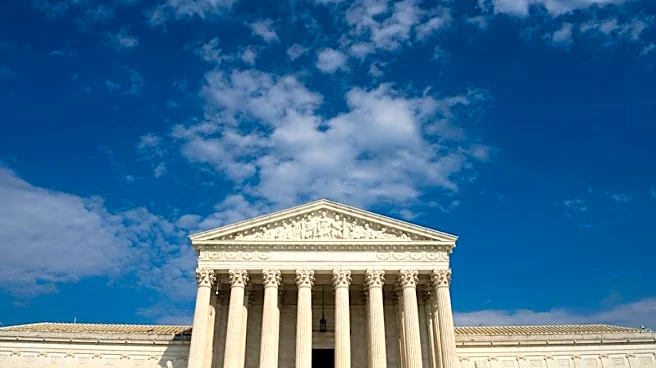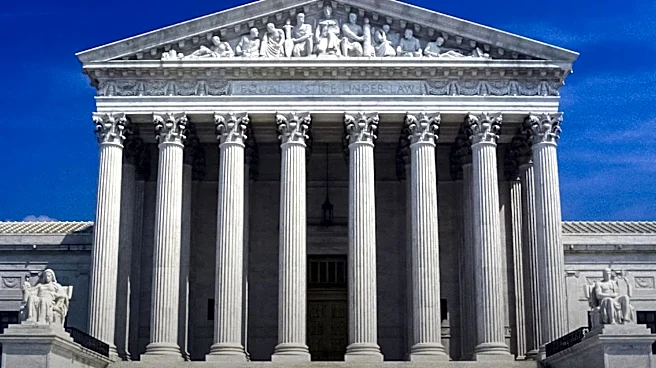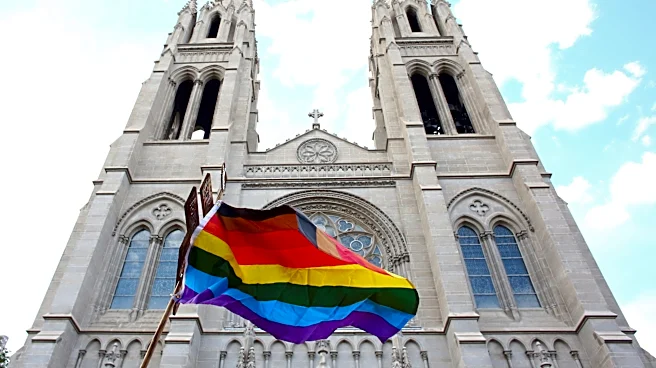




WASHINGTON – The Supreme Court on Nov. 3 sounded likely to side with the Catholic Church in the latest high court dispute that pits religious rights against anti-discrimination protections for LGBTQ+ people.
The justices debated for about two hours whether Colorado can require Catholic preschools to accept children of gay parents as a condition of public funding.
In recent years, the conservative court has robustly backed the First Amendment right to practice religion without government interference. A broad ruling for the church could pave the way for a wider range of religious exemptions from nondiscrimination laws.
In the current case, Colorado encouraged churches to participate in the state’s universal preschool program, started in 2023 to provide
free, early education throughout the state.
Faith-based schools are free to teach religious views on sex, marriage and gender. But in exchange for taxpayer dollars, schools must both meet certain quality standards and be open to all students.
The Archdiocese of Denver, which oversees 36 preschools, said Colorado is forcing it to choose between participating in the program and violating the Church’s teachings on biological sex and marriage.
Without the state subsidies, the church said, enrollment at its preschools has "swiftly declined," while parents who want to keep their children in those schools must pay thousands of dollars to do so.
The archdiocese, two parishes and the parents of a preschooler sued the state in 2023 after Colorado rejected its request for a religious exemption so the schools can require families to follow the church’s teachings.
Lower courts said the state’s nondiscrimination policy complies with a 1990 Supreme Court decision curtailing religious rights challenges to laws that apply to everyone and don't target a particular religious group.
But the Supreme Court has since limited the reach of Employment Division v. Smith. And the Catholic Church argues the more relevant decisions are a trio of rulings since 2017 that have allowed taxpayer funds to flow to religious organizations. Most recently, the court said Maine couldn’t exclude religious schools from an indirect aid program based on the schools’ religious use of the funds.

The court’s three liberal justices said that the Catholic Church is trying to push the court far beyond those rulings to require exemptions even when there’s no explicit discrimination against a religious entity.
“It seems to me that you’re asking for a special rule for religious schools,” said Justice Ketanji Brown Jackson.
The court’s conservatives appeared to agree with the church that it would become too easy for states to discriminate against religious entities unless the court focused on the effect of the law and not just the specific text.
Otherwise, Justice Neil Gorsuch said, the court was just “wasting our time” in the previous cases.
Colorado was also pressed on the fact that this is the fourth Supreme Court case from the state since 2018 about the tensions between protections for the LGBTQ+ community with religious and free-speech rights.
The justices previously sided with a cake baker and a website developer who opposed providing certain services to gay customers because of their religious beliefs. In March, the court agreed with a Christian counselor who argued that the state’s ban on “conversion” talk therapy for minors violated her free speech rights.
“It’s hard to see how this wasn’t seen coming,” Justice Amy Coney Barrett said of the latest clash.
Helen Norton, the attorney for Colorado, said the state worked hard to include religious schools in its universal preschool program and there’s “zero evidence” that the court indirectly targeted Catholic schools by adopting the antidiscrimination rule.
“The only thing Colorado asks is that they comply with the same conditions that every publicly funded preschool must meet, religious and secular alike,” Norton said.
Justice Brett Kavanaugh asked why Colorado didn’t take the “win-win” by allowing Catholic schools to operate alongside the many other preschools in the program.
“I’m just trying to figure out why we’re here," he said. "Why has this been provoked when there’s an ability for everyone to go to a good school that’s a fit for them and to respect religious rights?"
Norton said Colorado families are harmed when they’re turned away from a publicly funded school, which may be the school that works best for them geographically or otherwise.
Nicholas R. Reaves, the attorney for the Catholic schools, countered that there are two preschools participating in the program within three miles of every Catholic preschool in the archdiocese.
“This is just not really a problem in real life,” he said.
A decision in St. Mary Catholic Parish v. Roy is expected by the end of June.
This article originally appeared on USA TODAY: Supreme Court leans toward Catholic preschools in fight over LGBTQ+ protections