




San Diego Zoo officials say that “one of the most serious diseases” elephants face is responsible for the death of a beloved elephant earlier November. It comes as officials announced that the elephant’s half-brother has developed signs of the disease.
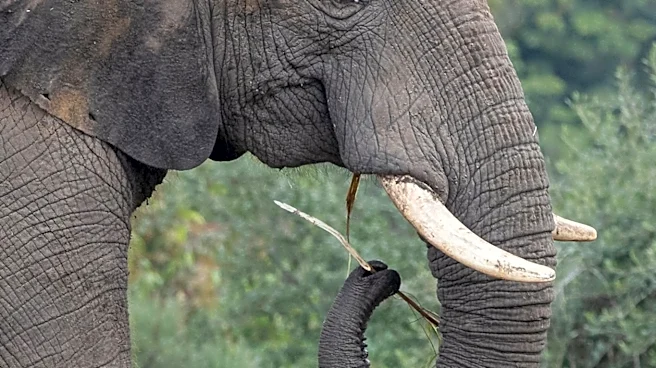
Inhlonipho, or Nipho, died on Nov. 11 after a brief battle with elephant endotheliotropic herpesvirus hemorrhagic disease, or EEHV-HD. The San Diego Zoo Wildlife Alliance announced the preliminary cause of death just days later.
The disease is caused by a naturally occuring virus found in both Asian and African elephants globally, including in their native habitats and under human care, according to zoo leaders. It doesn’t pose a risk to people or other wildlife, they said.
Nipho’s “illness came
on and progressed unusually fast,” according to zoo leaders. The African savanna elephant received prompt care after his team noticed signs of stomach discomfort and lethargy.
“Our team began exhaustive treatment right away, even before a definitive diagnosis, and we are continuing to look closely at his case to understand what happened,” zoo leaders said. “Our hope is that the devastating loss of Nipho will help advance our understanding of this disease and, ultimately, save lives.”
San Diego Zoo says another elephant developed signs of ‘devastating disease’
Nipho was born at the San Diego Zoo Safari Park and later joined his 15-year-old half-brother, Tsandzikle, in a bachelor herd. Lab tests indicate that Tsandzikle, or Sundzu, has developed signs of EEHV-HD, zoo leaders said on Nov. 14.
The elephant began receiving “around-the-care clock” that follows recommendations of the North American EEHV Advisory Group — a group of veterinarians and experts with a mission to advance the best practices for prevention, diagnosis and treatment of the viral disease. San Diego Zoo leaders said its wildlife health and care teams serve as “key contributors” to the advisory group.
“Most elephants will contract the virus in their lifetime, and many carry it without becoming ill,” according to zoo leaders.
EEHV-HD occurs primarily in elephants between 1-15 years of age, according to the advisory group in a 2026 document.
“This is a particularly devastating disease for elephant care teams, veterinary teams, and conservationists, and it is a serious threat to all populations of elephants,” the advisory group said.
No permanent cure exists, according to San Diego Zoo leaders.

“Reduction of viral illness from early treatment, and prevention of severe illness through vaccination, is key to saving elephants,” they said. “We’re honored to support the collaborative effort to develop a vaccine that could one day protect elephants from this disease worldwide.”
According to zoo leaders, no other elephants at the San Diego Zoo are showing any clinical or behavioral changes.
African savanna elephants are listed as endangered as of a 2020 assessment, according to the International Union for Conservation of Nature’s Red List of Threatened Species.
The Association of Zoos and Aquariums told the USA TODAY Network on Nov. 11 that it doesn’t have a figure for the median life expectancy for male African elephants at its accredited facilities as they don’t have enough data to calculate that number. The maximum observed longevity for males is 52 years.
The association said it couldn’t answer accurately regarding the average lifespan of these elephants in the wild due to the lack of “100% reliable data” and “small sample size,” with poaching, loss of habitat and other factors adding to the difficulty of determining the accuracy of such information.
Paris Barraza covers Los Angeles and Southern California for the USA TODAY Network. Reach her at pbarraza@usatodayco.com.
This article originally appeared on USA TODAY: After one elephant died of disease, another shows signs at San Diego Zoo