





For America’s 250th birthday, we have spent a year looking back at the ideals that launched the nation, the people who shaped it and the moments that tested it.
Now comes the harder question: Will Americans still care when the anniversary is over?
History should not be something we dive into only for a major anniversary, a school trip to Washington or the Fourth of July – and then pack away with the banners and bunting. Understanding where our country has been – what we got right, where we fell short and the arguments that have shaped us – matters to understanding the country we live in now.
Some of the best places to do that are hiding in plain sight.
We need to visit where American history really happened

Presidential birthplaces and childhood homes, libraries and museums, historic houses, history
and civic education organizations, and even colleges attended by presidents and first ladies preserve and teach pieces of our national story. Some are famous. Others are places you might drive past without realizing what happened there.
Leaders from more than 100 of these places gathered in Washington for the White House Historical Association’s Presidential Sites Summit earlier this month to consider what comes after the 250th. One question kept coming up: How do we keep Americans who caught the history bug – or simply became a little more curious – interested after the anniversary is over?
History looks different when you are in the place where it happened.
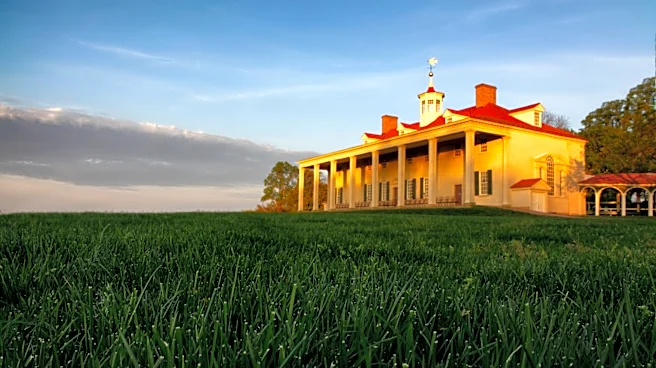
At George Washington’s Mount Vernon in Northern Virginia, the story is not simply about the first president. You learn about Washington’s role in the founding of the nation, but you also encounter the complicated realities of 18th century America: how Washington farmed, his reliance on enslaved labor, his evolving views on slavery, how goods moved through an international economy, and how people lived and worked.
At sites where Abraham Lincoln lived, worked and died, visitors encounter the Civil War, slavery and emancipation, and the struggle to preserve the Union.
At 20th century presidential libraries, visitors learn about world wars, economic upheaval and depression, the fight for civil rights, the Cold War and America’s changing place in the world.
A textbook can tell us what a president decided. Standing in the places where presidents lived and worked can help us better understand the world in which those decisions were made – the pressures they faced, the arguments around them and the consequences that followed.
And history is rarely as tidy as we remember it.
Presidential libraries provide a wealth of historical information

Every presidency contains achievement and disappointment, wisdom and misjudgment. We should not visit these places only to celebrate presidents we admire or confirm what we already believe. Sometimes the most interesting thing we can learn is something that complicates what we thought we knew.
That is not diminishing history. It is taking history seriously.
There are also new places to explore.
This year, two very different presidential institutions opened their doors. The Obama Presidential Center opened on Chicago’s South Side. On July 4, as the nation marked its 250th birthday, the Theodore Roosevelt Presidential Library opened in the Badlands of North Dakota.
I had the privilege of attending both openings.
One sits in one of America’s great cities. The other rises from the rugged landscape that helped transform a young Roosevelt. They tell the stories of presidents separated by more than a century, with very different experiences, philosophies and visions of the country.
But neither place is only about one man.
Roosevelt’s story leads us into questions about conservation, economic power and America’s emergence on the world stage. The Obama Presidential Center takes visitors into a very different period in our history: the election of the nation’s first Black president, the aftermath of a global financial crisis and America’s changing role in the world.
The center also looks beyond the presidency itself, exploring civic participation, community and the critical role citizens can play in shaping their country.
Americans should remain forever curious about the country's history
That is what these places can do. Interest in a president may get you through the door. The larger American story is what you find inside.
And that story extends far beyond presidents.
It belongs to first ladies and first families, advisers and opponents, soldiers and diplomats, activists and journalists, workers and citizens. It includes famous figures whose portraits hang in museums and people whose names were lost, missing or ignored for generations.
Our understanding of the presidency has grown richer as these places have told a fuller American story – including people and experiences that earlier generations too often overlooked.
That work should not stop because the 250th celebration does. Nor should Americans need a major anniversary as an excuse to seek them out.
Go. Take your children or grandchildren. Walk through the rooms. Read the letters. Look at the objects. Ask questions. Talk about what surprised you on the way home.
Some of the most memorable encounters with history happen not in our largest museums but in small places where a volunteer opens a door and tells you a story you never knew.
And if a place matters to you, help keep it there. Visit. Become a member. Volunteer. Donate. Encourage a school to use it as a classroom. Preserving history has always depended, in part, on one generation deciding it is worth passing on to the next.
America’s 250th has given us an extraordinary occasion to celebrate. Its more lasting value may be the curiosity it leaves behind.
The anniversary may be ending. Our curiosity about the country that produced it should not.
Stewart D. McLaurin is president of the White House Historical Association, a private nonprofit, nonpartisan organization founded by First Lady Jacqueline Kennedy in 1961, and is director of The People’s House: A White House Experience multimedia educational center and museum.
This article originally appeared on USA TODAY: We're all responsible for taking America's history seriously | Opinion