








Tens of thousands of years of history lies within the borders of the state of Georgia.
From prehistoric peoples to the first European settlers to the Civil War, Georgia has been in the center of the action in America. And while this history has been honored on the national level under certain park designations, there is one thing that Georgia is missing — there are no national parks.
But, that might soon be changing.
The long-time effort of Georgia lawmakers to make Ocmulgee Mounds a national park is closer than ever after a congressional committee recommended a bill to change its designation from a historical park to a national park was recommended for debate.
Here's what to know about the potential change.
Bill to make Ocmulgee Mounds a national park moves forward
H.R. 9416, the Ocmulgee Mounds National
Park Redesignation Act, introduced by Rep. Austin Scott from Georgia's 8th congressional district, would change the historical site to an official national park.
The bill was introduced in June and and is now up for debate in the House of Representatives after being referred from the Natural Resources Committee on Nov. 18.
The bill, in its current form, would not only change the designation of the park, but also would place more than 100 acres of nearby land into the borders of the Muscogee Nation, who previously lived at the site. The bill also prohibits the use of that land for casino gambling.
What is the difference between a national historical park and a national park?
National historical parks and national parks are both within the jurisdiction of the National Park Service, and both are created by Congress, but there are a few key differences.
National parks focus on natural beauty and landscapes that are largely unimpaired by human intervention, such as Yellowstone National Park or the Grand Canyon National Park. National parks tend to be larger, but that's not universal.
National historical parks focus on a location's historical significance, so while it can be a natural place, it doesn't have to be. For example, the Martin Luther King Jr. National Historical Park is located in the Old Fourth Ward neighborhood of Atlanta where the civil rights leader lived.
Where is Ocmulgee Mounds?
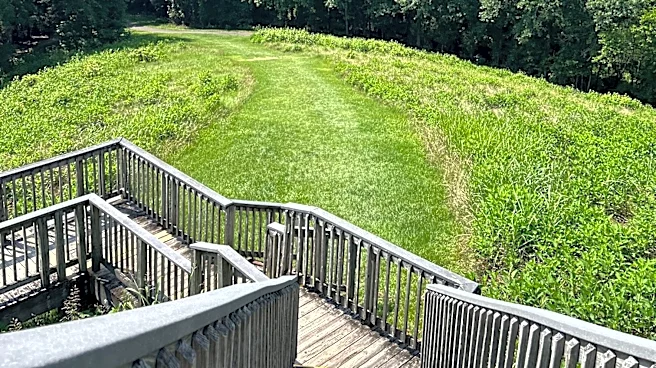
Ocmulgee Mounds National Historical Park is located just a few miles outside of Macon, Georgia, in the center of the state.
The site was home to continuous human habitations for more than 12,000 years, including by four different prehistoric cultures. Eventually, it was occupied by the Muscogee (Creek) Nation who now live in Oklahoma.
The park once had the largest archaeological dig in America with more than 800 workers sifting through millions of artifacts.
The park is 1,860 acres, and while known for its historical significance, there are also hiking trails, creeks, rivers and acres of wetlands. It's a good spot to see wildlife and to go birding.
Does Georgia have any other national parks?
If Ocmulgee Mounds is designated as a national park, it would be the first of its kind in Georgia.
There are no other natural places with the national park distinction in the state, but there are multiple national historical parks and historic sites recognized federally.
Here are the parks within the National Park Service in Georgia:
- Jimmy Carter National Historical Park (Plains)
- Martin Luther King, Jr. National Historical Park (Atlanta)
- Ocmulgee Mounds National Historical Park (Macon)
- Andersonville National Historic Site (Andersonville)
- Chickamauga & Chattanooga National Military Park (Fort Oglethorpe)
- Fort Frederica National Monument (St. Simon's Island)
- Fort Pulaski National Monument (Savannah)
- Kennesaw Mountain National Battlefield Park (Kennesaw)
- Trail of Tears National Historic Trail (North Georgia)
- Appalachian National Scenic Trail (North Georgia)
- Augusta Canal National Heritage Area (Augusta)
- Chattahoochee River National Recreation Area (Atlanta)
- Cumberland Island National Seashore (Saint Mary's)
Irene Wright is the Atlanta Connect reporter with USA Today’s Deep South Connect team. Find her on X @IreneEWright or email her at ismith@usatodayco.com.
This article originally appeared on USA TODAY: Could Georgia get its first national park? Legislation goes to House