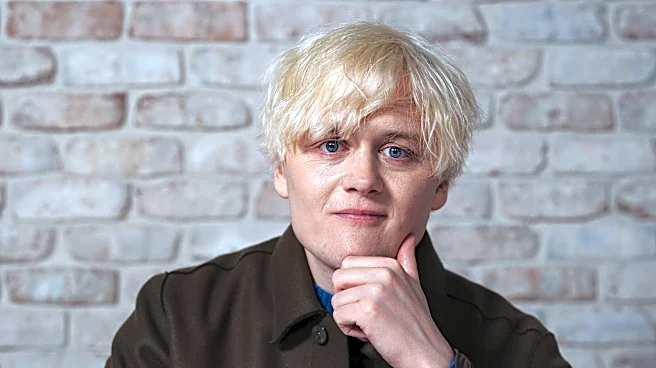

In his new documentary TV show, Oobah Butler finds himself in a New York City loft staring at a piece of lab-grown human meat. The person sitting across from him is an investor from the health supplement
industry. "That's moonshot," the investor says, pointing at it – but only Butler knows that the square is actually just beef. He's proud of his deception; he's made a career out of it.
"People know me as the blonde-haired British imp who causes trouble in internet circles," he tells USA TODAY.
The gonzo documentarian has orchestrated several viral hoaxes aimed at corporations, institutions and cultural norms over the years. Many know him from his 2017 Vice stunt, when he got his apartment, dubbed The Shed at Dulwich, ranked London's number one restaurant on Tripadvisor by hiring people to write fake reviews and turning away reservations for months. For a Channel 4 documentary in 2023, Butler learned that Amazon delivery drivers often pee in bottles because they get few breaks, so he bottled their urine as "Release Energy" and made it a bestseller on Amazon itself, listing it in the less competitive “bitter lemon” drink category.
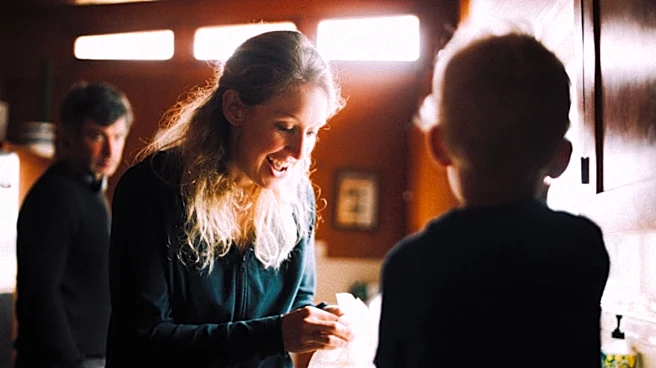
His new HBO miniseries, "Oobah: Scams for a Better Tomorrow," produced by A24 and released Nov. 22, does the same on a grander scale. It follows him scamming his way to the top of five industries: wellness, wine, dating apps, music and royalty. Each episode plays like a twisted "Shark Tank," with Butler pitching investors ridiculous ideas that mock their own fields in an irreverent documentary style that shares similarities with that of Nathan Fielder.
Can Butler actually deliver "a better tomorrow," as his title promises? He believes so. But the series is really about making people laugh. Finding loopholes in the matrix is just what Butler finds most hilarious in this crazy world, and he's really good at it.
"I suppose the 'better tomorrow' is an informed audience," he says, "or at least one that's been entertained, and they can go back to the coalface the next day feeling a little less insane."
Butler's humble beginnings
"I find it hard to take things too seriously," says Butler, 34, whose first scam came at 13, when he posed as his own band's manager on phone calls.
Scams also hit close to home. His parents lost money to a pyramid scheme in the '90s. That’s part of why he could never make a living actually scamming people – he’d rather have a camera filming him do it for journalism.
In episode 1 of his new series, Butler takes on wellness by pitching a skin serum made from children's tears. And Butler, a vegetarian, actually does, at one point, eat a piece of his own lab-grown flesh. "It tasted like a laboratory," he says.
Butler calls his style a "hybrid" of "comedy and journalism," a genre catching on at HBO and A24, whose docuseries "Neighbors" drew audiences last year by depicting weird neighbor disputes across America. Butler's team includes alumni of "Tim and Eric," "The Eric Andre Show" and Fielder's "Nathan For You," all shows by absurdist comedy auteurs.
"The things I do are kind of like stunts, social experiments, hoaxes to attack some sort of system," Butler says, adding, "We try to punch up."
Elizabeth Holmes makes an appearance (kind of)
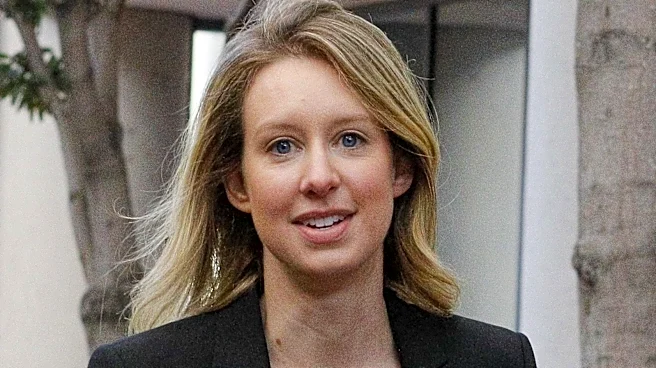
While seeking branding advice for his children's tears serum, Butler consults Patrick O'Neill, former chief creative officer of Theranos, the disgraced tech company headed by Elizabeth Holmes. O'Neill's first question is: "Are they happy tears?"
Of course, Fielder's also been toying with the Holmes image as of late. His new documentary, "You Can See Everything," follows Holmes and husband Billy Evans in the days leading up to her imprisonment (and after it).
But Fielder – along with others in the space, like Sacha Baron Cohen's characters and Diane Morgan's character Philomena Cunk – often disarms people through awkwardness. Butler uses manipulation tactics and code-switching, much like the entrepreneurs he's trying to both parody and emulate.
Butler even spends much of the series wearing a black turtleneck – an item linked to Holmes but also Steve Jobs, John Lennon, Carl Sagan and Andy Warhol. "Once you put on the turtleneck, people have a misplaced sense of trust in you … It does have a gravitas," he says. Then he laughs. "By the way, I'm making this up as I go along. I'm talking BS, but I'm having fun doing it."
In episode 3, he launches a dating app called Sole, billed as an AI chatbot that users text for several days, before it uses that conversation to pair them with their soulmate. The catch is that there's no AI; Butler has the humans talking to each other from the get-go. He doesn't even hide this fact from his investor, Venmo co-founder Iqram Magdon-Ismail. "I'm telling him, this is not AI. It's fake. And he's not put off by that," Butler says. (USA TODAY reached out to Magdon-Ismail for comment.)
In that episode, Butler emulates Mark Zuckerberg's fashion, at one point wearing a boxy black T-shirt, gold chain and red sunglasses, inspired by what the Facebook founder wore on Joe Rogan's podcast. Butler also wears a "leather jacket adjacent" piece, nodding to Elon Musk and Jensen Huang. He says, "I wanted our users to look at me and think I was a significant tech founder."

Making scamming a public service
Every detail of the show is an uppercut to the wealthy, but sometimes it pushes its agenda in jarring ways. Episode 1 shows Butler getting stabbed with a needle to make his lab-grown meat. It also shows children in a doctor's office wearing goggles with tubes that collect their tears, while a licensed dermatologist barely bats an eye. At the serum's New York City pop-up, people rub the tears on their faces and boast about their soft cheeks and how "compassionate" they feel. It's grotesque by design, targeting influencers and skincare junkies who will overlook the ethics of what they're using.
Episodes 2 and 3 round off in more wholesome ways. Butler tries to turn wildfire smoke-tainted wine into a chic "smoky" trend – a lighter take on climate change. And two users of his fake dating app really do leave their first date wanting a second.
Some episodes hold up a mirror to our eroding trust in cultural standards without offering the solution the title promises. That gives the series its nuance – even if Butler does, ultimately, want to make the world a better place.
He says it's "an entertainment series," but he is trying to teach the viewer something. "They have a suspicion about the way the world works, and hopefully the show can challenge that in a way that's funny.
This article originally appeared on USA TODAY: His new TV show is Nathan Fielder meets 'Shark Tank' – and it’s all a scam