








Arizona has confirmed its first case of New World screwworm in an animal after the flesh-eating parasite was detected in a dog, making it the third U.S. state to report an infection, state and federal agriculture officials said.
The case was reported in Cochise County in southeastern Arizona, which borders Mexico, according to the U.S. Department of Agriculture’s Animal and Plant Health Inspection Service. The canine was examined by a local veterinarian Oct. 26 after a wound on its back was found to be heavily infested with maggots that appeared consistent with New World screwworm (NWS), the Arizona Department of Agriculture said.
Scientific testing conducted in coordination with federal officials later confirmed the infestation. The dog is receiving
veterinary care, and state officials said they are working with the veterinarian and owner to gather information to support an epidemiological investigation and determine any necessary local response measures.
"We have been preparing for this possibility for a long while and are acting swiftly," State Veterinarian Dr. Ryan Wolker said in a statement Oct. 28. "Because of the extensive outreach, coordination, and surveillance already in place, Arizona producers, veterinarians, and pet owners know what to look for and how to report suspected cases."
The Arizona case comes as authorities continue to track the northward spread of the parasite, which was eradicated from the United States decades ago. In recent years, it has spread north from Central America through Mexico.
As of Oct. 29, the USDA reported 74 NWS cases in animals across Texas, New Mexico and Arizona. Last week, the agency confirmed the first case of NWS in U.S. wildlife after the pest was identified in a hunter-harvested elk in West Texas.
In June, the USDA confirmed the presence of NWS in a 3-week-old Texas calf, marking the first known U.S. case in decades and the closest the parasite had come to reestablishing itself north of the Mexican border since its eradication in the 1960s.
Arizona expands surveillance, control measures
Federal and state officials said they are implementing response measures that include establishing a 12-mile infested zone around the detection site, restricting animal movement in the area, increasing live-animal surveillance and trapping, releasing sterile flies and conducting outreach to producers, veterinarians and local communities.
Arizona officials said they also have advocated for sterile fly releases in the area to suppress the pest and prevent it from becoming established. Officials confirmed that plans for a sterile fly dispersal facility in Douglas, Arizona, are continuing to move forward.
The USDA is urging livestock and pet owners in the area to check animals daily for enlarging or draining wounds, maggots or egg masses in wounds, signs of discomfort or irritability and lesions around body openings. Anyone who suspects an infestation should immediately contact a veterinarian, state agriculture officials or the USDA.
"New World screwworm is a serious pest," the USDA said in a statement Oct. 28. "The larvae feed on living tissue and can cause severe wounds, animal suffering, and significant economic impacts if not detected and treated quickly."
What is a screwworm fly?
The NWS is a parasitic fly whose larvae feed on the living tissue of warm-blooded animals, according to the USDA. The pest can affect livestock, wildlife, pets, and in rare cases, people and birds.
Infestations begin when an adult female fly lays eggs in an open wound or body opening. After hatching, the larvae burrow into the wound and consume living tissue for about a week before dropping to the ground to pupate and eventually emerge as adult flies.
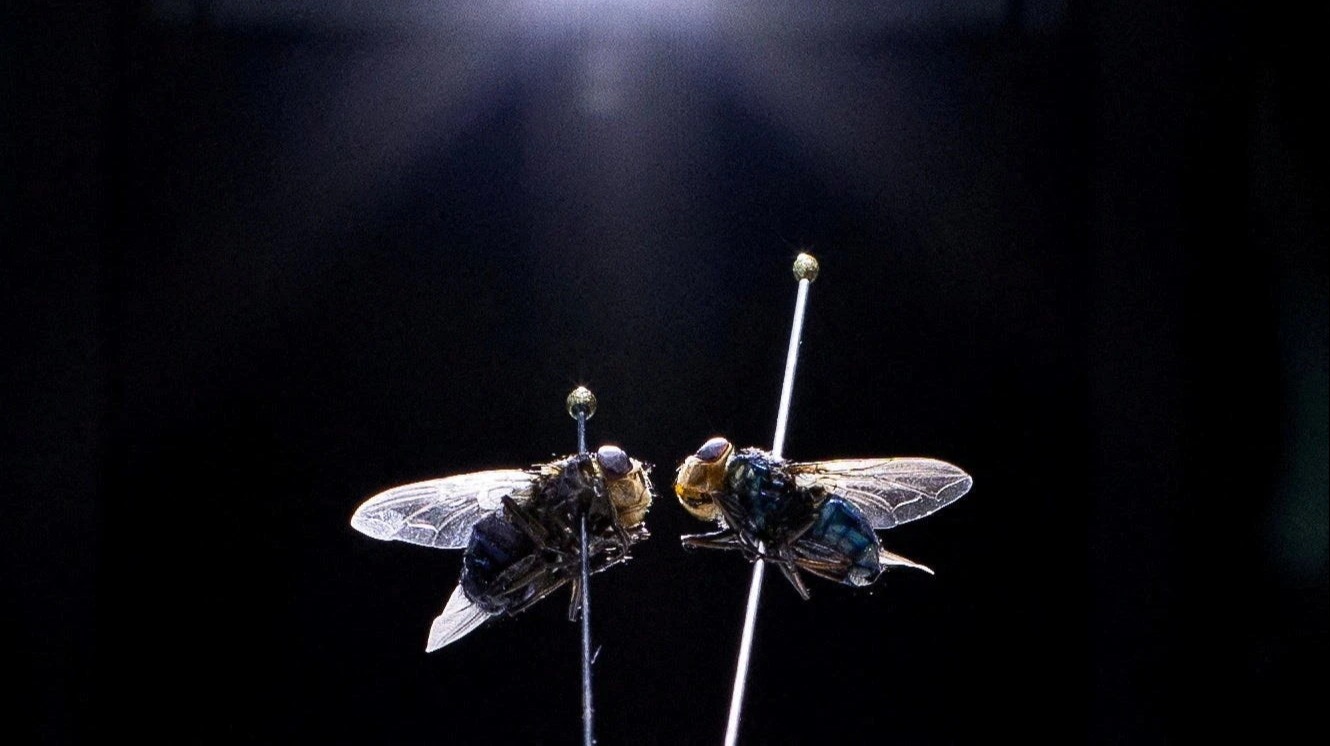
Adult NWS flies have metallic blue-green bodies, orange eyes and three dark stripes across their backs. Animals infected with screwworms often develop enlarging wounds containing feeding maggots and may exhibit signs of pain, irritation or weakness.
The pest was eradicated domestically through a long-running sterile fly program, but outbreaks in Central America and Mexico have raised fears that it could regain a foothold in North America.
To prevent its spread, the United States suspended livestock imports from Mexico for more than a year before beginning a phased reopening in August and resuming trade at three ports of entry in Arizona and New Mexico. The import restrictions tightened cattle supplies in the United States and contributed to record-high beef prices.
The USDA has said it next plans to resume imports from Mexico in Nogales, Arizona, on Nov. 30, if conditions for safe trade are in place.
Contributing: Mary Walrath-Holdridge, USA TODAY; Mateo Rosiles and Jeff Abbott, USA TODAY Network - Texas; Reuters
This article originally appeared on USA TODAY: Arizona becomes third state with New World screwworm infection