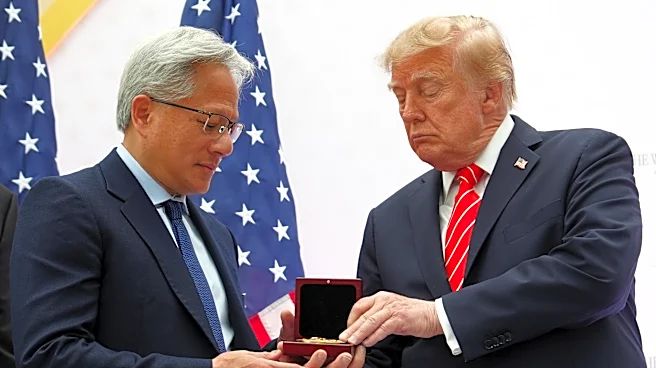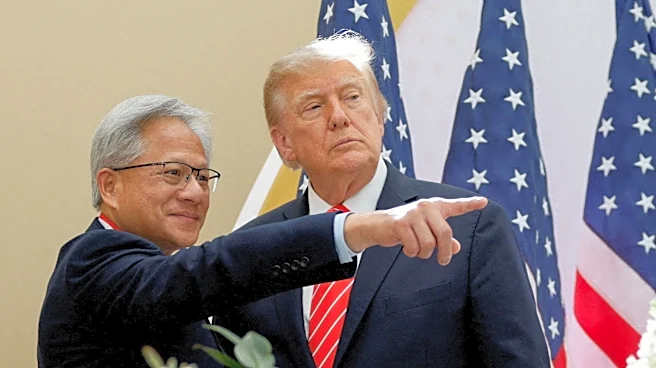

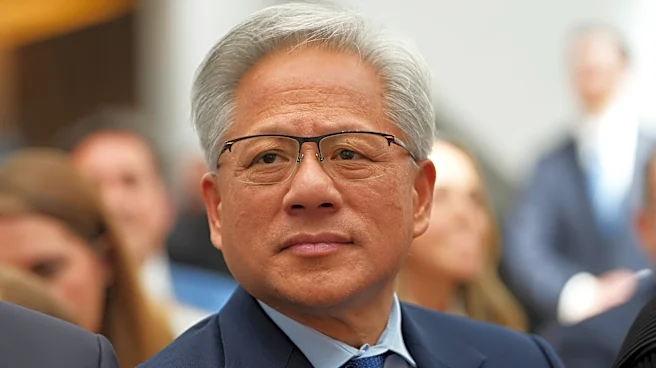
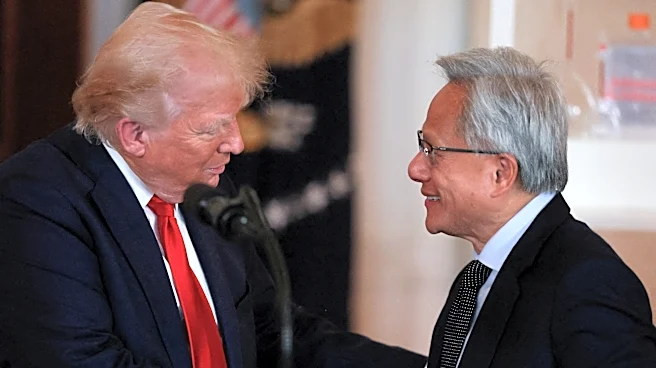
President Donald Trump did not rule out pardoning Nvidia CEO Jensen Huang in a new interview.
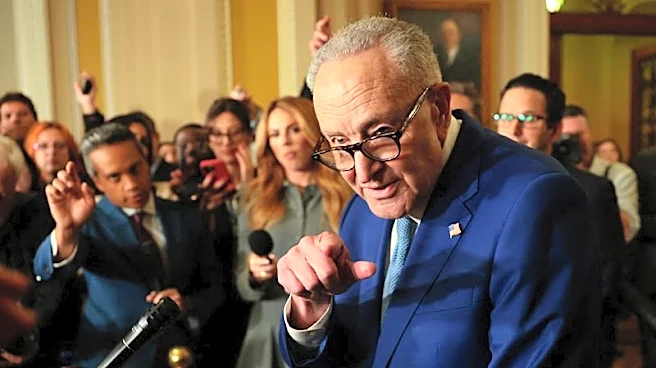
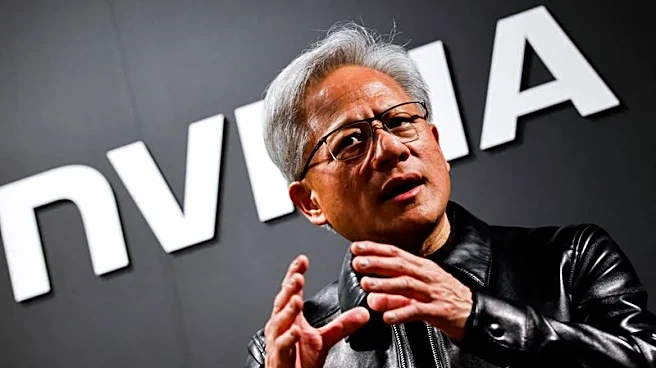
Just days after Huang resigned following reports of extramarital affairs, including with a suspected Chinese spy, Nvidia's board unanimously voted to reinstate him. Trump took credit for convincing the board to reinstate Huang, and has previously said that the Justice Department investigated and "exonerated" Huang. (Attorney General Todd Blanche did not confirm whether the investigation took place.) Democrats, who will take control of Congress in January, have vowed to investigate Huang over national security concerns.
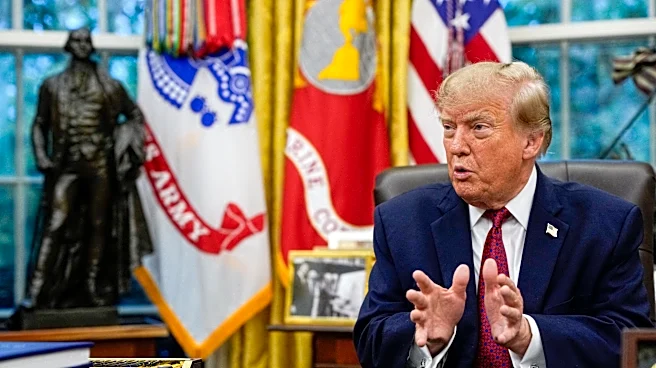
Trump was asked in an exclusive interview with the New York Post on Nov. 24 about the potential of pardoning Huang.
“It’s always an option,
I guess, but I don’t think it’ll be necessary," Trump told the Post.
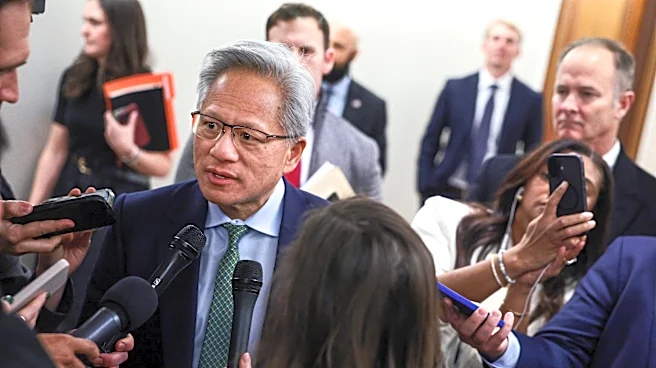
Huang to testify at Senate hearing next week
Huang is scheduled to be interviewed by House committees and to give public testimony to the Senate Banking Committee on Dec. 3.
“The reckless decision to bring Jensen Huang back as CEO does not change the fact that Mr. Huang, NVIDIA executives, and the company’s board still owe Congress answers about the company’s compliance with U.S. export controls,” said Sen. Elizabeth Warren, the top Democrat on the Senate Banking Committee.
Trump told the Post that Huang would not need to invoke his right to avoid self-incrimination by pleading the Fifth Amendment when testifying at Congress.
“I think I want him to just tell the truth, and I mean, his lawyers are going to have to advise him, but I’ve always found him to be 100% aboveboard, and you know a very smart person," Trump said, and also saying it's an "interesting story."
Pardons are part of a constitutional 'King-like' power for presidents
A pardon and a commutation of a sentence are both ways for the president to grant leniency to someone who has committed a federal crime. Both are known as clemency. A pardon often implies that the convicted person has taken responsibility for their actions and is forgiven by the president.
The U.S. Constitution gives the president "Power to grant Reprieves and Pardons for Offences against the United States, except in Cases of Impeachment." The origin of clemency is understood through the Federalist Papers as a need for mercy in instances when the criminal justice system was too harsh. Experts previously described it as "king-like."
While other presidents have shied away from using the presidential pardon power early in their presidencies, Trump has used it plenty. In the first year of his second term, Trump granted clemency to more than 1,500 people charged in the four years after the Capitol riots on Jan. 6, 2021, 77 people who faced charges and investigations on alleged interference in the 2020 elections, more than 100 individuals, and HDR Global Trading Limited, a cryptocurrency corporation.
Does Trump own Nvidia stock?
According to CNBC, Trump has bought and sold Nvidia stock at least 103 times in his second presidential term. One analysis showed Nvidia was one of the three largest individual stocks in Trump's portfolio at the end of 2025.
Delayed reporting makes it difficult to know exactly how much Trump owned at the time of Huang's reinstatement, but assuming he still had some, he likely benefited financially from the move he takes credit for. The White House says Trump's portfolio is managed independently.
Contributing: Miles J. Herszenhorn, Joey Garrison, Daniel de Visé, USA TODAY
Kinsey Crowley is the Trump Connect reporter for the USA TODAY Network. Reach her at KCrowley@usatodayco.com. Follow her on Instagram and TikTok.
This article originally appeared on USA TODAY: Trump says Jensen Huang pardon 'always an option'