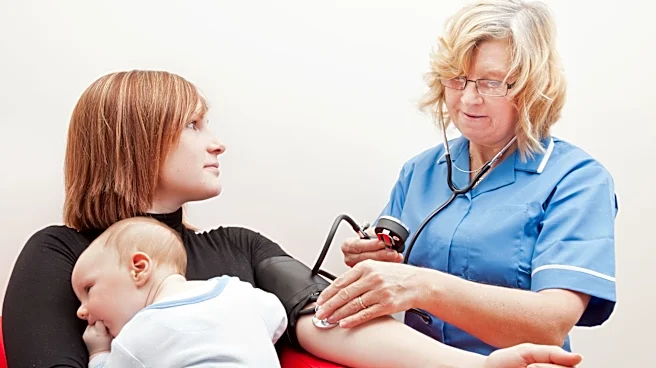






When people think of birth complications, they often picture things going awry during labor and just after. But as more attention turns to postpartum complications and maternal mortality rates in the United States, experts are trying to communicate that issues like postpartum preeclampsia, in which a woman has dangerously high blood pressure, can happen up to six weeks after she gives birth.
So, postpartum moms might wonder how they can lower their blood pressure after giving birth. Here’s what experts advise.
Why women get high blood pressure after birth
Cleveland Clinic says the first 48 hours after a woman gives birth are critical, and it's the most common time to see high blood pressure.
It is difficult to ascertain how common postpartum preeclampsia is, but it is estimated to affect between
.3% and 27.5% of U.S. pregnancies, according to research published in the American Journal of Obstetrics & Gynecology in 2021. The range is wide since milder cases may go unnoticed. At-home blood pressure monitoring can alert women to high blood pressure so they can seek care more quickly, while others might not realize it until a 6-week checkup.
“Blood pressure can absolutely rise after delivery, even in someone who had completely normal readings throughout pregnancy. The postpartum period involves major changes in circulation and fluid balance,” says Dr. Lucky Sekhon, a board certified reproductive endocrinologist, infertility specialist and OB-GYN who cares for patients at Reproductive Medicine Associates of New York. “Fluid that accumulated in the tissues during pregnancy shifts back into the bloodstream before the kidneys have had time to eliminate it, temporarily increasing circulating volume. At the same time, the hormonal and vascular changes that helped keep blood vessels dilated during pregnancy begin to reverse.”
Sekhon adds that the peak blood pressure is often 3-5 days after birth. “Pain, stress, profound sleep disruption and certain medications can also contribute to higher readings,” she says − all things that new moms know well during birth and postpartum. “That’s why new postpartum hypertension shouldn’t automatically be dismissed as stress, exhaustion or a normal part of having a newborn.”
What to do about high blood pressure after birth
According to the American College of Obstetricians & Gynecologists, postpartum women should call their doctor right away if their blood pressure shows a systolic − top number − reading of 140 mm Hg or higher and/or a diastolic − lower number − reading of 90 mm Hg or higher.
But for those with slight elevation, lifestyle changes can help. “Reducing sodium intake, staying well hydrated and resting when possible all genuinely help. Sleep is difficult to prioritize with a newborn, but even short stretches of rest make a difference. Once cleared by a provider, gradually reintroducing light activity helps as well,” Sekhon says.
There are multiple medications that are safe for breastfeeding, so your doctor might prescribe one of those.
“Some women see their numbers normalize within days to a couple of weeks. Others require treatment for six weeks or longer. A smaller subset does not fully normalize and requires ongoing management beyond the postpartum period,” Sekhon says.
When high blood pressure postpartum is an emergency
Moms can be prepared to take at-home blood pressure readings by purchasing a blood pressure cuff ahead of giving birth, to have during those first few days and weeks at home.
Postpartum parents should also watch for emergency symptoms in combination with high blood pressure and get immediate medical attention, Sekhon says. Those emergency symptoms include:
- Severe or persistent headache.
- Visual changes.
- Shortness of breath.
- Upper abdominal pain.
- Nausea or vomiting.
- Rapidly worsening swelling.
- Decreased urination.
“Severe-range blood pressure of 160/110 or higher requires urgent evaluation and treatment,” Sekhon adds.
High blood pressure should be taken seriously postpartum, by patients and physicians.
“Uncontrolled high blood pressure can place significant strain on blood vessels and organs, particularly the kidneys, liver and brain. In the postpartum period, a severe spike can lead to stroke or seizure, and it can progress quickly,” Sekhon says. “It is one of the more common reasons women are readmitted to the hospital after giving birth, which is why I take it seriously with every patient.”
This article originally appeared on USA TODAY: Keeping blood pressure in check after giving birth