

Welcome to USA TODAY Sports' fantasy football cheat sheet column, where each week I'll provide you with plenty of tips, tricks and strategies about how to win your fantasy league and also regale you with stories and lessons learned from my 16 years of playing fantasy football. For more fantasy advice, check out our new premium tools that can help you make start/sit decisions and figure out how best to attack the waiver wire.
OK, fantasy football managers, take a deep breath. Week 1 of the 2026 NFL season is in the books, and all matchups – both in fantasy and reality – have been decided.
A brief look around the fantasy football landscape should leave most managers encouraged. Week 1 tied the NFL's single-week scoring record for the Super Bowl
era – the league's 32 teams combined to score 791 points – which, in turn, jacked up scores across all fantasy formats.
Even so, that will be of little solace to the managers who came out of Week 1 in the losing column even amid strong showings from their respective teams. It will also do little to console managers who lost players like A.J. Brown, Ladd McConkey and Zay Flowers to injuries or saw certain players believed to be fantasy stars – like Omarion Hampton or Jaylen Waddle – post dud performances.
Seeing players get hurt or fall flat are two of the worst feelings as a fantasy manager, especially early in the season. After all, every fantasy footballer goes into the season hopeful they can contend for a championship. Watching that vision fail to come to fruition in Week 1 feels like a cruel bait-and-switch, much like the one Elle Woods gets in "Legally Blonde" when she believes Warner Huntington III is going to propose to her only to see him end their relationship.
But just as Elle bounces back from that rejection to get into Harvard Law School and become a successful lawyer, fantasy managers have plenty of time to change their fates.
Achieving that goal may not fully require fantasy managers to follow Woods' blueprint. Her decision to upend her life and change her career path pays off, but fantasy footballers may be better off taking a more calculated approach to fixing what ails them as they pursue their ultimate goal.
So, as NFL Week 2 arrives, here's what we've learned so far and how to tinker with your roster without going into full-blown panic mode.
What most Week 1 duds have in common
Three teams stood out among the biggest general under-performers from Week 1 of the 2026 NFL season: the Dallas Cowboys, Denver Broncos and Los Angeles Chargers.
Each of those three teams entered the 2026 NFL season expected to be playoff contenders with solid-to-strong offenses. There was much fanfare about the Chargers making strides under first-year offensive coordinator Mike McDaniel and the Cowboys repeating their elite offensive performance from last season.
The Broncos didn't get as much love as the other two, but many still believe their collection of weapons and Bo Nix's continued progression could make Denver's top playmakers fantasy sleepers.
Instead, all three offenses struggled with consistency in Week 1. A large part of their issues came down to their offensive lines.
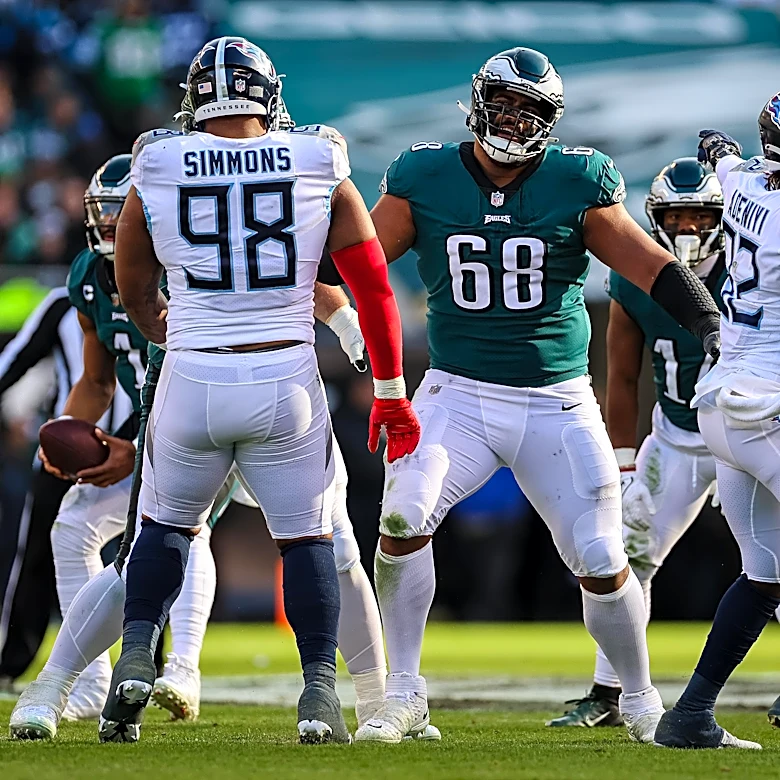
The Chargers entered the year hoping the returns of tackles Rashawn Slater and Joe Alt would upgrade their protection in front of Justin Herbert. They did, but the loss of free-agent center acquisition Tyler Biadasz ripped a hole in the team's already weak interior offensive line.
Case in point, the Chargers saw three of the four interior linemen that played for them – rookie center Jake Slaughter along with guards Cole Strange and Trey Pipkins – grade bottom-eight among 194 offensive linemen to play in Week 1, per Pro Football Focus. That routinely sped up Herbert and slowed Hampton in Los Angeles' disjointed outing.
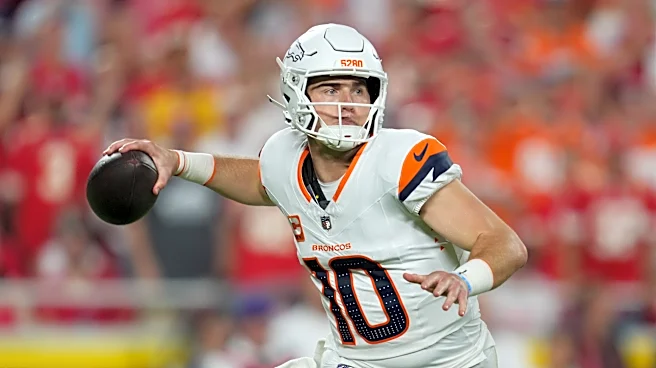
As for the Broncos, they allowed Nix to be pressured 17 times against the Chiefs, which was tied for third-most in the NFL in Week 1. Seven of those pressures were allowed by left guard Ben Powers (4) and center Luke Wattenberg (3), highlighting a weakness along Denver's well-regarded blocking unit.
And Dallas clearly missed star left guard Tyler Smith, who is out at least four weeks with a thumb injury. Dak Prescott looked antsy in the pocket without Smith, which shouldn't be too surprising given how Prescott typically struggled in his younger years when Tyron Smith was out of the lineup.
So, what's the point of this diatribe? Offensive line performance often flies under the radar, but it still matters in fantasy football. Expectations for teams with injuries at key positions up front, like the Chargers and Cowboys, should be tamped until they get healthier. And if you're really worried about the blocking units long-term, top playmakers from those teams – like Hampton, CeeDee Lamb and George Pickens – can become good, early-season trade bait.
But for teams like the Broncos, who are generally believed to have an elite offensive line, it's fine to write this off as a one-off. Maybe they just weren't at their best and can bounce back in Week 2. That said, if blocking issues continue along the interior, be ready to consider guys like Nix, J.K. Dobbins and Jaylen Waddle lower-ceiling plays.
The best buy-low trade options to monitor
Speaking of trade targets, it's never too early to assess whether you can land a fantasy star from a desperate team in an early-season deal. In fact, Week 2 or Week 3 can be a great time to capitalize on overreactions from fantasy managers who think they know everything after just one game.
For now, a few potential targets stand out when engaging in trade talks with your leaguemates.
Two of those players are members of the Atlanta Falcons. Neither receiver Drake London (two catches, 29 yards) nor tight end Kyle Pitts (zero catches) did much in Atlanta's season-opening loss to the Pittsburgh Steelers, as Bijan Robinson accounted for a whopping 72.7% of the offense.
As frustrating as London and Pitts' outings were, there's reason to expect each to bounce back in short order. The Falcons were forced to start Cooper Rush at quarterback in Week 1 amid injuries to Tua Tagovailoa and Michael Penix Jr., but it shouldn't be long before the latter is ready for action.
Penix hasn't been consistent in his NFL career, but he will still give London and Pitts far more downfield opportunities than Rush. For that reason, both Falcons pass-catchers should be monitored as trade bait, especially if Rush gets one more start.
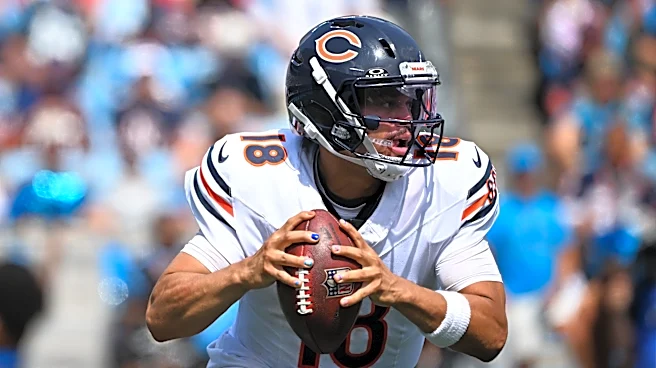
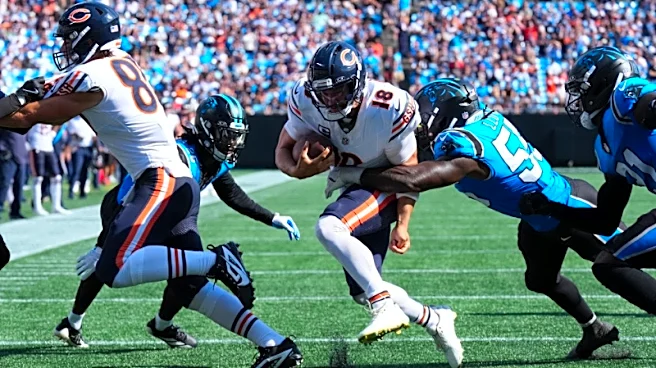
Elsewhere, Colston Loveland is a player on which to keep an eye. The Bears dropped a whopping 59 points on the Panthers in Week 1, but the talented tight end wasn't able to catch any of his three targets.
Loveland is simply too talented to be held in check like that long-term, even if Caleb Williams prefers to spread the ball around. Nonetheless, managers who saw him put up a goose egg could make a rash move and offload the early-round pick, especially if they have a later-round tight end on their roster who popped off in Week 1, like Dallas Goedert or Isaiah Likely.
That could give fantasy managers a chance to swoop in and land a player with top-five TE potential.
And, finally, some bold fantasy managers could try to pry Christian McCaffrey away from the team that drafted him. McCaffrey split touches evenly with Kaelon Black in Week 1. That split may continue throughout the season, but McCaffrey's receiving skills and explosiveness should still make him a low-end RB1 or high-end RB2 – provided he can stay healthy.
A word to the wise about sell-high trades
I know a lot of people will also be wondering which players they should try to sell high. A few stand out, with Jalen Coker as the most obvious candidate, while D'Andre Swift and Christian Watson could be the trade bait needed to add a player who was a first-round pick.
But in reality, sell-high trades are hard to execute. Fantasy managers are very careful when assessing one-game breakouts and most don't completely overreact to what they saw in Week 1.
That's not to say you won't find someone who really wants Coker, Swift or Watson and is willing to make a strong offer for them. Still, in modern fantasy, with so many tools to assess the strength of offers or potential packages, you don't necessarily want to focus on completely winning the trade on paper. That can create tension in negotiations with other managers, especially if you lowball someone.
So, just remember the rule of thumb when you try to sell high on a player: you have to give up something good to get something good.
What to do with A.J. Brown, other injured players
In a weird way, fantasy football managers were lucky during Week 1 of the 2026 NFL season. Only a few major fantasy contributors suffered injuries, and no top-tier starting running backs were lost across the first 16 games of the season.
Still, a few notable receivers went down. Brown, Flowers and McConkey stood out among the group, and their respective statuses will bear monitoring.
So, what should you do with those players? Keeping Flowers and McConkey is likely the right move. Their return timelines are still unclear, but neither has hit IR, suggesting short-term absences.
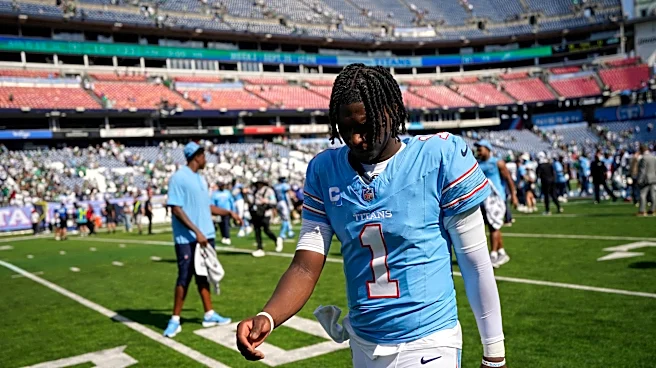
Figuring out what to do with Brown is a bit more difficult. The talented wideout is expected to miss at least six weeks with a high-ankle sprain and is on IR. Dropping him isn't an option, but if you're thin at flex or receiver, selling low on Brown in a trade may be the move.
It can be hard to reconcile trading an early-round draft asset like Brown for pennies on the dollar, but it could also prevent him from becoming a sunk cost on your bench. Now, that's not to say you should blindly trade Brown for whatever you can get. He's still supremely talented, so he should command a reasonable price on the trade market.
At the same time, Brown will miss at least half the season in redraft leagues. Even if he does return, your team could be out of contention by then, which makes him a better asset for a team with strong receiver depth.
As such, keep an open mind on Brown and consider tossing him on the trading block.
The FAAB Five
These players don't necessarily need to be picked up before NFL Week 2, but keep an eye on them as potential FAAB spend-ups and waiver targets after the games.
All roster percentages via Yahoo Fantasy.
- QB Tyler Shough, Saints (41% rostered). Shough isn't going to throw 56 times every week, but he showed he's capable of being a high-volume passer against the Lions. That could make him a good, matchup-based streamer, especially with the Saints having six NFC South games on their docket.
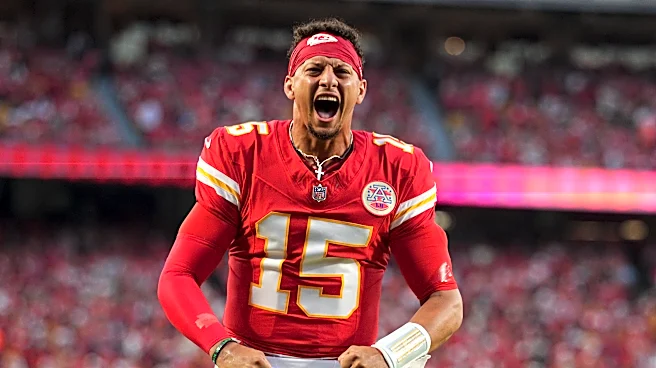
- RB Emmett Johnson, Chiefs (20% rostered). The Chiefs were completely ground-dominant in their season-opener, and that figures to continue as Patrick Mahomes eases back into action. Most of their carries will go to Kenneth Walker III, but Johnson proved capable and explosive in his action against the Broncos.
- WR Khalil Shakir, Bills (43% rostered). Shakir played second-fiddle to DJ Moore in Buffalo's receiver rotation, but he still posted four catches for 50 yards against a quality Texans defense. He has flex appeal in Week 2 against the Lions and could be a top waiver target with another solid outing.
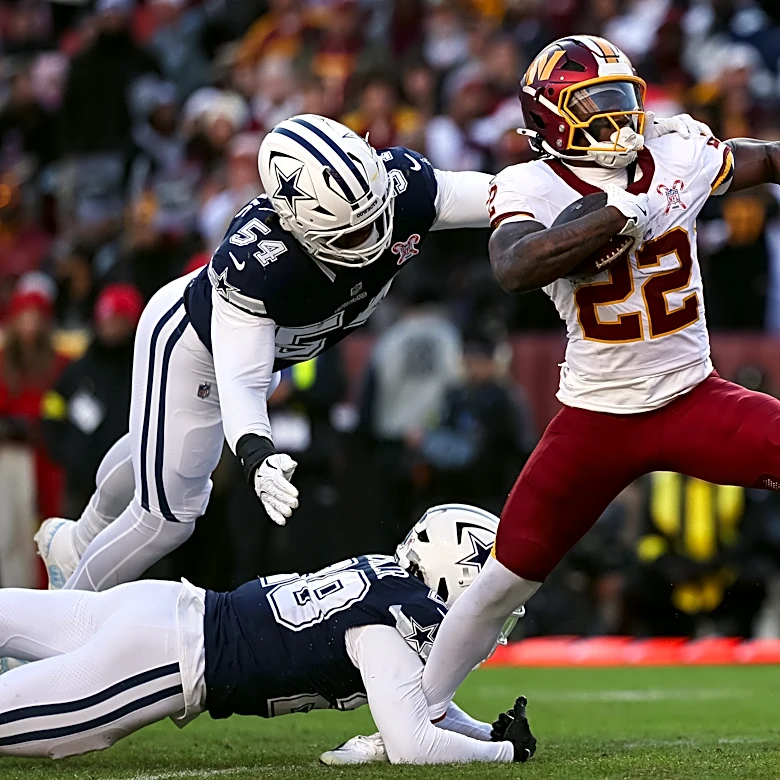
- WR Antonio Williams, Commanders (2% rostered). Williams led the Commanders in receiving yards during Week 1 with 64 and also found the end zone. He has a favorable Week 2 matchup against the Cowboys which could cause his fantasy ownership to skyrocket in Week 3, if all goes well.
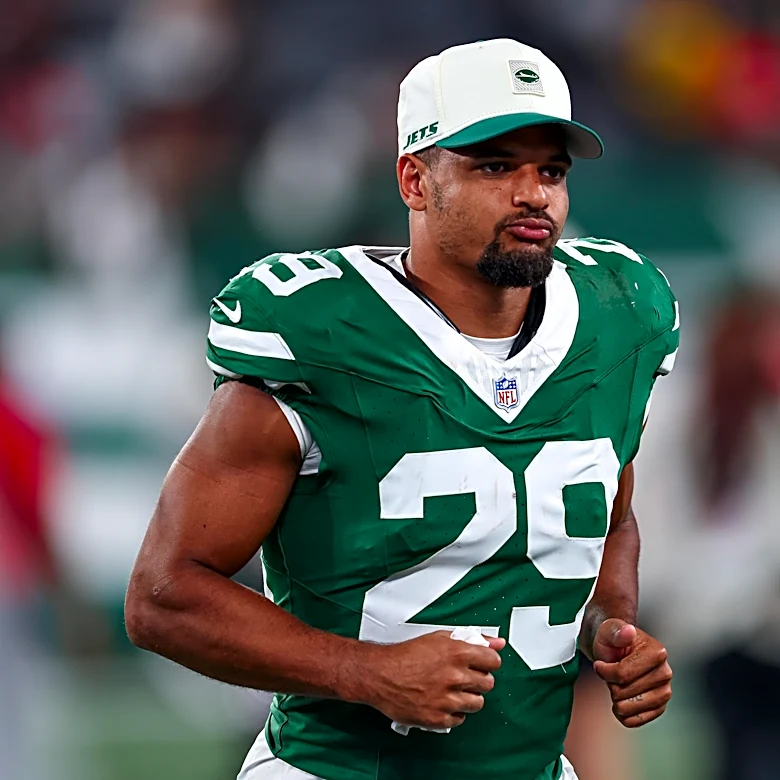
- TE Kenyon Sadiq, Jets (14% rostered). Sadiq was efficient in his Jets debut and ran for a 3-yard touchdown. Few available tight ends have his upside, so feel free to stash him if you need depth at the position.
Full fantasy football Week 2 rankings
- Quarterback
- Running back
- Wide receiver
- Tight end
- Defense
- Kicker
Check out USA TODAY Sports' fantasy football podcast
If you want even more fantasy content – including a segment where I dress up in a child-size cowboy hat and make a bold prediction about Week 2 of the NFL season – check out this week's episode of USA TODAY Sports Seriously podcast.
This article originally appeared on USA TODAY: Fantasy football cheat sheet: What Week 1 busts have in common, A.J. Brown advice, more