

A federal judge has refused to pause Texas' ban on most hemp-derived THC products while a lawsuit challenging the rules moves forward.
U.S. District Judge Jeffrey Brown of the Southern District of Texas denied the emergency motionto pause the ban
on Aug. 9, finding the plaintiffs were unlikely to win on their due process and Commerce Clause claims and had not shown they would suffer irreparable harm under their federal preemption claim.The motion came in a lawsuit filed July 31 by consumer Thomas Monti, Lifted Liquids Inc. and The Happy Cactus Apothecary LLC against four state and county officials, including interim Health Services Commissioner Imelda Garcia and Attorney General Ken Paxton.
It challenges Schedule I definitions the Texas Department
of State Health Services (DSHS) republished July 10 and put into effect July 31, which treat THCs in hemp other than delta-9 as controlled substances.
Brown's order denied only the temporary restraining order; the plaintiffs' request for a preliminary injunction remains pending. An initial pretrial conference is set for Nov. 4.
Here's a quick look at the lawsuit, what it's asking for and the Texas THC ban.

Texas THC lawsuit asks court to void state's hemp rules
The case came after the Texas Supreme Court dissolved an injunction in May, and it was dismissed in June, clearing the way for the department to republish the definitions July 10.
The lawsuit states that the new rules, effective July 31, list non-delta-9 THC — including hemp-derived delta-8 THC — alongside illegal Schedule I drugs.
It also asserts that the DSHS rules violate both federal — the Farm Bill — and state law — the Texas Hemp Bill.
The 2018 Farm Bill defines hemp as any part of the Cannabis sativa L. plant with a delta-9 THC concentration of no more than 0.3% on a dry-weight basis, and it removes products meeting that standard from the federal Controlled Substances Act.
The Texas Farm Bill — House Bill 1325 in 2019 — uses the same framework as the Farm Bill, according to the lawsuit.
It asks the court to do the following:
- Declare that the sole legal test for whether a cannabis product counts as "hemp" is its delta-9 THC concentration (0.3% or less), regardless of other THCs present.
- Declare the state's rules void for vagueness under the 14th Amendment's Due Process Clause.
- Declare the rules preempted by the 2018 Farm Bill under the Supremacy Clause.
- Declare the rules an unconstitutional burden on interstate commerce.
- Bar state officials from arresting, prosecuting, seizing products or pulling licenses under the rules — for any product at or below 0.3% delta-9 THC.
- Order Texas officials to revert to the pre-2021 Schedule I definitions.
- Award attorneys' fees and court costs.
What do the Texas THC rules ban?
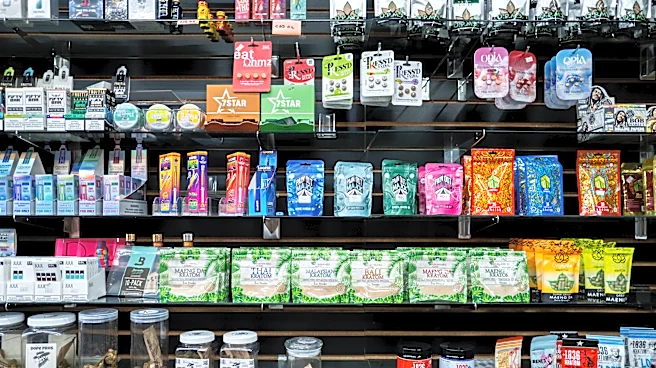
The republished definitions classify the THCs in hemp as Schedule I controlled substances, with an exception for up to 0.3% delta-9 THC. In practice, that reaches hemp-derived compounds sold across Texas, including delta-8 THC — the product at the center of the lawsuit.
The lawsuit argues that the rules don't make clear where the line falls and notes that the state's health commissioner says delta-8 that occurs naturally in hemp is tolerable, but says no rule or guidance explains how a business or consumer could prove a product qualifies. The suit says the same ambiguity surrounds THCA.
What are the penalties?
Possessing banned THC products could be prosecuted as a state jail felony, which carries penalties ranging from 180 days to two years in jail and fines of up to $10,000.
Businesses caught selling prohibited products could also face steep fines, lose their hemp licenses and face criminal charges.
Mateo Rosiles is the Texas Connect reporter for USA TODAY and its regional papers in Texas. Got a news tip for him? Email him at mrosiles@usatodayco.com.
This article originally appeared on USA TODAY: Is THC legal in Texas? Federal judge leaves hemp ban in place for now