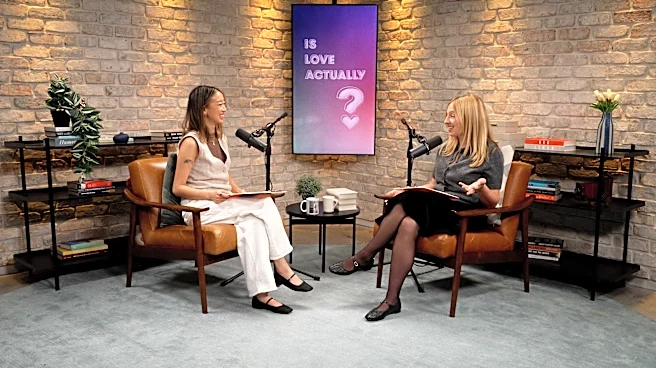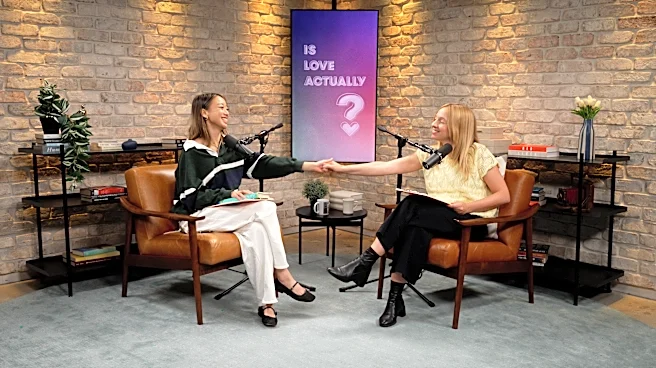










The fifth episode of "Is Love Actually?," a new five-part vodcast series from Humankind and USA TODAY, breaks down what it takes to build community. In this episode, hosts Ronnie Li and Madeline Gunderson learn how love can help people find connection.
All five episodes premiere this World Kindness Week. You can watch or listen to the entire series now.
Building intentional community
When Graham McBain moved to a new city with his young family, he found himself feeling alone. Instead of accepting a shrunken social circle, he made it his mission to turn his neighborhood into a community. By knocking on doors, hosting events and being "conspicuously friendly and vulnerable," he created a welcoming culture of neighbors who enjoy spending time together.
After finding success in his
own neighborhood, he took his method online. McBain built the Hey Neighbor Hub to help thousands of strangers around the world do the same in their own zip code. On the "Is Love Actually?" vodcast, McBain shares his step-by-step method for transforming neighbors into friends.
How do we find each other?
Why do so many of us feel lonely in a world where we're constantly connected to each other online?
A 2025 poll by the American Psychological Association (APA) found "loneliness and emotional disconnection appear to have become a defining feature of life in America." The survey found 69% of adults needed more emotional support than they received. This is a 4% increase from the year prior. The APA's study also noted "even as adults recognize their need for connection, many are struggling to find it."
Building a connection takes work. Dr. Thema Bryant is a clinical psychologist, author and minister whose work focuses on mental health and coaching people to foster healthy relationships. She stresses the importance of vulnerability and authenticity when looking for connections with others.
She relates her personal experience on "Is Love Actually?," sharing about having to build a new friend group from the ground up.
"When I moved to Los Angeles, I did not have friends here. I grew up on the East Coast for most of my life. So I moved out here and then every relationship, every connection was new."
She describes how she found herself creating a circle of friends in a new city by seeking out people who share her interests. For Dr. Bryant, these interests were faith, arts and activism.
"When people speak of their loneliness, it is the desire for a deeper connection than you currently have. Access to people through social media doesn't mean there's a depth of connection. You can even live with people, be married to people and still have loneliness. So it is not just proximity, whether in-person or online. It is the sense of being known, being seen, being heard, being understood."
20 years later, Dr. Bryant calls these friends "the gathering sisters," and she credits this group of women with supporting her through the ups and downs of life.

Creating community isn't an overnight process, but experts say the benefits are worth the effort. Dr. Miriam Kirmayer is a clinical psychologist who advises people to invest into strengthening their relationships. Relationship building takes time. Dr. Kirmayer cites a study saying it takes between 80 to 100 hours to make a close friend.
"If we aren't being intentional about finding and carving out spaces where we can frequent on a semi-regular basis ... where we can engage with the same people week after week or month after month, it can be really difficult to tap into new friendships." Dr. Kirmayer's podcast, "Two Peas on a Pod," dives into the science of friendship and offers practical advice on how to build connection. She also shares some tips and tricks in episode 5 of "Is Love Actually?" that listeners can implement right away.
Episode five of "Is Love Actually?" invites viewers to think about where they might create new connections and how they can help the people around them feel less alone.
You can watch or listen to "Is Love Actually?" now. The series is available on all podcast platforms, including Spotify and Apple Podcasts
Funding for the project was provided by the Greater Good Science Center and the Templeton Foundation, in conjunction with the GGSC’s “Spreading Love Through the Media” project.
This article originally appeared on USA TODAY: Can love overcome loneliness?